


Top Rated New Jersey Longshoreman injury Law Firm – Grossman Attorneys
If you were injured working at a New Jersey port, dock, or shipyard, you deserve fair compensation under federal law. The Longshore and Harbor Workers’ Compensation Act provides important protections, but insurance companies often try to minimize what they pay or deny valid claims altogether. You need an attorney who knows how to fight back.
Grossman Attorneys at Law has extensive experience handling LHWCA cases for injured maritime workers throughout New Jersey. Our team understands the complex federal rules that govern your claim and has a proven track record of securing strong settlements through aggressive negotiation. When insurers refuse to offer what’s fair, we’re prepared to take your case to trial.
You’ve already been through enough. Let us handle the legal fight while you focus on your recovery. Contact us today for a free consultation about your longshore injury claim.
Understanding the Longshore and Harbor Workers’ Compensation Act (LHWCA)
If you’ve been injured while working on New Jersey’s docks, ports, or waterfront facilities, you’re likely covered under the Longshore and Harbor Workers’ Compensation Act (LHWCA). This federal law provides wage replacement and medical benefits to maritime workers who don’t qualify as “seamen” under the Jones Act but work in traditional maritime employment.
Understanding how LHWCA coverage applies to your specific situation, who qualifies for benefits, and how this law differs from other maritime protections is essential to securing the full compensation you deserve. Under the LHWCA, covered workers may choose their own treating physician, and medical care is provided without deductibles or copayments, with benefits funded by employers and insurers and supported when necessary by the Special Fund’s Section 8(f) second-injury payments.

What is LHWCA Coverage?
The Longshore and Harbor Workers’ Compensation Act (LHWCA) provides federal workers’ compensation benefits to maritime employees who work on or near navigable waters but aren’t classified as seamen under the Jones Act. Understanding coverage scope is essential when pursuing benefits. The Act covers dock workers, harbor workers, ship repairers, shipbuilders, and shipbreakers injured while performing maritime employment duties.
Claimant eligibility requires meeting a two-part test: your injury must occur on navigable waters or adjoining areas like piers, wharves, and terminals, and your work must involve maritime employment. You’ll receive medical benefits, disability compensation, and vocational rehabilitation when you qualify. The LHWCA also provides death benefits to eligible survivors when an employee’s death results from a covered injury, and covers injuries occurring on navigable waters or adjoining areas such as dry docks, shipyards, and marine railways.
Who Qualifies for LHWCA Benefits?
Qualifying for LHWCA benefits requires you to meet specific employment and injury location criteria that federal law has established through decades of case precedent. Covered employees include dock workers, ship repairers, shipbuilders, harbor construction workers, and others who work on navigable waters or adjoining areas like piers and terminals.
The eligibility criteria focus on two key factors: your job duties must involve maritime employment, and your injury must occur on navigable waters or areas customarily used for loading, unloading, repairing, or building vessels. Workers performing clerical or administrative tasks typically don’t qualify unless their duties directly support maritime operations. You also have the right to choose your own treating physician under the LHWCA, though changing doctors later generally requires approval from your employer, insurer, or the OWCP.
How Does LHWCA Differ from Other Maritime Laws?
Maritime law encompasses several overlapping federal statutes, and understanding which one applies to your situation directly affects the compensation you can recover after a workplace injury. The LHWCA provides workers’ compensation-style benefits including medical coverage and wage replacement, while the Jones Act allows injured seamen to sue for negligence and pain and suffering.
Comparative jurisdiction between these laws depends on your employment status and work location. Benefit interaction can be complex, some workers qualify under multiple statutes, but you can’t recover twice for the same injury. Determining which law applies requires analyzing your specific circumstances carefully.
Major Ports and Maritime Facilities in New Jersey
Port Newark–Elizabeth Marine Terminal
Port Newark–Elizabeth Marine Terminal is located in the Newark Bay area, spanning the cities of Newark and Elizabeth in northern New Jersey. The facility is operated by the Port Authority of New York and New Jersey and serves as a primary gateway for containerized cargo entering the East Coast. Major terminal operators include Maher Terminals, APM Terminals, and GCT Bayonne. The port handles a diverse range of cargo types, including consumer goods, automotive parts, machinery, and refrigerated products, serving importers and exporters throughout the Northeast and Mid-Atlantic regions.
The Port Newark–Elizabeth Marine Terminal is the largest container port on the East Coast, handling approximately 3.8 million twenty-foot equivalent units (TEUs) annually. The facility employs over 10,000 direct workers, including longshoremen, crane operators, and logistics personnel. Recent infrastructure investments exceed $4 billion, including the raising of the Bayonne Bridge to accommodate larger vessels and upgrades to terminal automation systems. The port generates an estimated $50 billion in annual economic activity for the region and supports more than 400,000 jobs throughout the supply chain network.
South Jersey Port Corporation – Camden Terminal
The Camden Terminal is situated along the Delaware River in Camden, New Jersey, directly across from Philadelphia. The South Jersey Port Corporation operates this multi-purpose facility, which handles break-bulk cargo, project cargo, and specialized commodities. The terminal serves industries including steel, forest products, wind energy components, and heavy machinery. Major users include steel manufacturers, construction companies, and renewable energy developers requiring access to deep-water berthing and heavy-lift capabilities.
The Camden Terminal handles approximately 1.5 million tons of cargo annually and provides employment for several hundred longshore workers and support staff. The facility features over 1 million square feet of warehouse space and direct rail connections via Conrail Shared Assets. Recent investments of approximately $100 million have modernized terminal infrastructure, including wharf improvements and equipment upgrades.
The terminal contributes an estimated $500 million annually to the regional economy and supports specialized cargo operations that can’t be accommodated at container-focused facilities.
South Jersey Port Corporation – Paulsboro Marine Terminal
Paulsboro Marine Terminal is located in Paulsboro, New Jersey, along the Delaware River in Gloucester County. Operated by the South Jersey Port Corporation, this facility specializes in handling bulk commodities, steel products, and project cargo. The terminal serves manufacturers, energy companies, and agricultural businesses requiring bulk handling capabilities. Industries utilizing the facility include petroleum refining, steel processing, and agricultural product distribution, with direct access to regional rail networks and highway systems.
The Paulsboro Marine Terminal processes approximately 2 million tons of cargo annually, with a workforce of several hundred employees including longshoremen, equipment operators, and administrative personnel. The facility offers over 2 million square feet of warehouse and storage space, along with specialized equipment for bulk and heavy-lift operations. Infrastructure investments of approximately $150 million over recent years have enhanced berthing capacity and rail connectivity.
The terminal generates an estimated $400 million in annual economic impact for southern New Jersey and provides critical logistics support for regional industrial operations.
South Jersey Port Corporation – Salem Terminal
The Salem Terminal is positioned on the Delaware River in Salem, New Jersey, serving Salem County and the surrounding agricultural and industrial region. The South Jersey Port Corporation operates this facility, which primarily handles agricultural products, steel, and bulk commodities. The terminal provides crucial logistics support for regional farmers, food processors, and manufacturing operations. Major cargo types include grain, fertilizer, steel coils, and project cargo requiring specialized handling equipment and storage facilities.
The Salem Terminal handles approximately 500,000 tons of cargo annually, employing a workforce of over 100 longshore and terminal workers. The facility features approximately 500,000 square feet of covered storage and direct rail access through Conrail connections. Recent modernization efforts totaling approximately $50 million have upgraded dock infrastructure and cargo handling equipment to improve efficiency and safety.
The terminal contributes an estimated $200 million annually to the local economy and serves as a vital agricultural export gateway for South Jersey’s farming communities. The U.S. Maritime Administration’s data portal offers interactive dashboards and downloadable datasets that provide context on port throughput, vessel calls, and economic impacts across New Jersey facilities via the MARAD Data Portal.
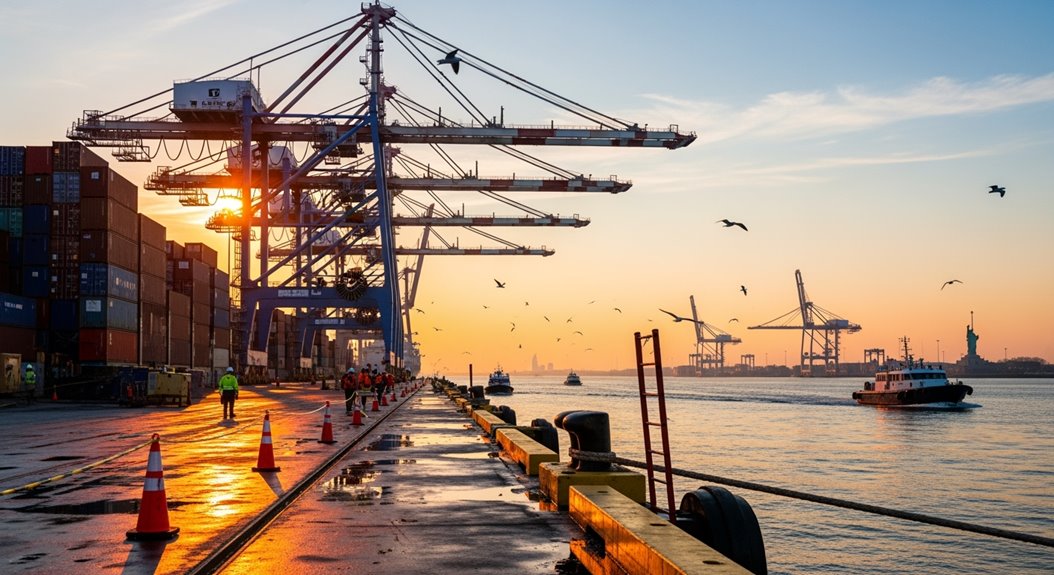
Common Longshore and Dock Worker Accidents in New Jersey
Frequently, longshore and dock workers across New Jersey’s busy ports face serious workplace hazards that other industries rarely encounter. You’re vulnerable to multiple accident risks:
- Struck-by incidents involving containers, cargo, forklifts, or cranes causing blunt force trauma
- Falls from ship decks, cargo holds, or gangways due to inadequate guardrails
- Slips and trips on wet, oily surfaces with poor dock lighting
- Chemical exposure to fuels, solvents, and toxic fibers during cargo handling
- Equipment failures from worn-out machinery lacking proper maintenance
Insufficient safety signage and defective equipment compound these dangers throughout New Jersey’s maritime facilities. In addition, OSHA’s marine terminal and longshoring standards require employers to implement hazard assessments and control measures that address these risks.
Longshore and Port Worker Injury Statistics in New Jersey
Despite the bustling activity across New Jersey’s major ports and waterfront facilities, precise injury statistics for longshore and dock workers aren’t publicly reported as a standalone category.
However, available data reveals concerning patterns affecting harbor safety and workers’ wellbeing:
- Trade, transportation, and utilities sectors account for 64% of New Jersey’s private-sector occupational injuries despite representing only 44% of employment
- The state recorded 66,800 workplace injuries in 2023, with 29,300 requiring time away from work
- Transportation and goods-moving sectors experienced 19 workplace fatalities in 2023
- Seasonal employment peaks create elevated risks during high-volume periods
- Large facilities with 1,000+ workers show the highest injury rates statewide
According to national BLS data, workers in transportation and material moving suffered a significant share of fatal occupational injuries in 2022, with event/exposure categories like transportation incidents and falls accounting for many deaths.
Insurance companies know our reputation. They know we prepare every case for trial and we’ll go the distance when settlement offers fall short. We investigate thoroughly, build bulletproof cases, and aren’t afraid to take yours to court. That changes negotiations from the start.
Anytime. Anywhere. We’re Ready to Fight for You.
Compensation Available for Longshoremen in New Jersey
If you've suffered a longshore injury in New Jersey, you're entitled to several types of compensation under the Longshore and Harbor Workers' Compensation Act. These benefits can include coverage for all medical treatment related to your injury, payments to replace lost wages during your recovery, and financial support for your family if your injuries prove fatal.
Understanding what compensation you can claim, and how to secure the full amount you deserve, is essential to protecting your financial future after a workplace accident.
Medical Benefits
When you're injured while working on New Jersey's docks or waterfront, the Longshore and Harbor Workers' Compensation Act guarantees you'll receive full medical coverage for your work-related injuries without any out-of-pocket costs. You won't face restrictions from provider networks, giving you freedom to choose your treating physicians.
This coverage includes doctor visits, hospitalizations, surgeries, prescription medications, physical therapy, and necessary medical equipment. Insurance carriers sometimes create billing disputes to delay or deny payment to your healthcare providers. These tactics can jeopardize your ongoing treatment. An experienced longshore attorney secures your medical benefits continue uninterrupted while resolving payment conflicts.
Disability Benefits
Understanding your financial rights after a longshore injury determines whether you'll maintain stability during your recovery or face mounting bills while unable to work. The Longshore Act provides disability benefits based on your injury's severity.
Temporary total disability pays two-thirds of your average weekly wage when you can't work at all. Permanent partial disability compensates for lasting impairments that limit your earning capacity.
The disability evaluation process examines how your injury affects your ability to perform your previous job or other suitable work. Grossman Attorneys at Law guarantees you receive maximum compensation, including vocational rehabilitation services when returning to your former position isn't possible.
Death Benefits
The most devastating longshore accidents result in fatal injuries, leaving families without their primary income source and facing an uncertain future. The Longshore Act provides death benefits to help surviving family members maintain financial stability.
Eligible dependents can receive survivor pensions, which typically equal two-thirds of the deceased worker's average weekly wage. These payments continue until the youngest child reaches eighteen or a surviving spouse remarries. The Act also provides funeral reimbursement up to $3,000 to help cover burial expenses. Filing these claims requires detailed documentation of dependency and financial relationships with the deceased worker.
Additional Damages
Beyond the standard Longshore Act benefits, injured New Jersey longshoremen often have rights to pursue additional compensation through third-party claims. If someone other than your employer caused your accident, such as equipment manufacturers, crane operators, or vessel owners, you may file a separate lawsuit.
These claims can include punitive damages designed to punish reckless conduct, compensation for emotional distress like anxiety and depression, and full recovery for pain and suffering. While Longshore benefits provide essential medical coverage and wage replacement, third-party actions frequently result in substantially larger settlements that address the complete impact of your injuries.
Statute of Limitations for Filing a LHWCA Claim
When you're injured on the job as a maritime worker, time isn't just a factor in your recovery, it's a strict legal deadline that can make or break your claim. Under the LHWCA, you must report your injury within 30 days and file your claim within one year of the accident or when you knew about your work-related condition.
Deadline calculation starts from the injury date or diagnosis. Certain circumstances may allow claim tolling, which pauses the clock temporarily. Missing these deadlines can permanently bar your right to compensation, making prompt action essential to protecting your benefits.
Get Results
Each one of our lawyers is a skilled and experienced litigator and negotiator. We never recommend settling your case when trial presents a better opportunity for recovery.



Why Do I Need a Longshoremen Workers Comp Injury Lawyer?
Maneuvering LHWCA claims requires specialized legal knowledge that most general practice attorneys simply don't possess. Maritime injury cases involve complex federal regulations, specific filing procedures, and unique compensation structures that differ markedly from standard workers' compensation claims.
A specialized attorney understands evidence preservation requirements, ensuring medical records, accident reports, and witness statements are properly documented before they disappear. They're intimately familiar with claim timelines and know exactly when each filing deadline occurs.
Insurance carriers employ experienced defense lawyers who know how to minimize payouts. You need equally skilled representation to protect your rights and secure maximum compensation.
Why Choose Grossman Attorneys for Your New Jersey LHWCA Claim
When you're injured on the job as a maritime worker in New Jersey, choosing the right legal representation can mean the difference between a minimal settlement and full compensation for your injuries.
Grossman Attorneys at Law is a respected maritime law firm with over 40 years of experience representing injured workers across the nation. Our maritime attorneys have secured substantial settlements and verdicts in cases ranging from Defense Base Act claims to longshoremen workers' comp injury cases and offshore accidents. We understand the complex laws that govern these claims and stand ready to take your case to trial when insurance companies fail to offer the fair compensation you deserve.
Aggressive But Fair Representation
Insurance companies and employers responding to Longshore Act claims expect injured workers to accept their initial offers and move on. Grossman Attorneys disrupts this expectation through tough negotiation that pushes back against inadequate compensation while maintaining ethical advocacy throughout every interaction.
The firm's approach combines aggressive pursuit of maximum benefits with professional conduct that strengthens your case rather than undermining it. Defense attorneys recognize Grossman's willingness to litigate when necessary, which creates leverage during settlement discussions. This reputation for thorough preparation and courtroom readiness often results in substantially improved offers before trial becomes necessary.
Experienced, Compassionate Staff
Throughout your LHWCA claim, you'll work with a dedicated team that combines decades of maritime law expertise with genuine concern for your recovery and financial security.
Our staff understands the physical pain and financial stress you're facing after a workplace injury. We provide trauma informed care, recognizing that maritime accidents often leave emotional as well as physical scars.
Our team includes bilingual support staff who can communicate clearly in your preferred language. From your initial consultation through final resolution, you'll receive personalized attention from professionals who treat your case with the urgency and respect it deserves.
A Track Record of Winning Longshore Claims
Our firm's success in Longshore and Harbor Workers' Compensation Act cases speaks directly to the results you can expect. We've secured numerous multi-million-dollar settlements by developing compelling verdict strategies that prepare every case for trial.
Our attorneys understand how to craft persuasive jury narratives that clearly demonstrate the impact of your injuries and the compensation you deserve. Defense attorneys and insurance carriers recognize our thorough preparation and willingness to litigate. This reputation means we're often able to negotiate stronger settlements, but we'll never hesitate to take your case to court when necessary to achieve full compensation.
Injured at a New Jersey Port? Let Grossman Attorneys Fight for Your LHWCA Compensation
If you or a loved one has been injured while working at a New Jersey port, you don't have to navigate the complex LHWCA claims process alone. Grossman Attorneys at Law has spent over 40 years fighting for injured maritime workers nationwide, securing the maximum compensation they deserve. Our litigation-first approach means insurance carriers take our cases seriously, they know we're prepared to go to trial when settlement offers fall short.
We appreciate the financial and physical challenges you're facing, and we're committed to holding employers and insurers accountable. Don't settle for less than you deserve. Contact Grossman Attorneys today to speak with an experienced LHWCA attorney who'll fight tirelessly for your rights and recovery.
*If you hire Grossman Attorneys for your LHWCA case, you pay no attorney fees for our service. When we win your case, the employer or its insurer typically pays a DOL-approved attorney’s fee and any case expenses we advanced are reimbursed from the recovery. If we don't win, you pay nothing.
- https://www.freightmango.com/port-info/us/newyork-usnyc/
- https://sustainableworldports.org/wpcap/wg-5/our-mission/port-of-new-york-and-new-jersey/
- https://www.southjerseyport.com/facilities/paulsboro-marine-terminal/
- https://en.wikipedia.org/wiki/Port_Newark–Elizabeth_Marine_Terminal
- https://www.southjerseyport.com
- https://www.nj.gov/offshorewind/projects/ports/
- https://www.panynj.gov/port/en/index.html
- https://www.panynj.gov/port/en/our-port.html
- https://www.portsamerica.com/our-locations/newark-nj