


Top Rated North Carolina Longshoreman injury Law Firm – Grossman Attorneys
If you were injured working at a North Carolina port or maritime facility, you need more than a standard workers’ compensation attorney. Your case falls under the federal Longshore and Harbor Workers’ Compensation Act, a specialized legal framework that requires specific knowledge and experience to navigate successfully. Grossman Attorneys at Law has spent years mastering LHWCA claims and understands exactly what injured longshoremen and harbor workers face during recovery.
We have a proven track record of negotiating substantial settlements with insurance companies that often try to minimize what injured maritime workers deserve. When negotiations fall short, we are fully prepared to take your case to trial and fight for maximum compensation. We know how overwhelming it feels to manage mounting medical bills and lost wages while trying to heal from a serious injury. You deserve an advocate who will stand by you through every step of this process. Contact us today for a free consultation about your longshore injury claim.
Understanding the Longshore and Harbor Workers’ Compensation Act (LHWCA)
If you’ve been injured while working on North Carolina’s docks, ports, or waterfront facilities, you’re likely covered under the Longshore and Harbor Workers’ Compensation Act (LHWCA). This federal law provides medical benefits and wage replacement to maritime workers who don’t qualify as traditional seamen but work in marine environments.
Understanding how LHWCA works, who it covers, and how it differs from other maritime laws is essential to protecting your right to full compensation after a workplace injury. Under the LHWCA, employers must secure coverage through private insurance or self-insurance, and injured workers are entitled to medical care without deductibles or copays.
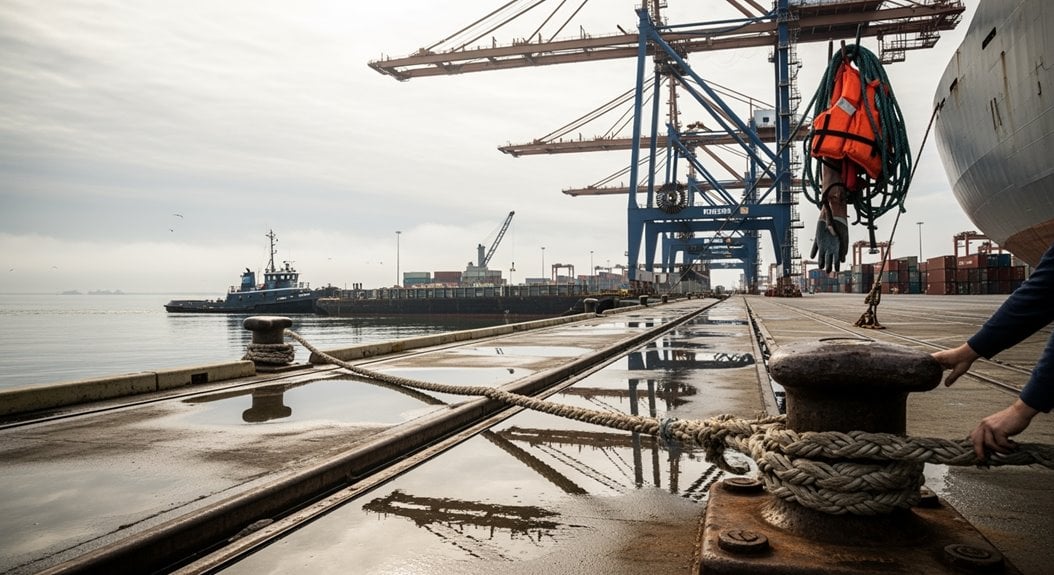
What is LHWCA Coverage?
When you’re injured while working on navigable waters or in maritime employment, the Longshore and Harbor Workers’ Compensation Act (LHWCA) provides essential federal protection that goes beyond standard workers’ compensation. This coverage applies to dock workers, ship repairers, harbor construction workers, and other maritime employees working in traditional maritime occupations. The jurisdictional scope extends to injuries occurring on navigable waters and adjoining areas like piers, docks, and terminals.
However, coverage exclusions apply to certain workers, including masters and crew members of vessels, who fall under Jones Act protections instead. Understanding these distinctions determines which benefits you’re entitled to receive. The LHWCA is administered by the OWCP’s DLHWC, which oversees claims and helps determine eligibility and benefits.
Who Qualifies for LHWCA Benefits?
Sorting out whether you qualify for LHWCA benefits hinges on two critical tests: the status test and the situs test. The status test confirms you’re a maritime employee, not vessel crewmembers covered under different laws, but workers like longshoremen, harbor workers, ship repairers, and offshore contractors.
The situs test verifies your injury occurred on navigable waters or in an adjoining area used for loading, unloading, repairing, or building vessels. Both tests must be satisfied.
If you work near water handling cargo or maintaining maritime equipment, you’ll likely meet these requirements and qualify for benefits. Covered locations typically include piers, wharves, docks, dry docks, terminals, shipyards, marine railways, and other adjoining areas customarily used for vessel-related activities.
How Does LHWCA Differ from Other Maritime Laws?
Maritime law doesn’t operate as a single, uniform system, instead, it comprises several distinct legal frameworks that protect different categories of workers based on where they work and what they do.
The LHWCA covers dock workers and harbor employees, while the Jones Act protects seamen working aboard vessels. These laws have different comparative jurisdiction requirements and proof standards.
Benefits overlap can occur when your job duties span multiple work locations, potentially qualifying you for coverage under different statutes. Understanding which law applies to your situation directly affects your compensation options and the legal strategy needed to maximize your recovery.
Major Ports and Maritime Facilities in North Carolina
Port of Wilmington
Located on the Cape Fear River in southeastern North Carolina, the Port of Wilmington serves as the state’s largest and busiest seaport. Major operators and tenants include international shipping lines, chemical companies, agricultural exporters, and breakbulk cargo handlers. The facility specializes in containerized cargo, bulk fertilizers, wood products, salt, cement, and various project cargo serving industries throughout the Mid-Atlantic region.
The port handles over 324,000 TEUs annually through its 42-foot deep navigation channel and processes significant volumes of non-containerized goods. The facility’s extensive infrastructure includes modern container terminals, specialized bulk handling equipment, and multiple berths designed for various cargo types. Port operations support regional manufacturing, agriculture, and distribution networks while generating substantial economic activity for New Hanover County and surrounding areas. The U.S. Army Corps of Engineers tracks port activity through WCUS reports that combine domestic and foreign waterborne commerce statistics by region, state, and waterway.
Port of Morehead City
Situated along the Crystal Coast in Carteret County, the Port of Morehead City operates as North Carolina’s second major deep-water port facility. The port serves lumber exporters, bulk commodity handlers, project cargo specialists, and various shipping companies requiring access to deep-draft channels. Primary cargo categories include wood pellets for international energy markets, dimensional lumber, phosphate products, and heavy-lift breakbulk shipments.
The facility features nine operational berths with extensive wharf frontage and maintains 45-foot deep navigation channels capable of accommodating large vessels. Combined with the Port of Wilmington, North Carolina’s port system processes more than 6.7 million tons of cargo yearly. The port’s strategic location provides efficient access to Atlantic shipping lanes while supporting the timber industry, agricultural exports, and energy sector supply chains throughout eastern North Carolina.

Common Longshore and Dock Worker Accidents in North Carolina
North Carolina’s ports present daily hazards that put dockworkers, longshoremen, and maritime laborers at serious risk of injury or death. Poor dock ergonomics combined with rushed operations create dangerous conditions that lead to:
- Crushing injuries from shifting cargo when loading equipment fails or cargo signaling between operators breaks down
- Slip and fall accidents on oil-soaked surfaces, wet decks, and uneven dock platforms
- Chemical exposures from fuel spills, solvents, and hazardous materials without proper protective equipment
Mechanical failures, inadequate training, and fatigue from extended shifts compound these risks, resulting in catastrophic injuries requiring immediate legal representation. OSHA’s marine terminal and longshoring standards emphasize hazard communication and safe cargo handling practices to reduce these risks.
Longshore and Port Worker Injury Statistics in North Carolina
Each year, thousands of longshoremen, dock workers, and port employees across North Carolina face serious workplace injuries that disrupt their lives and livelihoods.
North Carolina reported 40,900 serious cases requiring time away from work in 2023, with transportation and port sectors experiencing higher-than-average injury rates. According to national BLS data, overall nonfatal occupational injury and illness incidence rates vary by industry each year, with goods-producing sectors often exceeding the private industry average as shown in BLS Table 1.
Leading risk factors include:
- Struck-by incidents and crush injuries from heavy machinery
- Falls from vessels, platforms, and elevated surfaces
- Transportation accidents involving cargo vehicles and equipment
Despite strong safety training programs and equipment maintenance standards, port work remains inherently dangerous. When accidents occur, you’re entitled to thorough Longshore Act compensation covering medical care and lost wages.
Insurance companies know our reputation. They know we prepare every case for trial and we’ll go the distance when settlement offers fall short. We investigate thoroughly, build bulletproof cases, and aren’t afraid to take yours to court. That changes negotiations from the start.
Anytime. Anywhere. We’re Ready to Fight for You.
Compensation Available for Longshoremen in North Carolina
If you've been injured while working as a longshoreman in North Carolina, the Longshore and Harbor Workers' Compensation Act provides several types of financial protection to help you recover and support your family.
These benefits cover your immediate medical needs, replace lost wages during your recovery, and provide support to your dependents if you suffer a fatal workplace injury. Understanding what compensation you're entitled to receive is the first step toward securing the full financial recovery you deserve.
Medical Benefits
Understanding your right to medical care stands as the foundation of your longshore benefits claim. The LHWCA requires employers to provide complete medical coverage for work-related injuries without any out-of-pocket costs to you. This includes doctor visits, hospital stays, surgeries, medications, physical therapy, and necessary medical equipment.
Your employer must authorize treatment from qualified physicians, though you can request a one-time change of doctor if you're dissatisfied with your care. Insurance companies sometimes delay or deny treatment authorization, creating gaps in your recovery. We challenge these tactics to secure the immediate care you need.
Disability Benefits
Receiving fair compensation for your work injury requires understanding the four types of disability benefits available under the LHWCA. Temporary total disability covers periods when you can't work during recovery. Permanent total disability applies if you're unable to return to any substantial gainful employment.
Temporary partial and permanent partial disability address reduced earning capacity when you can work in limited capacities. These benefits may include vocational rehabilitation services and workplace accommodations to help you shift back to employment. While separate from social security benefits, LHWCA coverage also addresses mental health impacts resulting from your maritime injury.
Death Benefits
The sudden loss of a family member in a maritime workplace accident creates devastating emotional and financial hardship for those left behind. The Longshore Act provides survivor benefits to help your family maintain financial stability during this difficult time.
Eligible dependents can receive a percentage of the deceased worker's average weekly wage, typically for a specified duration based on their relationship to the worker. The Act also provides burial allowances to help cover funeral and related expenses. These benefits exist to make certain you're not left struggling financially while grieving your loved one's loss.
Additional Damages
Beyond basic medical benefits and wage replacement, injured longshoremen in North Carolina can pursue several forms of additional compensation that many workers don't realize they're entitled to receive.
You may recover damages for emotional distress caused by your workplace injury, including anxiety, depression, and psychological trauma. While the Longshore Act typically doesn't allow punitive damages, extra monetary awards designed to punish wrongdoers, you can still seek compensation for permanent scarring, disfigurement, and loss of enjoyment of life. Third-party negligence claims against equipment manufacturers or contractors may provide access to fuller damages beyond standard Longshore benefits, markedly increasing your total recovery.
Statute of Limitations for Filing a LHWCA Claim
When you're injured on the job as a maritime worker, timing matters more than you might realize. The LHWCA requires you to report your injury within 30 days and file your claim within one year of the accident. Missing these filing deadlines can jeopardize your entire case.
However, statute tolling may extend these timeframes in specific circumstances, such as when your employer fails to provide required notices or when you're unaware of your injury's full extent. These exceptions are complex and require careful legal analysis. Don't risk losing your benefits by waiting too long to seek representation.
Get Results
Each one of our lawyers is a skilled and experienced litigator and negotiator. We never recommend settling your case when trial presents a better opportunity for recovery.



Why Do I Need a Longshoremen Workers Comp Injury Lawyer?
Understanding your filing deadlines is just the first step in protecting your rights as an injured maritime worker. Maneuvering LHWCA claims requires specialized knowledge that general personal injury attorneys often lack. An experienced longshore lawyer understands the complex federal regulations governing your case and develops a legal strategy tailored to maritime law.
They'll manage your claim timeline, ensuring all deadlines are met while gathering critical evidence like witness statements and medical records. Insurance carriers often minimize payouts to unrepresented workers. Having skilled legal representation levels the playing field, markedly increasing your chances of receiving full compensation for medical expenses, lost wages, and disability benefits.
Why Choose Grossman Attorneys for Your North Carolina LHWCA Claim
When you're facing a Longshore and Harbor Workers' Compensation Act claim in North Carolina, you need attorneys who won't back down from insurance companies or accept lowball settlement offers.
Grossman Attorneys at Law is a respected maritime law firm with over 40 years of experience representing injured workers across the nation. Our admiralty law firm has secured substantial settlements and verdicts in cases ranging from Defense Base Act claims to longshoremen workers' comp injury cases and offshore accidents. We understand the complex laws that govern these claims and stand ready to take your case to trial when insurance companies fail to offer the fair compensation you deserve.
Aggressive But Fair Representation
Insurance companies consistently test injured maritime workers, hoping they'll accept lowballed settlement offers or give up on their rightful claims. That's why Grossman Attorneys employs tough negotiation tactics backed by 40 years of litigation experience. We push aggressively for maximum compensation while maintaining ethical advocacy standards that protect your interests and reputation.
Our approach balances firmness with fairness. We won't accept inadequate settlements, but we'll never pursue unreasonable demands that could jeopardize your case. Defense attorneys and insurance carriers know we're prepared for trial, which strengthens our negotiating position and increases your likelihood of receiving full compensation for your injuries.
Experienced, Compassionate Staff
Behind every successful longshore case stands a dedicated team that combines specialized legal knowledge with genuine concern for injured workers' wellbeing. You'll work with experienced advocates who understand maritime law's complexities and recognize the physical, financial, and emotional challenges you're facing.
Our compassionate intake process guarantees you feel heard from your first conversation. We explain your rights under the LHWCA in straightforward terms and answer your questions without legal jargon. Our staff members have supported hundreds of injured maritime workers through recovery and claims resolution. You'll never feel like just another case number at Grossman Attorneys.
A Track Record of Winning Longshore Claims
Professional support matters, but results matter more. You need attorneys who've consistently secured fair compensation for injured maritime workers. Our firm has built its reputation on winning outcomes, not just good intentions. We've developed proven settlement strategies through decades of litigation experience, and our case studies demonstrate our ability to maximize recovery for clients.
When insurance carriers see our name on a claim, they know we're prepared to fight in court. We've secured numerous multi-million-dollar settlements because we refuse to accept lowball offers that don't fully compensate injured workers for their losses.
Injured at a North Carolina Port? Let Grossman Attorneys Fight for Your LHWCA Compensation
If you or a loved one has suffered an injury while working at a North Carolina port or maritime facility, you don't have to navigate the complex LHWCA claims process alone. Grossman Attorneys at Law has dedicated over four decades to fighting for injured maritime workers' rights, securing the maximum compensation they deserve.
Our litigation-first approach means insurance companies take our cases seriously, and we're never afraid to take your claim to trial when necessary. Don't settle for less than full compensation for your injuries, lost wages, and medical expenses.
Contact Grossman Attorneys today to speak with an experienced LHWCA attorney who'll fight tirelessly for your rights and make certain you receive every benefit you're entitled to under federal maritime law.
*If you hire Grossman Attorneys for your LHWCA case, you pay no attorney fees for our service. When we win your case, the employer or its insurer typically pays a DOL-approved attorney’s fee and any case expenses we advanced are reimbursed from the recovery. If we don't win, you pay nothing.
- https://www.commerce.nc.gov/1-nc-towers-050522-nc-ports-general-presentation/open
- https://connect.ncdot.gov/projects/planning/Statewide-Freight-Plan/Documents/Draft 2022 NCDOT Statewide Multimodal Freight Plan Maritime Profile.pdf
- https://en.wikipedia.org/wiki/North_Carolina_State_Ports_Authority
- https://www.bts.gov/sites/bts.dot.gov/files/portprofiles/2017/Wilmington (NC).pdf
- https://www.ncdot.gov/initiatives-policies/Transportation/nc-2050-plan/Documents/nc-moves-fact-sheet-ports.pdf
- https://ncports.com
- https://econdev.org/nc-sc-and-va-ports/
- https://ncchamber.com/2022/08/31/calling-on-north-carolinas-ports/
- https://reason.org/wp-content/uploads/gateway-to-world-north-carolina-ports.pdf
- https://www.weather.gov/ilm/ripcurrents