


Top Rated Oregon Longshoreman injury Law Firm – Grossman Attorneys
If you work along Oregon’s docks and suffered an injury while loading ships, repairing vessels, or operating port machinery, you face a claims process far different from typical workers’ compensation. The Longshore and Harbor Workers’ Compensation Act governs your case, and insurance companies handling these claims often minimize what injured port workers truly deserve.
Grossman Attorneys at Law has spent years mastering LHWCA regulations and fighting for longshoremen across Oregon. Our team knows how to negotiate aggressively with insurers to secure maximum benefits for medical care, lost wages, and permanent disability. When fair settlement offers don’t come, we’re fully prepared to take your case to trial. You’ve dedicated yourself to one of the most demanding jobs on the waterfront. Now let us protect your rights and your family’s financial security. Call today for a free consultation about your longshore injury claim.
Understanding the Longshore and Harbor Workers’ Compensation Act (LHWCA)
If you’ve been injured while working on Oregon’s docks, waterfronts, or harbor facilities, you’re likely covered under the Longshore and Harbor Workers’ Compensation Act (LHWCA), a federal law that protects maritime workers who don’t qualify as traditional seamen. This specialized workers’ compensation system provides medical benefits, wage replacement, and disability compensation for longshoremen, harbor workers, ship repairers, and other maritime employees injured on navigable waters or adjoining areas.
Understanding how LHWCA differs from state workers’ compensation and other maritime laws like the Jones Act is essential to securing the full benefits you deserve. For official program information, claims guidance, and contacts, visit the Department of Labor’s Longshore Program homepage, which provides detailed resources through its DLHWC portal.
What is LHWCA Coverage?
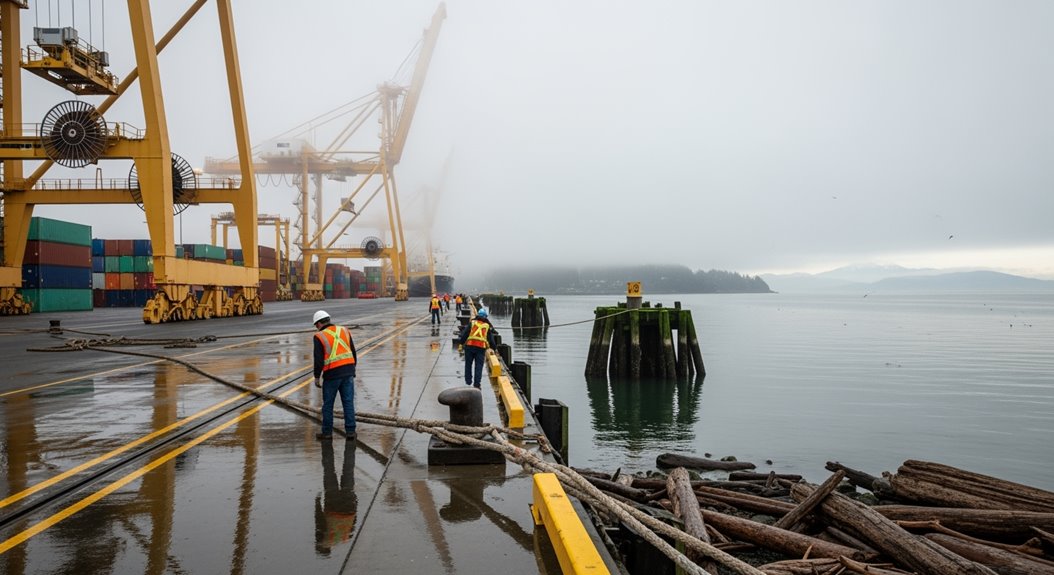
The Longshore and Harbor Workers’ Compensation Act kicks in when you’re injured while working on or near navigable waters in the United States. This federal law covers dock workers, longshoremen, ship repairers, and harbor construction workers.
Coverage limits extend to injuries occurring on piers, wharves, dry docks, terminals, and adjoining areas used for maritime work. The Act provides medical benefits, disability compensation, and vocational rehabilitation without caps on medical expenses.
Excluded injuries include those resulting from intoxication, willful misconduct, or intentional self-harm. Understanding your coverage rights guarantees you receive full compensation when maritime work activities cause your injury. Covered disability benefits may include TTD, TPD, PPD, or PTD, which are based on your average weekly wage at the time of injury.
Who Qualifies for LHWCA Benefits?
Qualifying for LHWCA benefits boils down to two essential tests: the status test and the situs test. Your employment status must show you’re a maritime employee, not a seaman covered by the Jones Act. The situs test examines where your injury occurred, specifically, whether it happened on navigable waters or adjoining areas like docks, piers, or terminals used in maritime operations.
Meeting both eligibility criteria is essential. You’ll need to demonstrate your work directly relates to maritime activities and that your injury happened in a covered location. These requirements determine whether you’re entitled to benefits. Under the LHWCA, covered sites also include dry docks, shipyards, and marine railways where vessel loading, unloading, repairing, dismantling, or building occurs.
How Does LHWCA Differ from Other Maritime Laws?
Understanding your eligibility under LHWCA is only part of the picture, maritime law includes several different statutes, each designed for specific types of workers and situations. The Jones Act covers seamen injured aboard vessels, while LHWCA protects harbor workers and longshoremen working on navigable waters.
Comparative jurisdiction between these laws determines which statute applies to your case. Statutory preemption prevents you from filing under multiple maritime laws simultaneously, making proper classification critical.
You might qualify under the Defense Base Act if you’re working overseas on military contracts. Each statute offers different benefits and procedural requirements affecting your compensation.
Major Ports and Maritime Facilities in Oregon
Port of Portland
The Port of Portland serves as Oregon’s largest maritime facility, strategically positioned along the Columbia and Willamette Rivers. Major companies operating at this facility include grain exporters, automobile importers, and various shipping lines that utilize the port’s four distinct terminals. The facility serves diverse industries including agricultural exports, automotive imports, breakbulk cargo, and containerized shipping operations.
The Port of Portland moves over 17 million tons of cargo annually across its terminal network. The facility supports thousands of longshore workers and related maritime employment positions throughout the region. Recent infrastructure investments have focused on modernizing terminal equipment and improving cargo handling efficiency. The port generates significant economic impact for the Portland metropolitan area and contributes substantially to Oregon’s international trade operations. The U.S. Maritime Administration’s resource hub lists the Port of Portland among its principal port resources, providing official contacts and operational information.
Port of Coos Bay
The Port of Coos Bay operates along Oregon’s southern coast, providing deep-water access for maritime commerce. The facility hosts timber exporters, bulk cargo handlers, and shipping companies serving Pacific Rim trade routes. Primary industries include forest products exports, bulk commodities, and regional shipping services.
The Port of Coos Bay processes nearly 2 million tons of cargo yearly. The facility employs longshore workers and maritime personnel to support its cargo operations. The port has pursued infrastructure improvements to accommodate larger vessels and expand cargo capacity. Economic contributions include supporting local employment and facilitating regional export activities.
Port of Newport
The Port of Newport is located on Oregon’s central coast, serving as a hub for commercial fishing and maritime support services. Fishing companies, seafood processors, and vessel repair operations maintain significant presence at this facility. The port specializes in commercial fishing fleet support, seafood processing, vessel maintenance, and marine research activities.
The facility supports Oregon’s commercial fishing industry through its extensive dock infrastructure and vessel service capabilities. Workforce statistics include longshore workers, commercial fishermen, and maritime service personnel. The port has invested in modernizing its fishing fleet infrastructure and expanding research vessel accommodation. Economic impact stems from commercial fishing operations, seafood processing, and tourism-related maritime activities.
Port of Astoria
The Port of Astoria operates at the mouth of the Columbia River in northwestern Oregon. Shipping companies, cold storage facilities, and maritime service providers utilize the port’s strategic location. Industries served include cargo handling, cold storage operations, marine construction, and vessel services.
The facility contributes to regional cargo movement and maritime commerce. Employment includes longshore workers and maritime support personnel across various operations. Infrastructure development has focused on pier improvements and expanding cargo handling capabilities. The port generates economic benefits through cargo operations, commercial activities, and supporting maritime industries.
Port of Columbia County
The Port of Columbia County is situated along the lower Columbia River corridor. Industrial manufacturers, logistics companies, and barge operators maintain operations at this facility. The port serves manufacturing, bulk cargo handling, barge transportation, and industrial development sectors.
Cargo volumes include bulk commodities and industrial materials moving through the facility. The workforce encompasses longshore workers and industrial employees supporting port-related operations. Port investments have targeted industrial site development and transportation infrastructure enhancements. Economic impact includes job creation, industrial development, and supporting regional supply chain operations.
Port of Toledo
The Port of Toledo is located on Oregon’s central coast along Yaquina Bay. The facility accommodates seafood processors, marine service providers, and commercial operators. Primary services include seafood processing support, vessel maintenance, and small-scale cargo operations.
The port handles specialized cargo and supports commercial fishing operations on a smaller scale. Employment includes longshore workers and maritime service personnel. Infrastructure improvements have focused on dock facilities and vessel accommodation capabilities. Economic contributions include supporting local fishing industries, maritime services, and coastal tourism activities.
Common Longshore and Dock Worker Accidents in Oregon
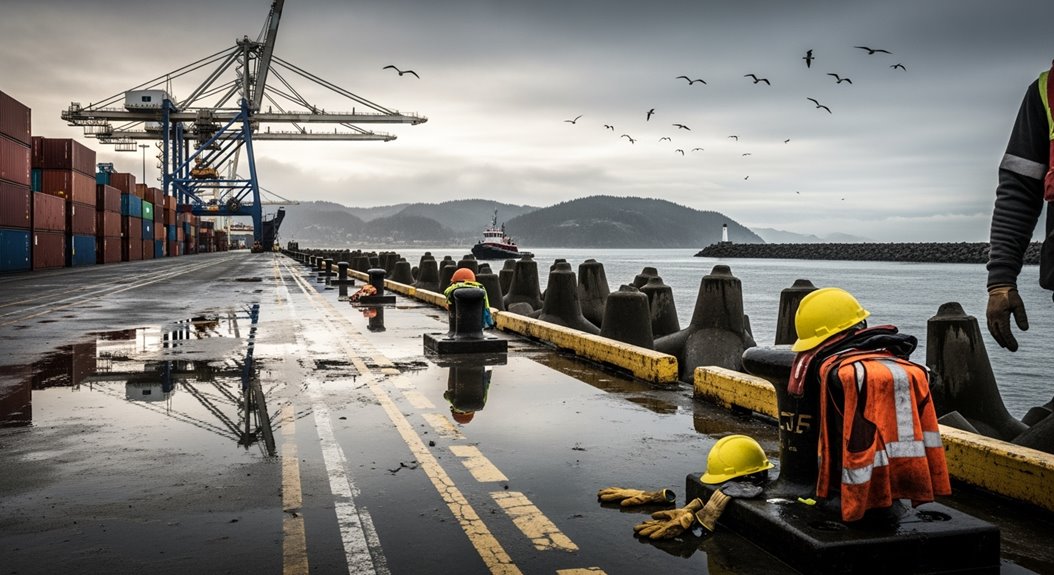
While Oregon’s maritime facilities drive substantial economic activity through their ports, the demanding nature of longshore and dock work exposes workers to serious hazards daily. Understanding these risks helps injured workers recognize when they need legal representation.
The most frequent accidents include:
- Transportation incidents involving vehicle collisions, forklift accidents, and pedestrian strikes, which caused 46% of Oregon’s fatal work injuries in 2019
- Falls from heights on cranes, gangways, or cargo stacks
- Contact with dock equipment resulting in struck-by, caught-in, or crushing injuries
- Slips and trips during shift hazards like wet surfaces or poorly maintained walkways
According to federal data, the BLS CFOI reports that transportation incidents are a leading cause of fatal injuries across industries, with event/exposure totals highlighting their prevalence in 2022.
Longshore and Port Worker Injury Statistics in Oregon
Beyond the visible activity at Oregon’s maritime facilities, workplace injury data reveals concerning patterns that directly affect longshoremen and port workers. Transportation incidents represent the leading cause of fatalities, accounting for 54% of Oregon’s workplace deaths in 2023. Understanding dockworker demographics and cargo theft impacts helps contextualize these risks:
- Transportation sector recorded 15 fatalities, with truck drivers particularly vulnerable
- Males comprise 87% of workplace fatalities, reflecting industry composition
- Agriculture and transportation industries lead fatal injury counts across consecutive years
- Violence-related deaths reached 22%, exceeding the 14% national average
These statistics underscore the serious hazards maritime workers face daily. Additionally, federal offshore safety oversight requires reporting of all fatalities under 30 CFR 250.188, and post-2006 changes to incident reporting criteria can affect how trends are compared across years.
Insurance companies know our reputation. They know we prepare every case for trial and we’ll go the distance when settlement offers fall short. We investigate thoroughly, build bulletproof cases, and aren’t afraid to take yours to court. That changes negotiations from the start.
Anytime. Anywhere. We’re Ready to Fight for You.
Compensation Available for Longshoremen in Oregon
If you've suffered an injury while working in Oregon's ports or maritime facilities, you're entitled to specific benefits under the Longshore and Harbor Workers' Compensation Act.
These benefits cover far more than just your immediate medical bills. Understanding what compensation you can recover, including medical treatment, wage replacement, death benefits for families, and potential additional damages, helps you protect your financial future during recovery.
Medical Benefits
Medical treatment under the Longshore and Harbor Workers' Compensation Act consistently provides injured Oregon longshoremen with all-inclusive healthcare coverage at no out-of-pocket cost. You'll receive coverage for doctor visits, surgeries, physical therapy, and specialist consultations necessary for your recovery.
Emergency transport by ambulance to medical facilities is fully covered when your injury requires immediate attention. The Act also includes thorough prescription coverage for all medications your physician deems medically necessary for treating your work-related condition. Insurance carriers must pay for your medical care directly, ensuring you won't face bills or financial barriers while recovering from your workplace injury.
Disability Benefits
When your longshore injury prevents you from working, the Longshore and Harbor Workers' Compensation Act provides wage replacement benefits calculated as two-thirds of your average weekly wage. These disability payments continue throughout your recovery period, with different rates depending on whether your condition is temporary or permanent, partial or total. The law establishes specific disability timelines that determine when benefits begin and how long they last.
If you can't return to your previous position, you may qualify for vocational rehabilitation services to help you shift to suitable alternative employment. Understanding these benefit calculations guarantees you receive appropriate compensation.
Death Benefits
Although no amount of money can replace a lost loved one, the Longshore and Harbor Workers' Compensation Act provides death benefits to surviving family members when a maritime worker dies from a work-related injury or illness.
These benefits include survivor support payments, typically two-thirds of the deceased worker's average weekly wage, distributed to eligible dependents like spouses and children.
The Act also covers funeral expenses up to $3,000, helping families manage immediate costs during an already difficult time. If you've lost a family member in a maritime workplace accident, you're entitled to pursue these critical benefits through the Longshore Act's protections.
Additional Damages
Beyond death benefits, Oregon longshoremen injured on the job can access several compensation categories under the Longshore and Harbor Workers' Compensation Act. You're entitled to medical benefits covering all treatment costs, temporary and permanent disability payments based on your injury's severity, and vocational rehabilitation if you can't return to your previous position.
While the Longshore Act doesn't provide punitive damages or compensation for emotional distress like personal injury lawsuits, the available benefits often exceed standard workers' compensation. Understanding these options helps you pursue full compensation. Grossman Attorneys at Law can explain which benefits apply to your specific situation.
Statute of Limitations for Filing a LHWCA Claim
If you've suffered a workplace injury as a longshoreman or maritime worker in Oregon, understanding the strict deadlines for filing your Longshore and Harbor Workers' Compensation Act claim can mean the difference between receiving full compensation and losing your rights entirely.
You must notify your employer within 30 days of your injury and file your formal claim within one year. These filing deadlines are firm, with limited exceptions. Statute nuances can affect your case, particularly if your injury developed gradually or symptoms appeared later. Missing these deadlines typically results in permanent loss of benefits, making immediate legal consultation essential.
Get Results
Each one of our lawyers is a skilled and experienced litigator and negotiator. We never recommend settling your case when trial presents a better opportunity for recovery.



Why Do I Need a Longshoremen Workers Comp Injury Lawyer?
Maneuvering the LHWCA claims process alone puts you at a significant disadvantage against experienced insurance companies and their legal teams. A specialized longshore attorney understands evidence preservation requirements, ensuring critical documentation of your injuries and workplace conditions doesn't disappear.
Your lawyer develops a thorough appeal strategy if your claim faces denial, navigating complex federal procedures most general practitioners don't understand. Insurance carriers often offer lowball settlements to unrepresented workers, knowing most won't recognize the full value of their claims. An experienced attorney levels the playing field, protecting your rights while you focus on recovery and returning to work.
Why Choose Grossman Attorneys for Your Oregon LHWCA Claim
When you're injured on the job as a maritime worker in Oregon, you need attorneys who won't back down from insurance companies or accept lowball settlements. Grossman Attorneys at Law brings over 40 years of specialized LHWCA experience to your case, with a proven track record of securing multi-million-dollar recoveries for injured longshoremen and harbor workers.
Our admiralty attorneys have secured substantial settlements and verdicts in cases ranging from Defense Base Act claims to longshoremen workers' comp injury cases and offshore accidents. We understand the complex laws that govern these claims and stand ready to take your case to trial when insurance companies fail to offer the fair compensation you deserve.
Aggressive But Fair Representation
Maritime insurance companies and their defense teams know exactly which law firms will fight for full compensation and which will settle quickly for less.
Grossman Attorneys has built its reputation on Assertive Negotiation backed by genuine courtroom experience. You'll benefit from attorneys who push aggressively for maximum compensation while maintaining professional relationships that facilitate productive discussions.
This Balanced Advocacy approach means fighting hard without creating unnecessary conflicts that could delay your benefits. Defense lawyers respect firms with trial credentials, and that respect translates into better settlement offers. You need representatives who won't accept inadequate compensation simply to close cases quickly.
Experienced, Compassionate Staff
Beyond courtroom skills and negotiation tactics, your longshore claim requires a legal team that treats you as a person, not a case number. At Grossman Attorneys, our trained advocates understand the financial strain and uncertainty you're facing after a workplace injury.
From empathetic intake through case resolution, our staff maintains regular communication about your claim's progress. We'll explain complex maritime law provisions in straightforward terms, return your calls promptly, and address your concerns thoroughly. You'll work with professionals who combine decades of legal experience with genuine compassion for injured workers navigating the LHWCA system.
A Track Record of Winning Longshore Claims
Although past results don't guarantee future outcomes, they reveal how consistently a firm fights for injured workers and whether they'll settle for less than you deserve. Grossman Attorneys has secured numerous multi-million-dollar settlements through proven litigation strategies that insurance companies respect.
Client testimonials consistently highlight the firm's refusal to accept lowball offers and commitment to maximum compensation. With over 40 years of experience handling complex Longshore claims nationwide, the firm's track record demonstrates their capability to take cases to trial when necessary. Defense attorneys recognize Grossman's thorough preparation and courtroom success, which often leads to stronger settlement negotiations.
Injured at a Oregon Port? Let Grossman Attorneys Fight for Your LHWCA Compensation
If you or a loved one has suffered an injury while working at an Oregon port, you don't have to navigate the complex LHWCA claims process alone. Grossman Attorneys at Law has spent over four decades fighting for injured maritime workers nationwide, securing the maximum compensation our clients deserve.
We recognize the financial strain that workplace injuries create for you and your family, and we're prepared to take your case all the way to trial if necessary. Insurance companies know our reputation for thorough preparation and refusing inadequate settlements.
Don't let them minimize your claim or deny you the benefits you've earned. Contact Grossman Attorneys today to speak with an experienced LHWCA attorney who'll fight tirelessly for your rights.
*If you hire Grossman Attorneys for your LHWCA case, you pay no attorney fees for our service. When we win your case, the employer or its insurer typically pays a DOL-approved attorney’s fee and any case expenses we advanced are reimbursed from the recovery. If we don't win, you pay nothing.
- https://www.portofportland.com/marine
- https://www.portofnewport.com/port-facilities
- https://www.portofcoosbay.com
- https://en.wikipedia.org/wiki/Port_of_Portland_(Oregon)
- http://cdn.portofportland.com/pdfs/Mar_Facility_Brochure.pdf
- https://www.portofastoria.com
- https://www.portofcolumbiacounty.org/discover-port
- https://www.oregonports.com/oregon-ports
- https://www.newportoregon.gov/dept/cdd/documents/Ch5g_Port_Facilities.pdf
- https://www.bls.gov/regions/west/news-release/2021/fatalworkinjuries_oregon_20210406.htm