


Top Rated Maine Longshoreman injury Law Firm – Grossman Attorneys
If you were injured while loading cargo, repairing vessels, or working on the docks in Portland, Bath, Searsport, or anywhere along Maine’s waterfront, you need an attorney who understands federal maritime law. The Longshore and Harbor Workers’ Compensation Act covers your injury, not state workers’ comp, and the claims process is complex. Deadlines are strict, insurers often deny valid claims, and one mistake can cost you the benefits you deserve.
Grossman Attorneys at Law has spent years helping longshoremen and harbor workers secure maximum compensation under the LHWCA. We know how to build strong cases, negotiate aggressively with insurance companies, and take your claim to trial when settlement offers fall short. You focused on doing a dangerous job to support your family. Now let us fight for the medical care and lost wages you need to recover. Call today for a free consultation. We’re here to help you move forward.
Understanding the Longshore and Harbor Workers’ Compensation Act (LHWCA)
If you’ve been injured while working on Maine’s docks, waterfronts, or harbor facilities, the Longshore and Harbor Workers’ Compensation Act (LHWCA) likely protects you. This federal law provides specific benefits and legal protections for maritime workers that differ markedly from standard workers’ compensation and other maritime injury laws.
Understanding what LHWCA covers, whether you qualify for benefits, and how it compares to other maritime legal options is essential to securing the full compensation you deserve after a workplace accident.
You can also review recent decisions and appeal procedures through the Department of Labor’s Benefits Review Board, which provides guidance on appeals information and published decisions relevant to LHWCA claims.
What is LHWCA Coverage?
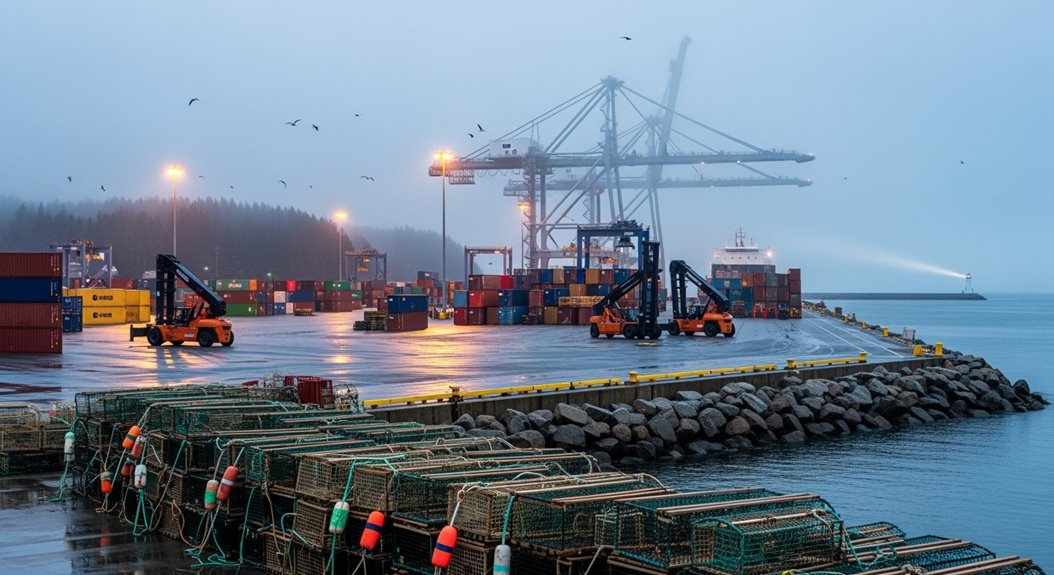
Working on the docks, loading ships, or performing maritime construction along Maine’s waterfront puts you under federal protection through the Longshore and Harbor Workers’ Compensation Act (LHWCA). This coverage scope extends to injuries occurring on navigable waters or adjoining areas like piers, terminals, and shipyards.
You’re protected whether you’re repairing vessels, handling cargo, or building maritime structures. However, maritime exclusions apply to certain workers.
If you’re a seaman covered under the Jones Act or a master or crew member of a vessel, you’ll fall outside LHWCA coverage and under different maritime laws instead. Under the LHWCA, covered workers may receive medical benefits and wage loss compensation administered by the OWCP and DLHWC.
Who Qualifies for LHWCA Benefits?
Your eligibility for LHWCA benefits hinges on two critical tests: your job status and your work location. The employment status requirement means you must be an employee, not an independent contractor. You’ll need to show your employer controlled your work duties and schedule.
The eligibility criteria also demand that your injury occurred on navigable waters or in adjoining areas used for maritime activities. This includes piers, docks, terminals, and shipyards. Covered areas also include dry docks, marine railways, and other adjoining locations customarily used for vessel loading, unloading, repairing, dismantling, or building.
Maine’s extensive coastline and busy ports mean many workers qualify for LHWCA coverage. Meeting both tests establishes your right to benefits under federal maritime law.
How Does LHWCA Differ from Other Maritime Laws?
Understanding which maritime law applies to your case determines the benefits you’ll receive and the legal process you’ll follow. The LHWCA provides no-fault workers’ compensation benefits, meaning you don’t need to prove employer negligence.
In contrast, the Jones Act requires seamen to prove negligence for recovery. General maritime law offers comparative jurisdiction in some cases, allowing injured workers multiple recovery options.
The LHWCA’s remedial purpose focuses on providing medical care and wage replacement benefits regardless of fault. This distinction matters markedly because it affects your available compensation, legal burden of proof, and case strategy.
Major Ports and Maritime Facilities in Maine
Port of Portland
Located in Casco Bay along Maine’s southern coast, the Port of Portland serves as the state’s largest seaport and a critical hub for New England maritime commerce. Major operators include Sprague Energy, Portland Yacht Services, International Marine Terminal, and Maine Port Authority. The facility handles diverse cargo including petroleum products, bulk salt, gypsum, wood pulp, scrap metal, and container shipments, while supporting commercial fishing, ferry services, and cruise ship operations.
The port processes approximately 20 million tons of cargo annually, ranking as New England’s second-busiest tonnage facility. Its workforce includes over 2,000 direct maritime employees across nine operating terminals spanning 200 acres of port infrastructure. Recent investments exceeding $30 million have upgraded container handling capabilities, refrigerated storage facilities, and intermodal rail connections. The port generates an estimated $1.4 billion in annual economic impact for the greater Portland region.
As part of national maritime datasets, Portland’s facilities and terminals are represented within the Port Feature Class, alongside River Mile Markers and the National Waterway Network used for commerce analysis.
Mack Point Marine Terminal (Searsport)
Situated on Penobscot Bay in mid-coast Maine, this deep-water facility in Searsport operates as the state’s primary bulk cargo terminal. Sprague Energy maintains significant operations here, alongside facilities managed by Maine Port Authority focusing on energy products, wood pellets, salt, and construction materials. The terminal has become increasingly important for offshore wind development staging and assembly operations.
The Searsport terminal handles approximately 3 million tons of cargo annually with berthing capacity for Panamax-class vessels drawing up to 45 feet. The facility employs roughly 150-200 maritime workers and supports hundreds of indirect jobs throughout Waldo County. Recent infrastructure investments of $12 million have enhanced heavy-lift capabilities and expanded laydown areas for project cargo, contributing approximately $100 million annually to the regional economy.
Port of Eastport
Located at the easternmost point of the United States along Passamaquoddy Bay, Eastport provides the deepest natural harbor on the U.S. East Coast with direct access to international shipping lanes. The facility supports aquaculture operations, commercial fishing fleets, seafood processing companies, and serves as a strategic location for project cargo and heavy equipment. Major tenants include fishing cooperatives, cold storage operators, and maritime service providers.
The port maintains water depths exceeding 60 feet at low tide and handles approximately 500,000 tons of cargo annually, primarily seafood products and specialized project shipments. Employment ranges from 75-100 direct maritime workers, with seasonal variations tied to fishing operations. The facility contributes an estimated $40-50 million annually to Washington County’s economy, with ongoing discussions regarding expansion for offshore wind and aquaculture support services.
Bangor Waterfront
Positioned along the Penobscot River approximately 30 miles inland from the coast, the Bangor waterfront provides barge and limited cargo vessel access serving central and northern Maine. Operations include wood products shipping, petroleum distribution, and maritime service facilities. The City of Bangor manages much of the waterfront infrastructure alongside private terminal operators.
Bangor’s maritime facilities handle approximately 200,000-300,000 tons of cargo annually, primarily bulk liquids and forest products. The waterfront employs 30-50 maritime workers directly, with significant economic linkages to inland transportation and distribution networks. Recent waterfront redevelopment initiatives have balanced commercial maritime operations with recreational and tourism infrastructure, contributing approximately $15-20 million annually to the regional economy.
Bar Harbor Ferry Terminal and Cargo Facility
Located on Mount Desert Island, Bar Harbor serves primarily as a passenger ferry terminal connecting to Canadian maritime provinces, while maintaining limited cargo handling capabilities for island supply chains. The facility supports tourism-related maritime services, commercial fishing operations, and island logistics. Bar Island Ferry Company and commercial fishing operators comprise the primary maritime businesses.
The facility processes approximately 150,000 ferry passengers annually alongside 50,000-75,000 tons of island cargo, primarily provisions and construction materials. Direct maritime employment ranges from 40-60 workers, expanding significantly during peak tourism seasons. The terminal’s economic impact reaches approximately $10-15 million annually, serving as a critical lifeline for island communities and supporting Bar Harbor’s tourism economy.
Port of Rockland
Situated on Rockland Harbor in Knox County, this mid-coast facility serves as a working waterfront supporting commercial fishing, ferry services to island communities, and limited cargo operations. FMC Corporation operates a lime processing facility utilizing the port, while numerous fishing companies, boatyards, and marine service providers maintain operations. The port also serves as a cruise ship destination and supports Maine’s lobster industry infrastructure.
Rockland’s port facilities handle approximately 500,000-750,000 tons of cargo and materials annually, including limestone, fishing industry supplies, and island freight. Maritime employment totals roughly 200-250 workers across commercial fishing, cargo handling, and marine services. The port contributes an estimated $75-100 million annually to Knox County’s economy, serving as the region’s economic anchor and maintaining Maine’s maritime heritage.
Port of Belfast
Located on Penobscot Bay, the Belfast waterfront combines working port infrastructure with municipal marina facilities and commercial fishing operations. Front Street Shipyard operates a significant yacht service and refit facility, while general cargo terminals handle bulk materials, aquaculture supplies, and project cargo. The city-owned Belfast Harbor provides berthing for commercial vessels and fishing fleets.
The port handles approximately 100,000-150,000 tons of cargo annually with a maritime workforce of 75-100 employees across various sectors. Recent waterfront investments exceeding $5 million have improved pier infrastructure and expanded boat building facilities. The port generates approximately $25-30 million in annual economic impact for Belfast and Waldo County, balancing industrial maritime uses with recreational boating and tourism services.

Common Longshore and Dock Worker Accidents in Maine
Maine’s bustling ports and marine terminals create workplaces where longshoremen and dock workers face constant physical danger. Despite weather readiness protocols and hazard signage, accidents remain disturbingly common. You’re exposed to risks that can result in catastrophic injuries requiring immediate medical attention and long-term care. Under federal safety rules, employers at marine terminals must follow OSHA standards specific to longshoring and terminal operations to mitigate these hazards. The most frequent accidents include:
- Struck-by incidents involving forklifts, trucks, and cargo-handling equipment in congested dock spaces
- Slip and fall accidents on wet decks, uneven surfaces, and poorly maintained walkways
- Falling cargo injuries from improperly secured loads and rigging failures
- Cold exposure injuries including hypothermia and frostbite during harsh Maine winters
Longshore and Port Worker Injury Statistics in Maine
Every year, thousands of maritime workers across Maine face workplace injuries that disrupt their livelihoods and test their families’ financial stability. Understanding these statistics helps you recognize patterns that affect port safety and worker demographics:
- Maine recorded 4.2 workplace injuries per 100 workers in 2023, reflecting a 14% decrease from the previous year
- Transportation and material moving occupations lead all injury claims, despite recent workforce reductions
- First-year employees account for 36% of all workplace injuries and 34% of total claim costs
- Injured workers miss an average of 80 workdays, markedly impacting household income
OSHA highlights common longshoring hazards, including fall protection, struck-by and caught-between incidents, and equipment operation risks, emphasizing targeted safety resources for marine terminals.
Insurance companies know our reputation. They know we prepare every case for trial and we’ll go the distance when settlement offers fall short. We investigate thoroughly, build bulletproof cases, and aren’t afraid to take yours to court. That changes negotiations from the start.
Anytime. Anywhere. We’re Ready to Fight for You.
Compensation Available for Longshoremen in Maine
When you're injured while working at Maine's ports or harbors, the Longshore and Harbor Workers' Compensation Act provides specific categories of benefits designed to address your financial and medical needs.
These benefits go beyond basic workers' compensation and include coverage for medical treatment, various forms of disability payments, survivor benefits for families, and in some cases, additional damages when employers act negligently.
Understanding what compensation you're entitled to receive can help you evaluate whether settlement offers from insurance carriers truly reflect the full value of your claim.
Medical Benefits
Under the Longshore and Harbor Workers' Compensation Act, injured maritime workers receive thorough medical coverage for workplace injuries without the restrictions that typically limit state workers' compensation claims. You're entitled to all reasonable and necessary medical treatment, including surgeries, physical therapy, and specialist consultations.
The Act also provides telehealth coverage for remote medical appointments, ensuring you can access care regardless of location. Your employer's insurance carrier maintains prescription oversight to approve necessary medications. You won't face copays or deductibles for approved treatment. If disputes arise about medical necessity, you can request an independent medical examination to support your claim.
Disability Benefits
As a longshoreman injured on the job in Maine, you'll receive compensation for lost wages through disability benefits that replace a portion of your income while you recover. The Longshore Act provides temporary or permanent disability payments based on your injury's severity and duration.
These benefits typically equal two-thirds of your average weekly wage, tax-free. If you can't return to your previous position, you're entitled to vocational rehabilitation services to help you develop new job skills. Unlike private disability insurance, Longshore benefits continue as long as your work-related disability persists, with no arbitrary time limits on your recovery.
Death Benefits
If a workplace accident claims the life of a longshoreman in Maine, the Longshore and Harbor Workers' Compensation Act provides substantial death benefits to surviving family members who depended on the worker's income.
These survivor benefits typically include two-thirds of the deceased worker's average weekly wage, paid to eligible dependents. Spouses generally receive benefits until remarriage, while dependent children receive support until age eighteen or longer if disabled.
The Act also covers funeral expenses up to $3,000. Wrongful death claims under the Longshore Act guarantee families aren't left financially devastated after losing their primary wage earner to a preventable workplace tragedy.
Additional Damages
Beyond basic workers' compensation benefits, Maine longshoremen can't pursue additional damages like pain and suffering or punitive damages through the Longshore Act itself—the Act provides exclusive remedy for most workplace injuries.
However, you might recover punitive damages and emotional distress compensation if a third party caused your accident. For example, if a negligent equipment manufacturer or contractor contributed to your injuries, you could file a separate lawsuit outside the Longshore system.
These third-party claims aren't limited by workers' compensation restrictions, allowing you to seek full damages including pain, suffering, and emotional harm. We'll evaluate all potential claims.
Statute of Limitations for Filing a LHWCA Claim
Time limits matter materially when filing a Longshore and Harbor Workers' Compensation Act claim, and missing these deadlines can permanently eliminate your right to compensation. You must report your injury within 30 days and file your claim within one year of the accident or from when you first learned your condition was work-related.
These filing deadlines are strict, though certain circumstances allow claim tolling—temporary pausing of the time limit. Exceptions exist for circumstances beyond your control, but relying on extensions is risky. Contacting an experienced attorney immediately after your injury protects your rights and guarantees compliance with all procedural requirements.
Get Results
Each one of our lawyers is a skilled and experienced litigator and negotiator. We never recommend settling your case when trial presents a better opportunity for recovery.



Why Do I Need a Longshoremen Workers Comp Injury Lawyer?
Although the Longshore and Harbor Workers' Compensation Act exists to protect injured maritime workers, negotiating its complex requirements without experienced legal representation puts your financial recovery at serious risk. Insurance carriers employ teams of lawyers who understand how to minimize payouts. They'll use technical procedural requirements and strict deadlines against you.
An attorney specializing in LHWCA claims levels the playing field. Your lawyer handles benefits negotiation, ensuring you receive maximum compensation for medical treatment, lost wages, and permanent disability. They'll counter lowball settlement offers and, when necessary, take your case to trial. Legal representation transforms complicated maritime law into results.
Why Choose Grossman Attorneys for Your Maine LHWCA Claim
When you're injured on the job as a maritime worker in Maine, selecting the right legal representation can mean the difference between a quick settlement that falls short and the full compensation you deserve.
Grossman Attorneys at Law is a respected maritime law firm with over 40 years of experience representing injured workers across the nation. Our maritime attorneys have secured substantial settlements and verdicts in cases ranging from Defense Base Act claims to longshoremen workers' comp injury cases and offshore accidents. We understand the complex laws that govern these claims and stand ready to take your case to trial when insurance companies fail to offer the fair compensation you deserve.
Aggressive But Fair Representation
Insurance companies and employers know when they're facing an attorney who'll fight for every dollar you deserve. Our tough negotiation approach means we won't accept lowball settlement offers that undervalue your claim.
We prepare every case as if it's going to trial, and defense attorneys recognize this commitment. However, aggressive representation doesn't mean scorched-earth tactics. Our ethical advocacy guarantees we pursue maximum compensation through principled legal strategies, not empty threats. We'll push hard at the negotiating table while maintaining the professional credibility that makes our trial reputation so effective when settlement discussions stall.
Experienced, Compassionate Staff
Behind every successful longshore claim stands a team that combines deep legal knowledge with genuine concern for injured workers and their families. Our staff receives regular empathy training to understand what you're experiencing during this difficult time. We recognize that your injury affects every aspect of your life, from medical bills to family finances.
Team continuity means you'll work with the same dedicated professionals throughout your case. You won't need to repeatedly explain your situation to different people. This consistency builds trust and guarantees nothing falls through the cracks as your claim progresses toward maximum compensation.
A Track Record of Winning Longshore Claims
Our proven results speak louder than any promise we could make. We've secured numerous multi-million-dollar settlements and trial victories for injured maritime workers throughout our 40 years of practice.
When insurance companies recognize your attorney's name and courtroom reputation, they're more likely to offer fair compensation. Our client testimonials reflect not just financial recoveries, but the peace of mind that comes from having aggressive advocates in your corner.
We've successfully litigated against Fortune 500 companies and major carriers, proving we won't back down from any opponent, regardless of their resources or legal teams.
Injured at a Maine Port? Let Grossman Attorneys Fight for Your LHWCA Compensation
If you or a loved one has been injured while working at a Maine port, you don't have to navigate the complex LHWCA claims process alone. Grossman Attorneys at Law has spent over four decades fighting for injured maritime workers nationwide, securing the maximum compensation our clients deserve. Insurance carriers and defense attorneys know we're prepared to take cases to trial when settlement offers fall short.
Our litigation-first approach and proven track record have established us as one of the nation's premier longshore injury law firms. Don't settle for less than full compensation for your injuries, lost wages, and medical expenses. Contact Grossman Attorneys today to speak with an experienced LHWCA attorney who'll fight relentlessly for your rights.
*If you hire Grossman Attorneys for your LHWCA case, you pay no attorney fees for our service. When we win your case, the employer or its insurer typically pays a DOL-approved attorney’s fee and any case expenses we advanced are reimbursed from the recovery. If we don't win, you pay nothing.
- https://www.maineoffshorewind.org/advantages/ports-and-other-offshore-wind-infrastructure-assets/
- https://www.maritime.dot.gov/data-reports/ports/list
- https://www.maine.gov/dot/sites/maine.gov.dot/files/inline-files/MaineDOT MPA PIDP FY23 Grant Application - FINAL (042723).pdf
- https://www.bangormaine.gov/352/Harbor
- https://digitalcommons.usm.maine.edu/me_collection/25/
- https://www.maine.gov/decd/sites/maine.gov.decd/files/2025-05/FINAL_REPORT - TWL - Maine DECD_0.pdf
- https://en.wikipedia.org/wiki/Port_of_Portland_(Maine)
- https://pubmed.ncbi.nlm.nih.gov/31352877/