


Top Rated Illinois Longshoreman injury Law Firm – Grossman Attorneys
If you were injured working on Illinois docks, piers, or navigable waterways, you need an attorney who understands the federal Longshore and Harbor Workers’ Compensation Act. This complex law governs your claim instead of standard workers’ compensation, and the rules, deadlines, and procedures are entirely different. A single misstep can result in a denial that puts your financial recovery at risk.
Grossman Attorneys at Law has extensive experience handling LHWCA claims for longshoremen and harbor workers throughout Illinois. We know how to build strong cases, negotiate aggressively with insurance carriers, and take your claim to trial when fair settlement offers are not on the table. Our track record speaks to our commitment to securing maximum benefits for injured maritime workers.
You’ve dedicated yourself to demanding physical labor. Now let us fight for the compensation you deserve. Contact Grossman Attorneys at Law today for a free consultation about your longshore injury claim.
Understanding the Longshore and Harbor Workers’ Compensation Act (LHWCA)
If you’ve been injured while working on or near Illinois waterways, you need to understand whether the Longshore and Harbor Workers’ Compensation Act (LHWCA) covers your situation.
This federal law provides medical benefits and wage replacement to maritime workers who don’t qualify as traditional seamen, but many injured workers aren’t aware they’ve rights under this specific legislation.
The differences between LHWCA coverage and other maritime laws like the Jones Act can materially affect your compensation, so knowing which law applies to your case is your first critical step toward recovery.
In addition to wage replacement, the LHWCA pays for all medical benefits associated with a covered injury, including prescriptions and travel to medical appointments.

What is LHWCA Coverage?
When you work on navigable waters or in adjoining areas like docks and piers, the Longshore and Harbor Workers’ Compensation Act (LHWCA) provides federal protection that’s distinctly different from standard workers’ compensation. The coverage scope extends to maritime workers injured during employment, including longshoremen, harbor workers, and shipbuilders.
Claimant eligibility requires meeting two tests: your injury must occur on navigable waters or adjoining areas, and your work must involve maritime employment. This federal program offers benefits for medical treatment, lost wages, disability compensation, and vocational rehabilitation. Understanding whether you’re covered determines your path to recovering compensation. Administration and claims processing are handled by the OWCP/DLHWC, and eligibility determinations can be case-specific.
Who Qualifies for LHWCA Benefits?
Determining your eligibility for LHWCA benefits requires satisfying both a location test and an occupational test.
The location test verifies your injury occurred on navigable waters or adjoining areas like docks, piers, terminals, and shipyards. These covered locations must connect to maritime commerce. Covered areas also include dry docks and other adjoining sites customarily used for vessel-related activities under the Longshore Act.
The occupational test examines whether your job duties involve maritime employment, meaning work related to loading, unloading, building, or repairing vessels. You don’t need to work directly on water to qualify. Many warehouse workers, crane operators, and shipyard employees meet these eligibility criteria. Both tests must be satisfied for LHWCA coverage.
How Does LHWCA Differ from Other Maritime Laws?
The LHWCA operates as a workers’ compensation system specifically designed for maritime employees, which means it functions differently from the Jones Act and general maritime law that govern other water-based workers.
Under LHWCA, you’ll receive predetermined benefits without proving employer negligence, unlike Jones Act seamen who must establish fault. The comparative jurisdiction between these laws depends on your job duties and work location.
Understanding this compensation interplay matters because it determines your available remedies. LHWCA typically provides medical coverage and wage replacement, while Jones Act claims may yield higher damages through jury verdicts when negligence exists.
Major Ports and Maritime Facilities in Illinois
Illinois International Port District
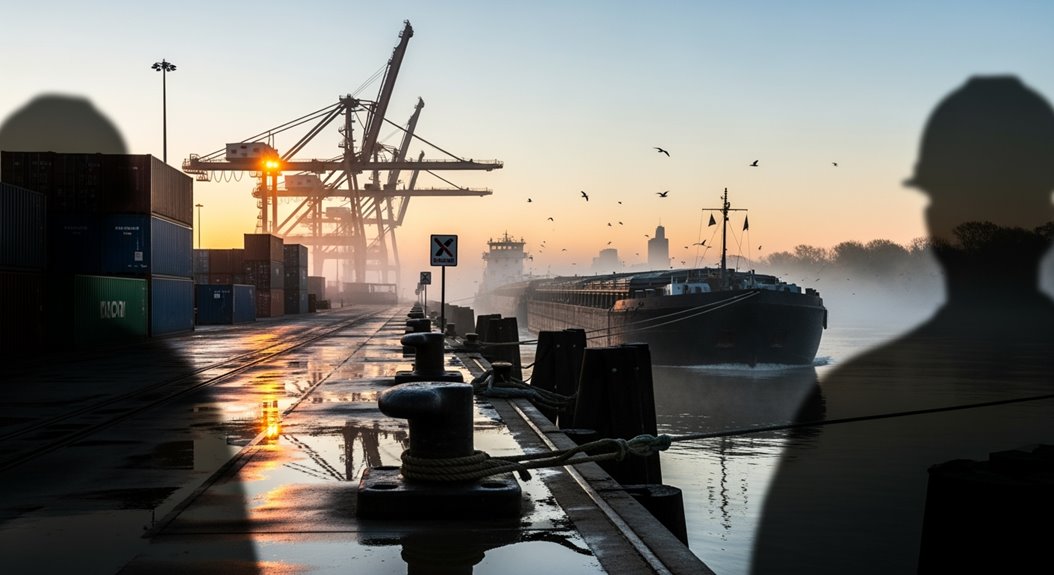
Located in South Chicago on the city’s southeast side, the Illinois International Port District serves as the state’s primary maritime gateway to international trade.
The district operates the Iroquois Landing Terminal and Senator Dan Dougherty Harbor, which connect to three interstate highways and extensive rail networks.
Major cargo handling operations and logistics companies utilize these facilities to move freight between Great Lakes vessels and inland transportation networks. The port supports bulk material handling, general cargo operations, and intermodal transfer services. The port complex spans 1,600 acres at the junction of the Grand Calumet and Little Calumet Rivers, providing 3,000 linear feet of berthing space for vessel operations.
The facilities handle significant freight tonnage annually, employing thousands of longshore workers and related maritime personnel. The district’s strategic location and multimodal connectivity generate substantial economic impact for the Chicago region, supporting jobs in cargo handling, warehousing, transportation, and related industries. Infrastructure investments continue to enhance the port’s capacity to serve as a critical node in Great Lakes and inland waterway commerce.
For contact details and additional port resources, the MARAD provides a compiled directory of port authority contacts and principal port resources.
Common Longshore and Dock Worker Accidents in Illinois
Working along Illinois’s bustling docks and port facilities exposes longshore workers to hazards that can result in life-altering injuries within seconds.
You face daily risks from slippery surfaces, falling cargo, and hazardous chemical exposure during loading operations.
Common accidents include:
- Slip and fall incidents from wet decks and inadequate lighting improvements during shift changes
- Struck-by injuries from swinging crane loads and unsecured containers
- Chemical exposure from fuel spills and toxic cargo residues
- Overexertion injuries from repetitive lifting without proper dock ergonomics
These preventable accidents often stem from employer negligence and inadequate safety protocols.
OSHA’s marine terminal standards require employers to implement hazard assessments, training, and equipment safeguards to reduce these risks under the OSHA Compliance Guide for Marine Terminals and Longshoring.
Longshore and Port Worker Injury Statistics in Illinois
Illinois longshore and port workers face serious dangers every shift, yet precise injury statistics for this workforce remain frustratingly difficult to pinpoint.
State data groups maritime workers with broader transportation categories, obscuring the true risks you face.
Maritime underreporting compounds this problem, as injured workers sometimes avoid filing claims fearing job loss, particularly within seasonal workforce populations.
National workplace fatality data reveals critical patterns:
- Transportation incidents caused 38% of Illinois work deaths in 2023
- Construction fatalities (25%) mirror physical risks dock workers encounter daily
- Falls and equipment contact injuries dominate physically demanding occupations
- Underreporting suggests actual injury rates exceed official statistics
These gaps mean your workplace dangers often go undocumented.
According to national BLS data, industry-specific nonfatal injury incidence rates are detailed in BLS Table 1, helping illustrate how physically demanding sectors face elevated risks even if Illinois maritime figures are hard to isolate.
Insurance companies know our reputation. They know we prepare every case for trial and we’ll go the distance when settlement offers fall short. We investigate thoroughly, build bulletproof cases, and aren’t afraid to take yours to court. That changes negotiations from the start.
Anytime. Anywhere. We’re Ready to Fight for You.
Compensation Available for Longshoremen in Illinois
When you're injured while working on Illinois docks or ports, the Longshore and Harbor Workers' Compensation Act provides specific categories of benefits designed to address your financial losses and medical needs.
These benefits differ markedly from standard workers' compensation and often provide more extensive coverage for maritime workers.
Understanding what compensation you're entitled to receive helps you recognize whether an insurance company's settlement offer truly reflects the full value of your claim.
Medical Benefits
After suffering a work-related injury, you're entitled to complete medical coverage under the Longshore and Harbor Workers' Compensation Act—and unlike many state workers' compensation systems, there are no arbitrary limits on what treatments you can receive.
Your employer must cover all reasonable and necessary medical care related to your injury, from initial emergency treatment through long-term rehabilitation. If your employer denies medical authorization for recommended procedures, you can challenge these treatment disputes through formal hearings.
Insurance carriers sometimes reject legitimate medical requests to reduce costs, but you don't have to accept inadequate care without fighting back.
Disability Benefits
Because longshore injuries often prevent workers from earning a paycheck, the Longshore and Harbor Workers' Compensation Act provides several categories of disability benefits designed to replace your lost wages while you're unable to work.
Temporary total disability covers periods when you can't work at all during recovery. Permanent partial disability compensates for lasting impairments that reduce your earning capacity. Permanent total disability applies when injuries prevent any future employment. You may also qualify for vocational rehabilitation services to develop new job skills. However, insurers often apply benefit offsets—reductions based on other compensation you receive—which can materially decrease your payments.
Death Benefits
If a longshore work accident proves fatal, the Longshore and Harbor Workers' Compensation Act provides death benefits to compensate surviving family members for their devastating loss.
Survivor benefits typically equal two-thirds of your loved one's average weekly wage, distributed among eligible dependents including spouses and children. The LHWCA also covers funeral expenses up to $3,000 to help with immediate costs during this difficult time. These benefits guarantee your family receives ongoing financial support when you've lost a wage earner. Our attorneys help surviving families navigate the claims process and secure every benefit they're entitled to receive.
Additional Damages
Beyond standard workers' compensation benefits, longshoremen injured in Illinois may pursue additional damages when third parties share responsibility for their accidents.
If a equipment manufacturer, property owner, or contractor's negligence contributed to your injury, you can file a separate personal injury lawsuit. These third-party claims allow you to seek compensation unavailable through workers' compensation, including punitive damages designed to punish reckless behavior and emotional distress damages for psychological harm. You might recover compensation for pain and suffering, loss of enjoyment of life, and full wage losses without statutory caps that typically limit workers' compensation awards.
Statute of Limitations for Filing a LHWCA Claim
When you've suffered a workplace injury as a maritime worker, understanding the time limits for filing your claim can mean the difference between receiving compensation and losing your rights entirely.
The LHWCA imposes strict filing deadlines that you must follow. You have one year from the date of your injury to file your claim, though certain circumstances may extend this period. Missing these statute limitations can permanently bar your claim, regardless of how severe your injuries are. Reporting your injury to your employer within 30 days protects your rights and starts the claims process correctly.
Get Results
Each one of our lawyers is a skilled and experienced litigator and negotiator. We never recommend settling your case when trial presents a better opportunity for recovery.



Why Do I Need a Longshoremen Workers Comp Injury Lawyer?
Maritime injury claims operate under complex federal laws that differ substantially from standard workers' compensation systems, making experienced legal representation essential for protecting your rights.
Insurance companies employ sophisticated defense teams to minimize payouts. Without skilled legal representation, you risk accepting settlements that fail to cover your full medical expenses, lost wages, and future care needs. An experienced Longshore attorney understands federal maritime law nuances, builds compelling evidence, and handles aggressive settlement negotiation tactics.
Your lawyer guarantees proper claim filing, meets critical deadlines, and fights for maximum compensation while you focus on recovery.
Why Choose Grossman Attorneys for Your Illinois LHWCA Claim
When you're facing a Longshore claim in Illinois, you need attorneys who won't back down from insurance companies or accept settlements that shortchange your recovery.
Grossman Attorneys at Law is a respected maritime law firm with over 40 years of experience representing injured workers across the nation. Our maritime litigators have secured substantial settlements and verdicts in cases ranging from Defense Base Act claims to longshoremen workers' comp injury cases and offshore accidents. We understand the complex laws that govern these claims and stand ready to take your case to trial when insurance companies fail to offer the fair compensation you deserve.
Aggressive But Fair Representation
Insurance companies know which law firms will fight for full compensation and which will settle quickly for less. Grossman Attorneys has built its reputation on aggressive advocacy that pushes back against lowball offers and delayed benefits.
You'll benefit from attorneys who thoroughly prepare every case for trial, forcing insurers to take your claim seriously. This approach doesn't mean unreasonable demands. The firm practices fair negotiation, seeking maximum compensation you're entitled to under the law while maintaining professional credibility. Defense attorneys recognize Grossman's willingness to litigate when necessary, which often leads to better settlement offers before trial.
Experienced, Compassionate Staff
Behind every successful case outcome stands a dedicated team that combines technical expertise with genuine concern for injured workers facing financial uncertainty.
Grossman Attorneys' staff understands you're steering medical appointments, reduced income, and complex legal procedures simultaneously. Our experienced advocates guide you through federal maritime law requirements while maintaining compassionate communication throughout your claim.
You'll work with professionals who've handled hundreds of Longshore cases and recognize the stress of fighting insurance carriers. We explain legal developments in straightforward terms, return calls promptly, and treat your case with the urgency it deserves. Your recovery matters as much as your settlement.
A Track Record of Winning Longshore Claims
Results speak louder than promises in longshore litigation, where insurance carriers routinely deny legitimate claims and offer settlements that barely cover ongoing medical expenses. Our firm has secured numerous multi-million-dollar recoveries for injured maritime workers through strategic preparation and aggressive advocacy.
We've developed proven settlement strategies through decades of litigation against Fortune 500 companies and major insurers. Our extensive knowledge of case precedents strengthens every claim we handle. Defense attorneys recognize our willingness to proceed to trial when offers fall short. This reputation consistently produces superior outcomes, ensuring you receive full compensation for your injuries and losses.
Injured at a Illinois Port? Let Grossman Attorneys Fight for Your LHWCA Compensation
If you or a loved one has suffered an injury while working at an Illinois port or waterway, you don't have to face the complex LHWCA claims process alone.
Grossman Attorneys at Law has spent over four decades fighting for the rights of injured maritime workers nationwide, securing the maximum compensation they deserve. Our litigation-first approach means we're prepared to take your case to trial if insurance carriers won't offer fair settlement. Defense attorneys know our reputation for thorough preparation and unwavering courtroom advocacy.
Don't settle for less than full compensation for your injuries, lost wages, and medical expenses. Contact Grossman Attorneys today to speak with an experienced LHWCA attorney who'll fight tirelessly for your rights.
*If you hire Grossman Attorneys for your LHWCA case, you pay no attorney fees for our service. When we win your case, the employer or its insurer typically pays a DOL-approved attorney’s fee and any case expenses we advanced are reimbursed from the recovery. If we don't win, you pay nothing.
- https://www.bts.gov/sites/bts.dot.gov/files/2025-03/BTS_Port-Performance-2025_Annual-Report_for web_20250224-1232.pdf
- https://www.iipd.com/about
- https://idot.illinois.gov/transportation-system/transportation-management/planning/marine-transportation/marine-transportation-data.html
- https://geodata.bts.gov/maps/usdot::principal-ports/about
- https://en.wikipedia.org/wiki/List_of_ports_in_the_United_States
- https://idot.illinois.gov/content/dam/soi/en/web/idot/documents/transportation-system/reports/opp/marine/20170830-UIC-Analysis of the IMTS.pdf
- https://www.arcgis.com/home/item.html?id=aa2da84b41254ac9bf860aa217d815b3
- https://ustradenumbers.com/ports/
- https://www.maritimemagazines.com/marine-news/202403/st-louis-ranked-the-united-states-most-efficient-inland-port/
- https://www.brookings.edu/articles/the-top-10-metropolitan-port-complexes-in-the-u-s/