


Top Rated Pennsylvania Longshoreman injury Law Firm – Grossman Attorneys
If you were injured working at a Pennsylvania port, dock, or shipyard, you need an attorney who understands the federal protections available to longshoremen under the Longshore and Harbor Workers’ Compensation Act. Insurance companies often deny or undervalue claims from maritime workers, leaving you without the benefits you deserve while you recover.
Grossman Attorneys at Law has extensive experience handling LHWCA cases for Pennsylvania port workers. Our team knows how to build strong claims that hold insurers accountable, and we have a proven track record of securing substantial compensation through skilled negotiation. When insurance companies refuse to offer fair settlements, we are fully prepared to take your case to trial.
You focused on doing your job safely. When an accident happened anyway, you deserve an advocate who will fight for your rights and your future. Contact us today for a free consultation about your longshore injury claim.
Understanding the Longshore and Harbor Workers’ Compensation Act (LHWCA)
If you’ve been injured while working on Pennsylvania’s waterways or port facilities, you’re likely covered under the Longshore and Harbor Workers’ Compensation Act (LHWCA), a federal law that provides specific benefits to maritime workers who don’t qualify as traditional seamen.
This specialized compensation system operates differently from Pennsylvania’s state workers’ compensation program and offers distinct advantages for eligible workers. Understanding whether you qualify for LHWCA coverage, what benefits you can receive, and how this law differs from other maritime protections is essential to securing the full compensation you deserve after a workplace injury.
Under the LHWCA, employers must secure coverage through private insurance or self-insurance, and a DOL-administered Special Fund helps pay certain benefits when a responsible employer or insurer cannot.

What is LHWCA Coverage?
When you’ve been injured while working on or near the water in Pennsylvania, understanding whether you’re covered under the Longshore and Harbor Workers’ Compensation Act (LHWCA) can mean the difference between receiving all-inclusive benefits and facing significant medical bills on your own.
The coverage scope extends to workers injured on navigable waters or adjacent areas like piers, docks, and shipyards. Eligible workers include longshoremen, harbor construction workers, ship builders, and ship repairers. Coverage provides medical treatment, wage replacement, and vocational rehabilitation. Private employers with maritime operations must carry this federal insurance to protect their workforce.
Under the LHWCA, compensation can also include death benefits for families when a worker’s death results from a covered injury on navigable waters.
Who Qualifies for LHWCA Benefits?
Understanding coverage basics matters little if you don’t know whether you actually qualify for LHWCA benefits. Eligibility Criteria require two essential elements: your job must involve maritime employment, and your injury must occur on or near navigable waters.
Covered Workers include longshoremen, harbor workers, ship builders, ship repairers, and dock workers who load or unload vessels. In Pennsylvania, this typically means workers at Philadelphia’s ports, Pittsburgh’s river terminals, and Erie’s harbor facilities. Your specific job title matters less than where you work and what maritime tasks you perform when injury strikes.
You also have the right to choose your own treating physician under the LHWCA, though changing doctors later generally requires permission from your employer, insurer, or the OWCP.
How Does LHWCA Differ from Other Maritime Laws?
Although both LHWCA and Jones Act claims involve maritime workers, they protect different groups under entirely separate legal frameworks. The Jones Act covers seamen, crew members aboard vessels, and allows them to sue employers for negligence.
LHWCA, however, provides no-fault workers’ compensation benefits to shoreside maritime workers like longshoremen and harbor construction workers. The historical evolution of these laws reflects different needs: Jones Act (1920) addressed seamen’s dangerous conditions, while LHWCA (1927) extended protections to dock workers previously left unprotected.
Understanding these comparative jurisdictions determines which law applies to your injury and what compensation you’re entitled to receive.
Major Ports and Maritime Facilities in Pennsylvania
Port of Philadelphia
The Port of Philadelphia is located along the Delaware River in southeastern Pennsylvania and serves as the state’s largest maritime gateway. Major terminals include Packer Avenue Marine Terminal and Tioga Marine Terminal, which handle containerized cargo, break bulk, and roll-on/roll-off vessels. The port supports industries including steel, petroleum, produce distribution, and automotive imports, with operations managed by PhilaPort and private terminal operators.
The port handles over 2,400 vessel arrivals annually and processes millions of tons of diverse cargo. It employs thousands of workers across cargo handling, terminal operations, port security, and logistics services. The facility contributes significantly to the regional economy, with cargo valued in the billions of dollars passing through its terminals each year. The port’s activity is reflected in WCUS annual reports, which combine domestic and foreign waterborne commerce statistics by region, state, and waterway.
Port of Pittsburgh
The Port of Pittsburgh operates at the confluence of the Allegheny, Monongahela, and Ohio Rivers in southwestern Pennsylvania. As the nation’s fifth busiest inland port, it serves as a critical hub for barge transportation of coal, petroleum products, construction materials, and agricultural commodities. Multiple private terminals and public landing facilities support regional manufacturing, energy production, and distribution networks.
The port processes approximately 9,000 barge movements per lock annually and handles millions of tons of cargo. Its strategic location and extensive lock and dam system facilitate efficient inland waterway commerce. The port’s operations support substantial employment in marine transportation, cargo staging, and related logistics services while generating significant economic value for the region.
Port of Erie
The Port of Erie is situated on Presque Isle Bay along Lake Erie’s southern shore in northwestern Pennsylvania. The facility connects regional commerce to the Great Lakes-St. Lawrence Seaway system, handling bulk commodities, general cargo, and supporting maritime services. The port serves agricultural shippers, manufacturers, and supports the region’s industrial base with access to international shipping routes through the Great Lakes network.
The port moves hundreds of thousands of tons of cargo annually and provides essential maritime infrastructure for the Lake Erie region. It supports local employment in port operations, cargo handling, and maritime services while facilitating trade connections between Pennsylvania and domestic and international markets via the Great Lakes shipping network.
Port of Chester
The Port of Chester is located along the Delaware River in Delaware County, just south of Philadelphia. The port features a deepened navigation channel that accommodates larger vessels and handles diverse cargo types including bulk materials, project cargo, and containerized goods. Private terminal operators and industrial facilities utilize the port’s improved infrastructure for maritime commerce.
The port’s deepened channel enhancement has expanded its operational capacity to handle modern vessel sizes and increased cargo volumes. This infrastructure investment has improved the facility’s competitive position for maritime shipping while supporting employment in terminal operations and related maritime services. The port contributes to the broader Delaware River maritime corridor’s economic impact.
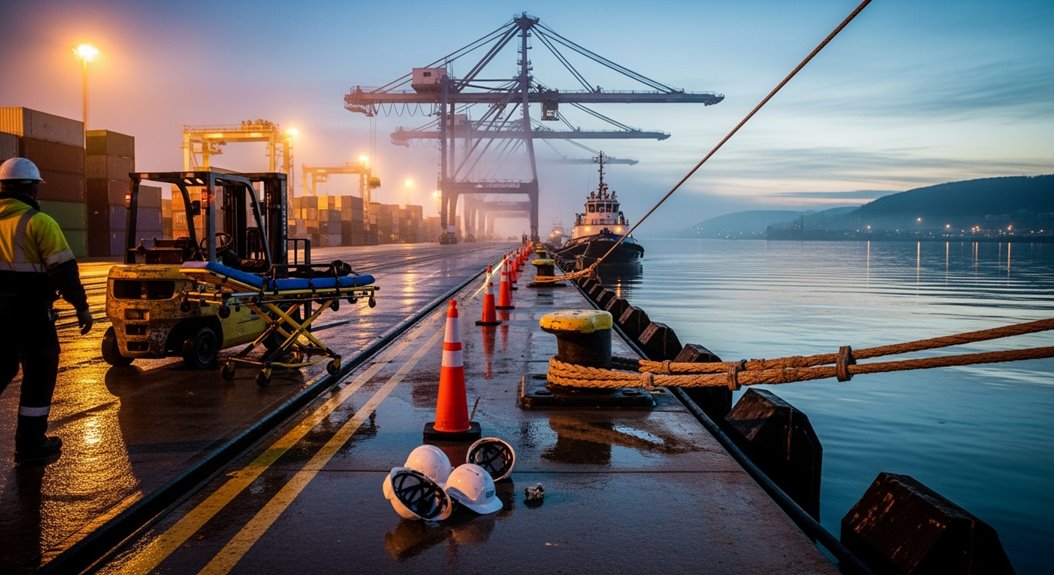
Common Longshore and Dock Worker Accidents in Pennsylvania
Workers at Pennsylvania’s ports face significant injury risks every day they report to the docks. You’re exposed to numerous hazards while loading vessels, maintaining equipment, and securing facilities against threats like cargo theft and shoreline erosion damage.
The most frequent accidents include:
- Falls from cranes, gangways, and elevated platforms onto dock surfaces or into water
- Crush injuries from shifting cargo containers and heavy machinery during loading operations
- Slip and fall incidents on wet decks caused by weather conditions or spilled materials
These accidents often result from insufficient safety training, equipment failures, or inadequate workplace protocols that employers should address. OSHA highlights additional risks and provides resources on longshoring safety, emphasizing controls for equipment, fall protection, and hazard communication.
Longshore and Port Worker Injury Statistics in Pennsylvania
When you’re injured working Pennsylvania’s docks and terminals, understanding the scope of workplace dangers you face becomes essential to protecting your rights.
Pennsylvania reported 162,194 workplace injuries in 2023, with transportation and warehousing sectors experiencing disproportionately high rates. Port workers face particular risks from:
- Overexertion injuries (24.5% of cases) from lifting cargo without proper port ergonomics
- Contact with equipment (22.2%) involving containers and machinery
- Falls and slips causing 25% of fatal workplace injuries
Poor shift scheduling often compounds these hazards, leaving fatigued workers vulnerable to preventable accidents requiring immediate legal intervention. According to BLS data, fatal occupational injuries in transportation and warehousing remain among the highest by event/exposure across U.S. industries in 2022.
Insurance companies know our reputation. They know we prepare every case for trial and we’ll go the distance when settlement offers fall short. We investigate thoroughly, build bulletproof cases, and aren’t afraid to take yours to court. That changes negotiations from the start.
Anytime. Anywhere. We’re Ready to Fight for You.
Compensation Available for Longshoremen in Pennsylvania
When you're injured while working on Pennsylvania's waterways or ports, the Longshore and Harbor Workers' Compensation Act provides specific categories of benefits to help you recover financially and physically.
These benefits go beyond basic workers' compensation, offering all-encompassing support that recognizes the unique risks maritime workers face. Understanding what compensation you're entitled to, including coverage for medical care, lost wages, permanent disabilities, and support for your family if the worst happens, is essential to protecting your rights after a workplace injury.
Medical Benefits
Under the Longshore and Harbor Workers' Compensation Act, injured longshoremen receive full coverage of all reasonable and necessary medical treatment without any out-of-pocket costs.
You're entitled to choose your own medical providers and receive appropriate care for your injuries. This includes doctor visits, surgeries, medications, physical therapy, and durable equipment like wheelchairs or braces. Insurance carriers sometimes delay treatment authorization or create benefit disputes to minimize their expenses.
When insurers refuse necessary care or question your medical providers' recommendations, you need experienced legal representation to enforce your rights and make certain you receive proper treatment.
Disability Benefits
As an injured longshoreman in Pennsylvania, you're entitled to disability benefits that replace a portion of your lost wages while you recover from your workplace injury. The Longshore Act provides compensation based on your average weekly wage and degree of disability. You'll receive temporary total disability payments if you can't work at all, or temporary partial disability if you return to lighter duties at reduced pay.
Understanding disability timelines is vital, as payment rates and durations vary by injury severity. Proper benefit coordination guarantees you receive all compensation you're owed without unnecessary delays or disputes with insurance carriers.
Death Benefits
If a longshore worker dies from a workplace accident in Pennsylvania, the Longshore and Harbor Workers' Compensation Act provides death benefits to eligible family members who depended on the worker's income. Survivor compensation typically includes weekly payments to spouses and dependent children, calculated as a percentage of the worker's average weekly wage.
The Act also covers reasonable funeral expenses up to a statutory limit. You'll need to file a claim promptly to secure these benefits. Documentation requirements include proof of dependency and the relationship between survivors and the deceased worker. Our attorneys help families navigate this difficult process while maximizing entitled benefits.
Additional Damages
When longshoremen suffer injuries in Pennsylvania maritime facilities, they're typically limited to compensation under the Longshore and Harbor Workers' Compensation Act, which covers medical expenses, lost wages, and disability benefits.
However, you can't recover punitive damages or compensation for emotional distress through standard LHWCA claims. These additional damages may only become available if you can prove your employer intentionally caused your injury or if a third party's negligence contributed to your accident.
Understanding these limitations helps set realistic expectations, though exceptions exist in specific circumstances where deliberate wrongdoing occurs. An experienced maritime attorney can evaluate whether alternative claims might apply.
Statute of Limitations for Filing a LHWCA Claim
Understanding the deadline for filing your Longshore and Harbor Workers' Compensation Act claim can mean the difference between receiving the benefits you're entitled to and losing your right to compensation entirely.
Filing deadlines under the LHWCA require you to notify your employer within 30 days of your injury and file a formal claim within one year. These timeframes are strict, though certain circumstances may qualify for claim tolling, which pauses the deadline clock. If you're approaching these deadlines or have already passed them, consulting an experienced longshore attorney immediately is essential to protect your rights.
Get Results
Each one of our lawyers is a skilled and experienced litigator and negotiator. We never recommend settling your case when trial presents a better opportunity for recovery.



Why Do I Need a Longshoremen Workers Comp Injury Lawyer?
The complexity of Longshore and Harbor Workers' Compensation Act claims makes legal representation more than just helpful—it's often the determining factor between receiving full benefits and accepting far less than you deserve. An experienced attorney understands evidence preservation requirements, ensuring vital documentation doesn't disappear before your hearing. They'll navigate strict claim timelines that vary depending on injury type and employer notification requirements.
Insurance carriers employ experienced defense lawyers who know how to minimize payouts. Without equally skilled representation, you're negotiating from a position of disadvantage. Your attorney levels the playing field, protecting your rights while you focus on recovery.
Why Choose Grossman Attorneys for Your Pennsylvania LHWCA Claim
When you're facing a Pennsylvania LHWCA claim, you need attorneys who won't back down from insurance companies or settle for less than you deserve. Grossman Attorneys at Law brings over 40 years of specialized longshore litigation experience and a proven willingness to take cases to trial when fair settlement isn't offered.
Our maritime accident lawyers have secured substantial settlements and verdicts in cases ranging from Defense Base Act claims to longshoremen workers' comp injury cases and offshore accidents. We understand the complex laws that govern these claims and stand ready to take your case to trial when insurance companies fail to offer the fair compensation you deserve.
Aggressive But Fair Representation
Although insurance companies often pressure injured longshore workers to accept quick settlements, you deserve an attorney who'll fight for the full value of your claim without compromising your rights.
Grossman Attorneys combines assertive negotiation with ethical advocacy, pushing back against lowball offers while maintaining the highest professional standards. We're aggressive in protecting your interests but fair in our dealings with all parties. This balanced approach means we'll take your case to trial when necessary, yet we'll also recognize genuinely fair settlement offers. You get maximum compensation without unnecessary delays or compromised integrity throughout your LHWCA claim.
Experienced, Compassionate Staff
Behind every successful LHWCA claim stands a dedicated team of professionals who understand both maritime law and the personal toll of workplace injuries. Our staff receives ongoing empathy training to recognize what you're experiencing during recovery.
We've developed clear communication protocols that keep you informed without legal jargon overwhelming you. When we explain statute deadlines or medical documentation requirements, we'll make sure you understand exactly what's needed and why. Our paralegals, case managers, and attorneys work together to address your questions promptly. You'll never feel like just another case number at our firm.
A Track Record of Winning Longshore Claims
Compassionate support matters, but results matter more. We've secured millions in compensation for injured maritime workers because we grasp settlement psychology, knowing when insurers are offering fair value and when they're testing your resolve.
Our verdict strategies reflect decades of courtroom experience, and defense attorneys recognize we'll take your case to trial if needed. We've litigated against Fortune 500 companies and major carriers, winning substantial settlements and verdicts.
When you're facing lost wages and mounting medical bills, you need attorneys who've proven they can deliver the compensation you deserve under the Longshore Act.
Injured at a Pennsylvania Port? Let Grossman Attorneys Fight for Your LHWCA Compensation
If you or a loved one suffered injuries while working at a Pennsylvania port or maritime facility, you don't have to navigate the complex LHWCA claims process alone. Grossman Attorneys at Law has spent over 40 years fighting for injured maritime workers nationwide, securing the maximum compensation they deserve.
Our litigation-first approach means we're prepared to take your case to trial if insurance carriers refuse to offer fair settlements. Defense attorneys know our reputation for thorough preparation and courtroom success, which often leads to better outcomes for our clients.
Don't settle for less than you're entitled to under the Longshore and Harbor Workers' Compensation Act. Contact Grossman Attorneys today to speak with an experienced LHWCA attorney who'll fight for your rights.
*If you hire Grossman Attorneys for your LHWCA case, you pay no attorney fees for our service. When we win your case, the employer or its insurer typically pays a DOL-approved attorney’s fee and any case expenses we advanced are reimbursed from the recovery. If we don't win, you pay nothing.
- https://www.portpitt.com/pages/the-port-district
- https://en.wikipedia.org/wiki/Port_of_Philadelphia
- https://en.wikipedia.org/wiki/Port_of_Chester
- https://pagetsitdone.com/why-pa/location_and_infrastructure
- https://www.philaport.com
- https://www.philaport.com/facilities/
- https://roa.midatlanticocean.org/ocean-uses/status-trends-and-linkages/maritime-commerce-and-navigation/
- https://www.dvrpc.org/webmaps/phillyfreightfinder/modals/port.html
- https://www.pa.gov/content/dam/copapwp-pagov/en/fishandboat/documents/about-us/reports/accidentanalysis2022.pdf