


Top Rated Minnesota Longshoreman injury Law Firm – Grossman Attorneys
If you were injured working at a Minnesota port or dock facility, you face a complex federal claims process under the Longshore and Harbor Workers’ Compensation Act. These cases are drastically different from standard workers’ compensation claims and require an attorney who understands maritime law inside and out.
Grossman Attorneys at Law has spent decades representing injured longshoremen and harbor workers nationwide. Our team knows how to maximize LHWCA benefits, navigate federal procedures, and stand up to insurance companies that try to minimize your claim. When negotiations fail to produce fair compensation, we are fully prepared to take your case to trial.
You deserve an advocate who understands the physical demands of your job and the financial pressures you face after a serious injury. Contact Grossman Attorneys at Law today for a free consultation about your longshore accident case.
Understanding the Longshore and Harbor Workers’ Compensation Act (LHWCA)
If you’ve suffered an injury while working on Minnesota’s waterfront, steering docks, or handling cargo near water, the Longshore and Harbor Workers’ Compensation Act (LHWCA) likely protects your right to benefits. This federal law provides essential protections for maritime workers who don’t qualify as seamen under the Jones Act, covering medical expenses, wage replacement, and disability compensation when work-related injuries occur.
Understanding what LHWCA coverage includes, whether your job qualifies you for these benefits, and how this law differs from other maritime protections will help you determine your legal options after a workplace accident.
Under the LHWCA, covered workers can choose their own treating physician and have all related medical care paid without deductibles or copays, and benefits are generally paid by employers or insurers rather than the federal government through mechanisms like the Special Fund.
What is LHWCA Coverage?
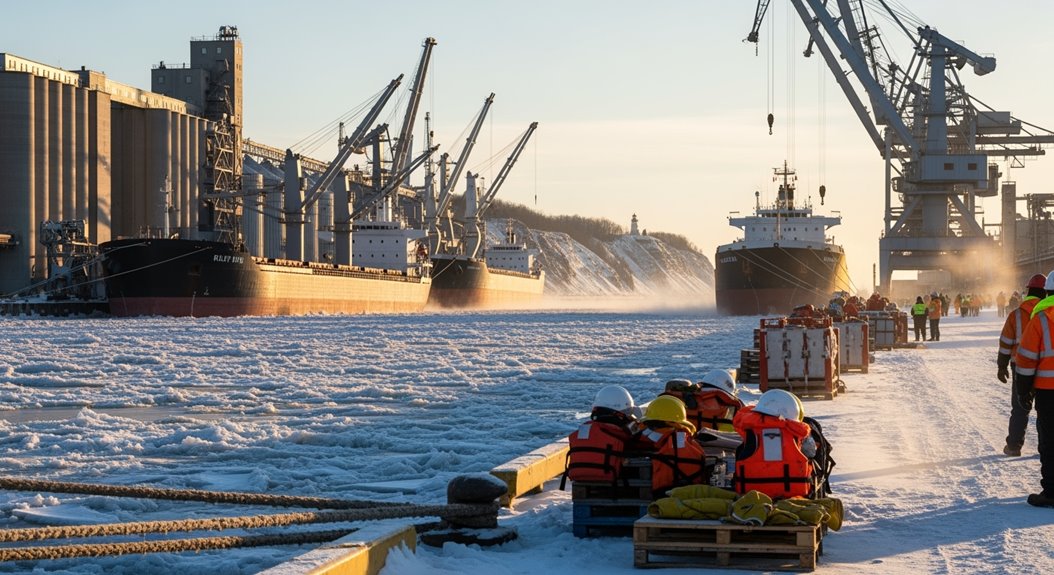
When you’re injured while working on navigable waters or in maritime-adjacent areas, you’ll likely fall under the Longshore and Harbor Workers’ Compensation Act (LHWCA)—a federal law that provides medical benefits, disability payments, and rehabilitation services to maritime workers who don’t qualify as traditional seamen under the Jones Act. The coverage scope extends to dock workers, ship repairers, harbor construction workers, and others performing maritime employment. However, statutory exclusions apply to certain positions, including masters and crew members of vessels, office workers, and employees covered by state workers’ compensation. Understanding whether you’re covered determines your path to compensation after a workplace injury.
Under the LHWCA, injuries occurring on navigable waters and adjoining areas like piers, wharves, dry docks, terminals, and shipyards are covered for workers engaged in loading, unloading, repairing, dismantling, or building vessels.
Who Qualifies for LHWCA Benefits?
Determining whether you qualify for LHWCA benefits requires meeting two distinct tests: the status test and the situs test. The status test confirms you work as a maritime employee, not as a master or crew member of a vessel. The situs test verifies your injury occurred on navigable waters or in adjoining areas used for loading, unloading, repairing, or building vessels. These eligibility criteria establish covered employment under the Act.
Minnesota maritime workers injured at shipyards, docks, terminals, and harbor facilities must satisfy both requirements to access LHWCA benefits, including medical treatment and wage replacement. Additionally, benefits are administered by the OWCP’s DLHWC, and covered workers may receive medical, wage loss, and vocational rehabilitation depending on the case.
How Does LHWCA Differ from Other Maritime Laws?
The LHWCA provides compensation benefits through an administrative process, while the Jones Act allows injured seamen to file lawsuits in court seeking full damages for employer negligence. Understanding this comparative jurisdiction matters because it affects your available remedies and compensation levels.
The statutory interplay between these laws can be complex—LHWCA covers most harbor workers and longshoremen with predetermined benefits, whereas Jones Act seamen can pursue unlimited damages including pain and suffering. The Outer Continental Shelf Lands Act extends LHWCA coverage to offshore platform workers. You’ll need experienced legal counsel to determine which law applies to your situation.
Major Ports and Maritime Facilities in Minnesota
Port of Duluth-Superior
The Port of Duluth-Superior operates as a bi-state facility spanning northeastern Minnesota and northwestern Wisconsin on Lake Superior’s western shore. Major companies operating at this facility include Cargill, CHS Inc., CN Railway, BNSF Railway, and various bulk cargo handlers specializing in grain, iron ore, coal, and limestone. The port serves agricultural, mining, energy, and manufacturing industries with both domestic and international shipping connections through the Great Lakes-St. Lawrence Seaway system.
The facility processes over 35 million tons of cargo annually across 49 miles of harbor frontage, ranking among the top 20 ports in the United States by tonnage. The port complex generates approximately 7,000 direct and indirect jobs in the region. Infrastructure includes specialized terminals for bulk cargo handling, modern grain elevators, ore docks, and intermodal transportation connections.
Economic impact studies indicate the port contributes significantly to regional commerce through maritime transportation cost advantages for heavy bulk commodities. The U.S. Army Corps of Engineers’ WCSC navigation facilities dataset maps port and waterway infrastructure that includes major Minnesota maritime assets.
Port of Saint Paul
The Port of Saint Paul operates along the Mississippi River in the state capital, serving as Minnesota’s primary inland river port facility. The port accommodates barge traffic, bulk commodity handlers, and industrial tenants utilizing river transportation for agricultural products, petroleum, aggregates, and manufactured goods. Major operations include grain export facilities, fertilizer distribution, construction materials handling, and general cargo services connecting to the broader Mississippi River navigation system.
As the 13th largest inland port in the United States, the facility handles approximately 5.9 million tons of cargo annually. The port maintains strategic infrastructure for barge loading and unloading operations, storage facilities, and rail connections to support multimodal freight movement. The facility supports commercial maritime activity while also accommodating maritime tourism, port festivals, and heritage preservation activities including lighthouse tours and waterfront development initiatives.
Common Longshore and Dock Worker Accidents in Minnesota
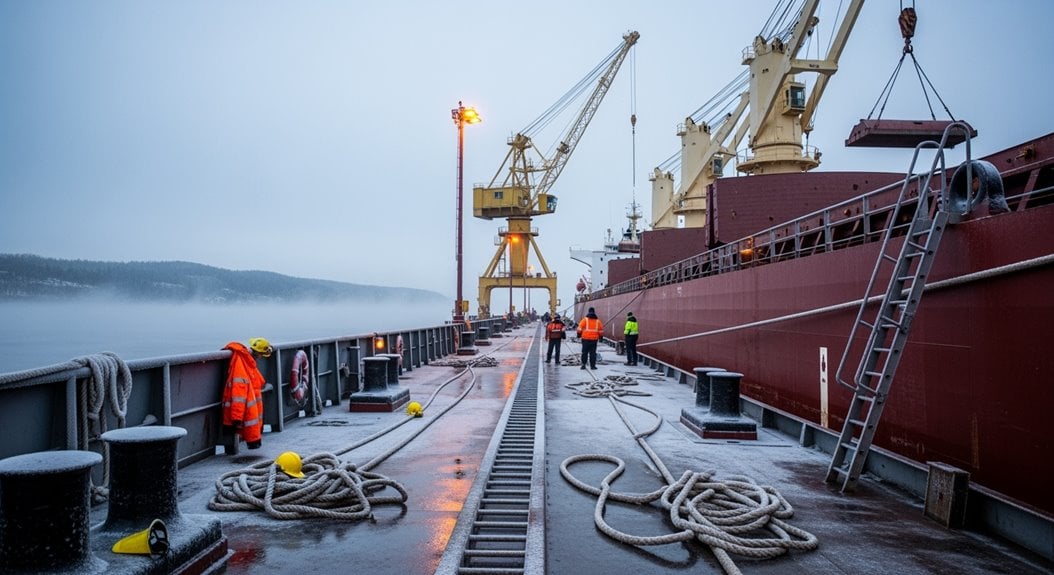
Dock and longshore workers in Minnesota face significant injury risks each workday as they load and unload cargo, operate heavy machinery, and navigate hazardous port environments. Seasonal hazards like icy surfaces and extreme cold intensify these dangers during winter months.
Even with thorough training programs, accidents still occur:
- Struck-by incidents from falling cargo, swinging crane loads, or forklift collisions
- Falls from ship decks, gangways, or slippery surfaces
- Overexertion injuries from manual lifting and repetitive movements
Exposure to hazardous substances, confined spaces, and water-related accidents further compound risks. When injuries happen despite safety precautions, injured workers deserve full compensation. OSHA highlights common terminal hazards and offers guidance through its longshoring safety resources to help reduce these risks.
Longshore and Port Worker Injury Statistics in Minnesota
Every year, more than 500,000 workers across the United States fall under the protection of the federal Longshore and Harbor Workers’ Compensation Act, which covers employees in port operations, maritime sectors, dock facilities, and related industries. Minnesota’s port workforce reflects concerning national trends in worker demographics and injury patterns. You face heightened risks during seasonal hazards like winter ice and summer heat waves.
Most serious injuries involve:
- Falls from loading platforms and equipment
- Caught-between accidents with machinery or industrial vehicles
- Amputations from handling industrial equipment
Black and Latino workers experience disproportionately higher fatality rates in longshore operations nationwide. According to the Bureau of Labor Statistics, the national nonfatal injury incidence rate reported in BLS Table 1 highlights elevated risks in transportation and warehousing compared to the all-industry average.
Insurance companies know our reputation. They know we prepare every case for trial and we’ll go the distance when settlement offers fall short. We investigate thoroughly, build bulletproof cases, and aren’t afraid to take yours to court. That changes negotiations from the start.
Anytime. Anywhere. We’re Ready to Fight for You.
Compensation Available for Longshoremen in Minnesota
If you've suffered an injury while working as a longshoreman in Minnesota, the Longshore and Harbor Workers' Compensation Act provides several categories of benefits designed to address both your immediate needs and long-term financial security. Understanding what compensation you're entitled to can help you make informed decisions about your case and guarantee you're not accepting less than what you deserve.
The benefits available include medical care coverage, disability payments for lost wages and reduced earning capacity, death benefits for families who've lost a loved one, and in certain circumstances, additional damages beyond standard workers' compensation.
Medical Benefits
Medical treatment under the Longshore and Harbor Workers' Compensation Act covers all reasonably necessary care related to your work injury, and insurers must pay for this treatment directly without requiring upfront costs from you. You're entitled to choose your treating physician, though insurers may attempt to control medical authorization through their preferred provider networks.
Treatment timelines become critical when insurers delay approvals or dispute recommended care. You can pursue evaluations from qualified specialists, obtain second opinions, and access physical therapy, medications, diagnostic testing, and surgical procedures when medically necessary for your recovery.
Disability Benefits
Understanding your compensation options becomes essential when a longshore injury prevents you from working at full capacity or forces you out of work entirely. Disability benefits under the Longshore Act provide weekly payments calculated at two-thirds of your average weekly wage.
Benefit eligibility depends on your injury's severity and your ability to return to work. Temporary total disability covers periods when you can't work at all. Permanent partial disability addresses lasting impairments that reduce your earning capacity. If you can't return to your previous position, vocational rehabilitation services help you develop new job skills and shift to suitable employment.
Death Benefits
When a longshore accident results in a worker's death, the Longshore and Harbor Workers' Compensation Act provides financial support to surviving family members who depended on the worker's income. These survivor benefits typically equal two-thirds of the deceased worker's average weekly wage, distributed among eligible dependents like spouses and children.
The Act also covers funeral expenses up to $3,000, helping families manage immediate costs during an incredibly difficult time. You'll need to file a claim promptly to secure these benefits. Our attorneys understand the urgency families face and work quickly to guarantee you receive the full compensation available under federal law.
Additional Damages
Beyond the standard benefits covered by the Longshore and Harbor Workers' Compensation Act, injured longshoremen in Minnesota may qualify for additional compensation when their employers or third parties demonstrate negligence. These claims can include punitive damages, which courts award to punish particularly reckless behavior and deter future misconduct. You may also recover compensation for emotional distress, addressing the psychological impact of your injuries beyond physical harm.
Third-party liability claims against equipment manufacturers, vessel owners, or contractors can provide substantially higher compensation than workers' compensation alone. These additional damages require proving fault through litigation rather than the no-fault compensation system.
Statute of Limitations for Filing a LHWCA Claim
Time limits can make or break your ability to recover compensation under the Longshore and Harbor Workers' Compensation Act, and missing a critical deadline often means losing your right to benefits permanently. You generally have one year from your injury date or from when you knew your condition was work-related to notify your employer. Filing deadlines require submitting your formal claim within one year of injury or last voluntary compensation payment.
Certain circumstances allow claim tolling, which pauses the deadline clock. Minnesota longshore workers shouldn't risk their benefits by waiting. An experienced LHWCA attorney protects your rights immediately.
Get Results
Each one of our lawyers is a skilled and experienced litigator and negotiator. We never recommend settling your case when trial presents a better opportunity for recovery.



Why Do I Need a Longshoremen Workers Comp Injury Lawyer?
Managing a Longshore and Harbor Workers' Compensation Act claim without legal representation puts you at a significant disadvantage against experienced insurance adjusters and defense attorneys whose primary goal is minimizing payouts. An attorney handles evidence preservation, ensuring critical medical records, accident reports, and physical evidence remain protected and admissible.
Your lawyer conducts thorough witness interviews to document what happened before memories fade or witnesses become unavailable. Insurance companies frequently deny valid claims or offer settlements far below what injured workers deserve. A specialized longshore attorney levels the playing field, protecting your rights while you focus on recovery.
Why Choose Grossman Attorneys for Your Minnesota LHWCA Claim
When you're injured on the job as a longshore or maritime worker in Minnesota, you need attorneys who won't back down from insurance companies or accept less than you deserve.
Grossman Attorneys at Law is a respected maritime law firm with over 40 years of experience representing injured workers across the nation. Our maritime attorneys have secured substantial settlements and verdicts in cases ranging from Defense Base Act claims to longshoremen workers' comp injury cases and offshore accidents. We understand the complex laws that govern these claims and stand ready to take your case to trial when insurance companies fail to offer the fair compensation you deserve.
Aggressive But Fair Representation
Standing up to insurance companies and their defense teams requires a law firm that won't back down from a fight. At Grossman Attorneys, we combine assertive negotiation with balanced ethics to protect your rights.
We push aggressively for maximum compensation while maintaining professional integrity throughout your case. Our litigation-first approach means we're prepared to take your claim to trial if insurers refuse fair settlement offers. Defense attorneys recognize our thorough preparation and courtroom commitment. You'll benefit from representation that's tough on opponents but honest with you about your case's strengths, challenges, and realistic outcomes. We fight hard without compromising ethical standards.
Experienced, Compassionate Staff
Behind every successful claim stands a dedicated team that treats your case with the attention and care it deserves. Our staff understands the physical and emotional challenges you're facing after a workplace injury. We prioritize client communication throughout your case, keeping you informed at every stage without legal jargon that confuses rather than clarifies.
Our approach incorporates trauma informed care, recognizing that maritime accidents often leave lasting impacts beyond physical injuries. You'll work with professionals who combine decades of legal experience with genuine compassion, ensuring you feel supported while we fight for the compensation you've earned.
A Track Record of Winning Longshore Claims
Although past results don't guarantee future outcomes, our firm's history demonstrates consistent success in securing substantial compensation for injured longshore workers nationwide. We've recovered millions in settlements and verdicts by implementing proven settlement strategies that maximize your recovery while minimizing delays.
When insurers refuse fair compensation, our trial preparation sets us apart. Defense attorneys recognize our willingness to litigate aggressively, which often motivates better settlement offers. We've successfully represented longshore workers in federal courts across the country, including cases against Fortune 500 companies. Your Minnesota claim receives the same dedicated advocacy that's earned us national recognition.
Injured at a Minnesota Port? Let Grossman Attorneys Fight for Your LHWCA Compensation
If you or a loved one has suffered an injury while working at a Minnesota port or harbor facility, you don't have to navigate the complex LHWCA claims process alone. Grossman Attorneys at Law has spent over four decades fighting for injured maritime workers nationwide, securing the maximum compensation they deserve under federal law.
Our litigation-first approach means insurance carriers take our cases seriously, knowing we won't accept inadequate settlement offers. With offices strategically located to serve workers across the United States, our team understands the unique challenges Minnesota maritime workers face and the full scope of benefits available under the Longshore Act. Contact Grossman Attorneys today to speak with an experienced LHWCA attorney who'll aggressively advocate for your rights.
*If you hire Grossman Attorneys for your LHWCA case, you pay no attorney fees for our service. When we win your case, the employer or its insurer typically pays a DOL-approved attorney’s fee and any case expenses we advanced are reimbursed from the recovery. If we don't win, you pay nothing.
- https://www.dot.state.mn.us/ofrw/waterways/index.html
- https://www.northspan.org/featured-partner-duluth-seaway-port-authority/
- https://sppa.com/harbor-management/st-paul-shipping-stats
- https://duluthport.com/business/port-operations-and-facilities/
- https://dedola.com/ports/two-harbors/
- https://www.cityofwinona.com/661/Commerical-Harbor
- https://stlouisriverquest.org/great-lakes-cargo-capital/
- https://duluthport.com
- https://thefreight.net/port/two-harbors-usthb/
- https://visitduluth.com/lake-superior/shipping-facts/