


Top Rated Michigan Longshoreman injury Law Firm – Grossman Attorneys
If you’ve been injured working at a Michigan port, dock, or shipyard, you need an attorney who understands the federal laws protecting maritime workers. The Longshore and Harbor Workers’ Compensation Act covers your injury, but insurance companies frequently undervalue or deny valid claims. You face strict deadlines and complex procedures that can cost you the benefits you’ve earned.
Grossman Attorneys at Law has extensive experience handling LHWCA cases for injured longshoremen and harbor workers. We know how to negotiate aggressively with insurance carriers to secure maximum compensation for medical treatment, lost wages, and disability benefits. When insurers refuse fair settlement offers, we’re fully prepared to take your case to trial.
You’ve worked hard to support your family. Now let us work hard for you. Contact Grossman Attorneys at Law today for a free consultation about your longshore injury claim.
Understanding the Longshore and Harbor Workers’ Compensation Act (LHWCA)
If you’ve suffered an injury while working on Michigan’s docks, harbors, or navigable waterways, you’re likely covered under the Longshore and Harbor Workers’ Compensation Act (LHWCA). This federal law protects maritime workers who aren’t traditional seamen but work in areas connected to shipping, loading, and harbor operations. Understanding LHWCA coverage is essential because it determines what benefits you can receive, which employers and insurance companies are responsible, and how your claim differs from standard workers’ compensation or other maritime protections like the Jones Act.
Under the LHWCA, eligible workers can receive medical care with no deductibles or copays and disability payments generally equal to two-thirds of their pre-injury wages, with annual adjustments tied to the National Average Weekly Wage.
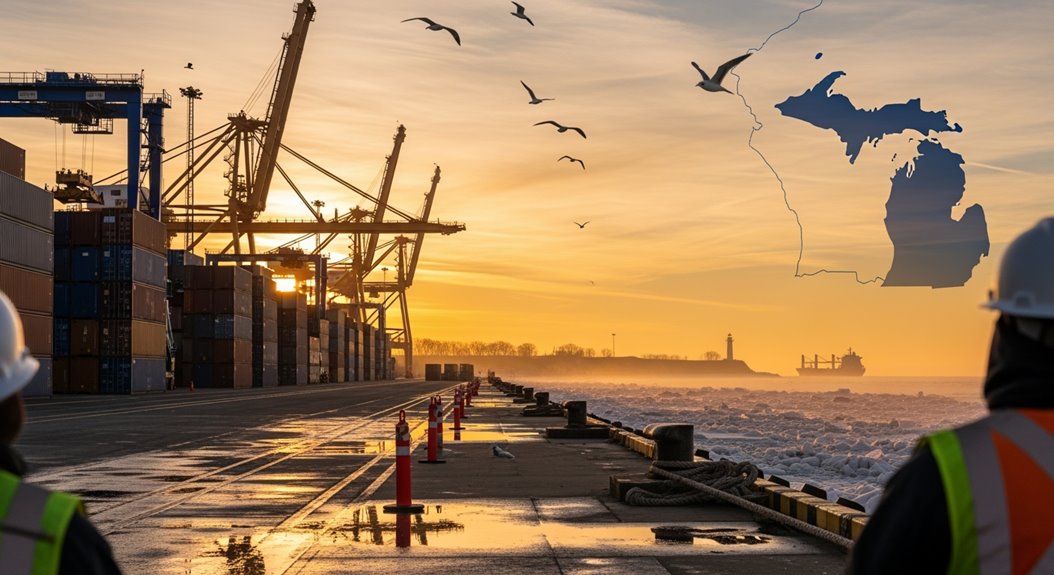
What is LHWCA Coverage?
When you’re injured while working on navigable waters or in maritime employment, the Longshore and Harbor Workers’ Compensation Act (LHWCA) provides federal coverage that replaces traditional state workers’ compensation. This federal protection addresses the unique risks maritime workers face daily.
The coverage scope extends to dock workers, shipbuilders, harbor construction workers, and others performing maritime work on or near navigable waters. Benefits eligibility requires proving your injury occurred during covered employment and within designated maritime zones. LHWCA provides medical treatment, wage replacement, disability benefits, and vocational rehabilitation.
Understanding your benefits eligibility determines whether you receive adequate compensation for your workplace injury. Coverage also applies to injuries occurring on navigable waters and adjoining areas such as piers, wharves, dry docks, shipyards, terminals, and marine railways used for loading, unloading, repairing, dismantling, or building vessels.
Who Qualifies for LHWCA Benefits?
Your eligibility for LHWCA benefits depends on two essential factors: the type of work you perform and where your injury occurred. Covered personnel include longshoremen, harbor workers, ship builders, ship repairers, and others working in maritime employment on navigable waters or adjoining areas like piers, docks, and terminals.
The eligibility criteria require that your injury happened during maritime work activities. You don’t need to work directly on a vessel. If you’re injured while loading cargo, repairing ships, or performing maritime-related tasks in covered locations, you’ll likely qualify for LHWCA protection and benefits. You generally must report your injury to your employer within 30 days and file a claim with the OWCP within the applicable deadline to preserve your LHWCA benefits.
How Does LHWCA Differ from Other Maritime Laws?
The LHWCA operates distinctly from the Jones Act and general maritime law, creating a workers’ compensation system specifically for harbor workers who don’t qualify as seamen. Understanding these comparative jurisdiction issues protects your right to compensation. The Jones Act covers crew members who spend substantial time aboard vessels, while LHWCA protects dock workers and those in harbor-adjacent roles. Coverage overlaps sometimes occur, requiring careful legal analysis to determine which law applies to your situation.
Unlike general maritime law’s negligence-based claims, LHWCA provides no-fault benefits, meaning you don’t need to prove employer wrongdoing to receive compensation for your injuries.
Major Ports and Maritime Facilities in Michigan
Port of Detroit
The Port of Detroit is Michigan’s largest inland port, strategically positioned along the Detroit River. This critical maritime hub processes steel, ore, and general cargo, serving as a vital connection point for regional and international trade. The port’s location provides direct access to both the Great Lakes system and international shipping routes through the St. Lawrence Seaway.
The Port of Detroit handles a significant portion of Michigan’s annual cargo volume, with operations supporting hundreds of longshore workers and maritime professionals. The facility’s modern infrastructure enables efficient processing of bulk materials and manufactured goods, contributing substantially to the regional economy through direct port operations and related logistics services. Michigan ports, including Detroit, are cataloged in the USACE WCSC navigation facilities dataset that maps key waterway and port infrastructure.
Port of Monroe
Port of Monroe offers Class 1 rail access and features modern container scanning technology for enhanced port security. The facility serves as an important link in Michigan’s maritime transportation network, combining waterborne cargo handling with direct rail connections to major distribution centers across North America.
The port’s strategic infrastructure investments, including advanced scanning capabilities, position it as a key player in secure cargo processing. Port of Monroe contributes to the region’s annual cargo throughput while maintaining employment for maritime workers specializing in intermodal transportation and security operations.
Muskegon Harbor
Muskegon Harbor is located along Lake Michigan’s eastern shore and accommodates both cruise ships and diverse commercial maritime operations. The facility serves as a multi-purpose port supporting tourism, commercial shipping, and industrial cargo handling. Its position on Lake Michigan provides access to major shipping lanes connecting to ports throughout the Great Lakes system.
The harbor supports Michigan’s maritime workforce through varied operations ranging from passenger vessel services to commercial cargo handling. Muskegon Harbor’s diverse operational profile contributes to the local economy through direct employment, vessel services, and related tourism and industrial activities.
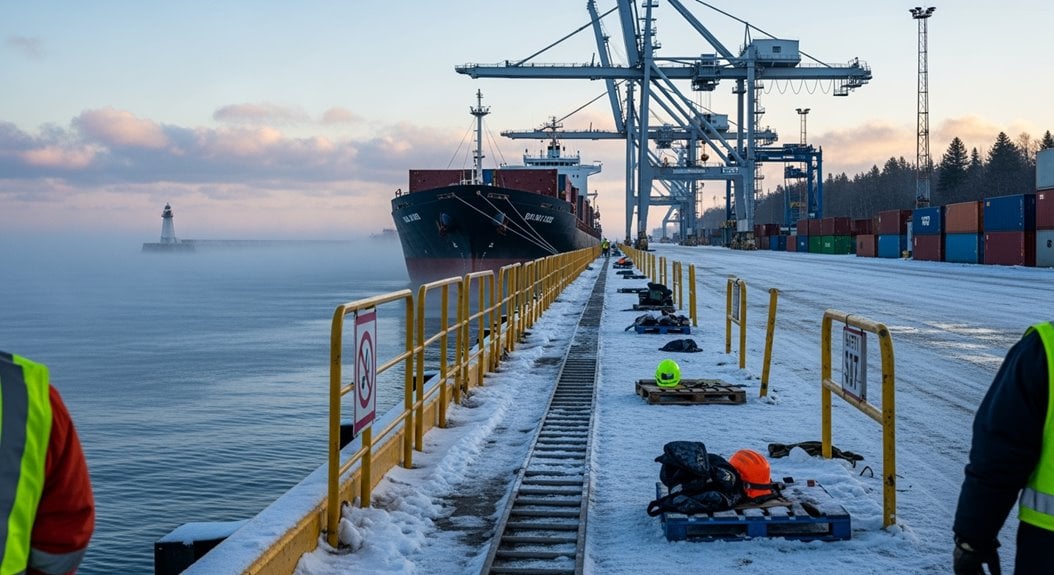
Common Longshore and Dock Worker Accidents in Michigan
Michigan’s busy ports and maritime facilities employ thousands of longshore and dock workers who face serious workplace dangers every day. You’re exposed to hazards that can result in life-changing injuries or death when proper safety culture isn’t maintained.
Common accidents include:
- Falls from cargo holds, ship decks, or docks causing fractures and traumatic brain injuries
- Crush injuries from shifting cargo during loading and unloading operations
- Equipment failures during vessel maintenance leading to lacerations and amputations
Inadequate training, fatigue from long shifts, and poor safety protocols increase your risk. When employers cut corners, you pay the price. OSHA’s marine cargo handling rules emphasize hazard controls such as fall protection, equipment inspections, and training under the Marine Terminals and Longshoring standards to prevent these incidents.
Longshore and Port Worker Injury Statistics in Michigan
While Michigan doesn’t publish separate injury statistics specifically for longshore and port workers, the broader workplace fatality data reveals serious risks you face in maritime operations. MIOSHA reported 34 workplace deaths in 2025, with struck-by incidents leading the causes.
Key Statistics Affecting Michigan Ports Workers:
- Struck-by accidents caused 10 of the first 22 workplace fatalities in 2025, involving vehicles, equipment, and falling objects
- Worker undercount likely means actual injury rates are markedly higher due to unreported or misclassified cases
- National longshore claims totaled approximately 16,000 injury cases and 56 fatalities under LHWCA in 2023
According to national data from the Bureau of Labor Statistics, industries vary widely in nonfatal injury risk, as shown by incidence rates in Table 1 for occupational injuries and illnesses.
Insurance companies know our reputation. They know we prepare every case for trial and we’ll go the distance when settlement offers fall short. We investigate thoroughly, build bulletproof cases, and aren’t afraid to take yours to court. That changes negotiations from the start.
Anytime. Anywhere. We’re Ready to Fight for You.
Compensation Available for Longshoremen in Michigan
If you've suffered an injury while working at a Michigan port or harbor, the Longshore and Harbor Workers' Compensation Act provides several types of compensation to help you recover financially. These benefits cover everything from your immediate medical treatment to long-term disability payments, ensuring you're not left struggling with bills while unable to work. Understanding what you're entitled to receive is the first step toward securing the full compensation you deserve under federal maritime law.
Medical Benefits
Understanding your right to medical benefits under the Longshore and Harbor Workers' Compensation Act can materially impact your recovery after a workplace injury. You're entitled to reasonable and necessary medical treatment from authorized physicians without cost-sharing requirements.
This includes doctor visits, surgeries, hospital stays, and pharmacy coverage for prescribed medications. While insurers may direct you to network providers, you can request alternative physicians if current treatment proves inadequate. Treatment authorization shouldn't be unreasonably delayed or denied. If your employer's insurer refuses to approve necessary care, you have the right to challenge their decision through formal proceedings.
Disability Benefits
Beyond covering your medical expenses, the Longshore and Harbor Workers' Compensation Act provides wage replacement through disability benefits when your injury prevents you from working. These payments compensate you for lost wages during your recovery.
Benefits eligibility depends on the severity and duration of your injury. Temporary total disability covers periods when you can't work at all. Temporary partial disability applies when you return to work at reduced capacity. Permanent disability benefits address lasting impairments that affect your earning ability. The Act also provides vocational rehabilitation services to help you develop new job skills if your injury prevents returning to maritime work.
Death Benefits
When a longshore worker dies from a work-related injury or occupational disease in Michigan, the Longshore and Harbor Workers' Compensation Act provides death benefits to eligible family members. These survivor benefits typically include compensation equal to 50% of the deceased worker's average weekly wage for a surviving spouse, with additional percentages for dependent children.
The Act also provides burial allowances up to $3,000 to help cover funeral expenses. Eligible survivors may receive these benefits for life or until remarriage, depending on their relationship to the deceased worker. You'll need proper documentation to establish your claim for these benefits.
Additional Damages
The Longshore and Harbor Workers' Compensation Act provides injured Michigan longshoremen with several types of compensation beyond standard wage replacement and death benefits. You may receive payments for medical expenses, vocational rehabilitation services, and permanent disability awards.
While the Act doesn't typically allow punitive damages or compensation for emotional distress like traditional personal injury lawsuits, you can pursue additional recovery through third-party claims. If equipment manufacturers, property owners, or other parties contributed to your accident, you might recover fuller damages outside the workers' compensation system. Understanding all available compensation paths guarantees you receive everything you're entitled to under the law.
Statute of Limitations for Filing a LHWCA Claim
After suffering a workplace injury on the docks or waterfront, you're facing critical deadlines that can make or break your claim for benefits. The LHWCA requires you to provide written notice of your injury within 30 days and file your formal claim within one year of the accident. These filing deadlines are strict, though certain circumstances allow for claim tolling, which pauses the clock temporarily.
Missing these deadlines can permanently bar your right to compensation. Because timing is vital in longshore cases, contacting an experienced attorney immediately after your injury protects your rights and guarantees compliance with all procedural requirements.
Get Results
Each one of our lawyers is a skilled and experienced litigator and negotiator. We never recommend settling your case when trial presents a better opportunity for recovery.



Why Do I Need a Longshoremen Workers Comp Injury Lawyer?
Insurance companies handling LHWCA claims employ teams of attorneys and adjusters whose primary goal is minimizing payouts to injured workers. They'll use sophisticated tactics to reduce your compensation or deny your claim entirely. An experienced longshore attorney levels the playing field by developing a thorough claim strategy that protects your rights.
Your lawyer handles all settlement negotiations, ensuring insurers can't pressure you into accepting inadequate offers. With proper legal representation, you'll have an advocate who understands maritime law complexities and fights for maximum compensation while you focus on recovery. Don't face insurance companies alone.
Why Choose Grossman Attorneys for Your Michigan LHWCA Claim
When you're injured on the job as a maritime worker in Michigan, you need attorneys who won't back down from insurance companies or settle for less than you deserve.
Grossman Attorneys at Law is a respected maritime law firm with over 40 years of experience representing injured workers across the nation. Our maritime attorneys have secured substantial settlements and verdicts in cases ranging from Defense Base Act claims to longshoremen workers' comp injury cases and offshore accidents. We understand the complex laws that govern these claims and stand ready to take your case to trial when insurance companies fail to offer the fair compensation you deserve.
Aggressive But Fair Representation
Because insurance companies and employers often prioritize their bottom line over injured workers' rights, you need representation that won't back down from a fight. Our assertive advocacy means we'll challenge lowball settlement offers and demand the full compensation you deserve. We combine ethical zeal with strategic litigation, preparing every case for trial while pursuing fair resolutions. This client-centered approach puts your recovery first, not insurance company profits.
We're aggressive when necessary but always professional, using our reputation and trial readiness to negotiate from strength. You'll get tenacious representation grounded in decades of maritime law experience.
Experienced, Compassionate Staff
At Grossman Attorneys at Law, our team combines decades of specialized maritime law knowledge with a genuine commitment to the people we serve. We appreciate that behind every case is a worker facing medical bills, lost wages, and uncertainty about the future. Our staff provides consistent support coordination throughout your claim, keeping you informed at every stage.
Team empathy isn't just a phrase here; it's how we approach every client conversation. You'll work with professionals who've handled hundreds of Longshore claims and genuinely care about securing the compensation you need to move forward with your life.
A Track Record of Winning Longshore Claims
Our firm's results speak directly to what matters most when you're injured and facing resistance from insurance carriers. We've secured numerous multi-million-dollar settlements for injured maritime workers throughout our 40-year history. Insurance companies and defense attorneys recognize our commitment to thorough preparation and courtroom advocacy.
Our verdict records demonstrate consistent success in obtaining maximum compensation for our clients. Unlike firms that quickly settle for less, our trial strategies focus on building cases strong enough to win at trial. This reputation means insurance carriers take our demands seriously, often leading to better settlement offers before litigation becomes necessary.
Injured at a Michigan Port? Let Grossman Attorneys Fight for Your LHWCA Compensation
If you or a loved one suffered injuries while working at a Michigan port or maritime facility, you don't have to navigate the complex LHWCA claims process alone. Grossman Attorneys at Law has spent over 40 years fighting for injured maritime workers nationwide, securing the maximum compensation our clients deserve.
We recognize the challenges you're facing—from medical bills to lost wages—and we're ready to hold insurance carriers accountable. Our litigation-first approach means we won't settle for less than full compensation, and we're prepared to take your case to trial if necessary. Don't let insurance companies minimize your claim. Contact Grossman Attorneys today to speak with an experienced LHWCA attorney who'll fight tirelessly for your rights.
*If you hire Grossman Attorneys for your LHWCA case, you pay no attorney fees for our service. When we win your case, the employer or its insurer typically pays a DOL-approved attorney’s fee and any case expenses we advanced are reimbursed from the recovery. If we don't win, you pay nothing.
- https://portofmonroe.com
- https://www.marineinsight.com/know-more/ports-on-the-great-lakes/
- https://www.greatlakesports.org/wp-content/uploads/2021/01/Michigan-2021-Update.pdf
- https://news.umich.edu/michigan-maritime-ports-set-to-grow-economy-throughout-the-state/
- https://portdetroit.com/about-the-port/
- https://www.muskegon.org/choose-muskegon/port-information/
- https://www.michiganbusiness.org/4a81c9/globalassets/documents/reports/maps/michigan-commercial-ports-map.pdf
- https://thegreatlakesgroup.com/ports
- https://www.michigan.gov/mdot/travel/mobility/marine
- https://www.maritime.dot.gov/data-reports/ports/list