


Top Rated Washington Longshoreman injury Law Firm – Grossman Attorneys
If you’ve been injured working on the docks, loading cargo, repairing vessels, or performing other maritime labor in Washington State, you need an attorney who understands the Longshore and Harbor Workers’ Compensation Act inside and out. The LHWCA provides different protections than standard workers’ compensation, and insurance companies often minimize what they owe injured workers.
Grossman Attorneys at Law has extensive experience representing longshoremen and harbor workers throughout Washington. We know how to build strong LHWCA claims, negotiate aggressively with insurers, and take your case to trial when necessary to secure the full compensation you deserve. Your injury has already disrupted your life and livelihood. Let us handle the legal fight so you can focus on healing. Contact Grossman Attorneys at Law today for a free, no obligation consultation about your longshore injury claim.
Understanding the Longshore and Harbor Workers’ Compensation Act (LHWCA)
If you’ve been injured while working on or near the water in Washington, you need to understand whether the Longshore and Harbor Workers’ Compensation Act (LHWCA) protects you. This federal law provides specific benefits and protections for maritime workers, but it doesn’t cover everyone who works near the waterfront.
Knowing if you qualify, what benefits you can receive, and how LHWCA differs from other maritime laws like the Jones Act will directly impact your ability to recover compensation for your injuries.
Under the LHWCA, eligible workers receive medical care without copays and wage-replacement benefits tied to the annually updated National Average Weekly Wage, funded through employer insurance or self-insurance authorized by the Department of Labor.
What is LHWCA Coverage?
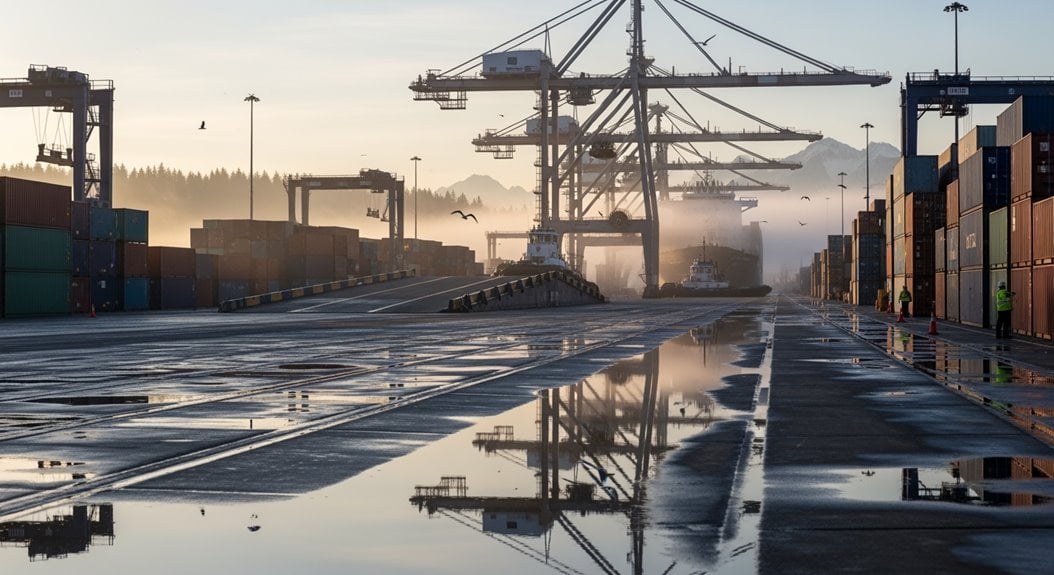
The Longshore and Harbor Workers’ Compensation Act provides federal benefits to workers injured while performing maritime work on or near navigable waters of the United States. Coverage scope extends to dock workers, ship repairers, harbor construction employees, and other maritime workers who aren’t classified as seamen.
You’ll meet claimant eligibility requirements if your injury occurred on navigable waters or in adjoining areas like piers, wharves, terminals, and shipyards used for loading, unloading, repairing, or building vessels. The Act covers medical expenses, disability benefits, and vocational rehabilitation.
Understanding whether your specific work situation falls under LHWCA protection determines which federal benefits you’re entitled to receive. Administration and claims processing are handled by the OWCP and its Division of Longshore and Harbor Workers’ Compensation (DLHWC).
Who Qualifies for LHWCA Benefits?
Sorting out whether you qualify for LHWCA benefits hinges on two straightforward tests: the status test and the situs test. The status test examines whether you’re a maritime employee, not a ship’s crew member or master. The situs test confirms your injury occurred on navigable waters or in adjoining areas like piers, docks, or terminals used for loading, unloading, building, or repairing vessels.
These eligibility criteria define specific claimant categories, including longshoremen, harbor workers, ship repairers, and shipbuilders. Meeting both requirements establishes your right to pursue compensation under federal maritime law.
Under the Longshore Act, covered injuries also include those occurring at dry docks, shipyards, marine railways, and other adjoining areas customarily used for vessel-related activities.
How Does LHWCA Differ from Other Maritime Laws?
While all three major federal maritime laws protect workers injured on the water, LHWCA operates fundamentally differently from the Jones Act and general maritime law.
The Jones Act allows seamen to sue employers for negligence in civil court, potentially recovering unlimited damages including pain and suffering. General maritime law provides similar remedies through unseaworthiness claims. LHWCA, however, functions as a workers’ compensation system with predetermined benefits and no-fault coverage.
This comparative jurisdiction distinction matters markedly—LHWCA provides faster, guaranteed benefits but limits your total recovery. Understanding these remedy differences helps you pursue the appropriate claim for your specific maritime employment situation.
Major Ports and Maritime Facilities in Washington State
Port of Everett
The Port of Everett is located on Port Gardner Bay in Snohomish County, approximately 25 miles north of Seattle. Major companies operating at this facility include Boeing, Kimberly-Clark, and various aerospace manufacturers and suppliers. The port serves primarily aerospace, manufacturing, and wood products industries, while also providing marina services and waterfront development.
The Port of Everett supports over 35,000 jobs throughout the region and handles $29.7 billion in exports annually. The port’s cargo operations focus on breakbulk and specialty cargo related to the aerospace sector, with significant infrastructure dedicated to supporting Boeing’s wide-body aircraft production and related supply chain operations. According to the U.S. Army Corps of Engineers, these facilities are included in its navigation facilities dataset mapping ports and waterway infrastructure across the nation.
Grays Harbor
Grays Harbor is located on Washington’s Pacific coast and serves as a deep-water port facility with direct ocean access. The port handles operations for agricultural exporters, automobile shipping companies, and forest products manufacturers. Primary industries include international cargo shipping, with specialization in agricultural commodities and vehicle exports, along with forest products and bulk cargo handling.
Grays Harbor leads the West Coast in exports of soybeans and ranks among the top facilities for automobile exports. The port’s deep-water Pacific facilities allow it to accommodate large ocean-going vessels, making it a critical gateway for agricultural products destined for Asian markets and a primary distribution point for automobile imports and exports on the West Coast.
Port of Anacortes
The Port of Anacortes is situated in northern Skagit County on Fidalgo Island, serving as a gateway to the San Juan Islands. The port supports commercial fishing operations, marine transportation services, and oil refining industries, with Shell and Tesoro operating major facilities in the area. Industries served include commercial fishing, petroleum refining, marine manufacturing, and tourism-related maritime activities.
Anacortes combines significant commercial fishing infrastructure with industrial marine operations and coastal tourism services. The port’s facilities support a diverse commercial fishing fleet, provide moorage and marine services, and serve as a ferry terminal connecting to the San Juan Islands, creating a mixed economic impact across multiple maritime sectors.
Port of Bellingham
The Port of Bellingham is located in Whatcom County on Bellingham Bay in northwestern Washington, near the Canadian border. The port serves cold storage operators, fishing companies, marine manufacturing businesses, and cruise line operations. Primary industries include commercial fishing, marine trades, cruise ship services, and cargo handling operations.
Bellingham’s port facilities provide comprehensive maritime services including commercial fishing support, industrial marine infrastructure, and waterfront redevelopment areas. The port has invested in modernizing its facilities to support growing cruise ship traffic, expanded cold storage capabilities, and enhanced cargo handling operations while maintaining its commercial fishing heritage.
Port of Ilwaco
The Port of Ilwaco is located at the mouth of the Columbia River in Pacific County on Washington’s southwestern coast. The port primarily serves commercial fishing vessels, charter fishing operations, and recreational boating services. Industries include commercial salmon and tuna fishing, sport fishing charters, and coastal tourism activities.
Ilwaco operates as a smaller-scale fishing harbor with facilities designed to support the commercial fishing fleet and recreational fishing industry. The port’s economic impact centers on its role as a working fishing port, providing moorage, fuel, ice, and support services to commercial fishermen while also accommodating the growing sport fishing and tourism sectors along the lower Columbia River.
Port of Bremerton
The Port of Bremerton is located in Kitsap County on the western shore of Puget Sound, directly across from Seattle. The port’s industrial parks house manufacturing companies, technology firms, and marine service providers, while also supporting operations related to the nearby Puget Sound Naval Shipyard. Industries served include advanced manufacturing, maritime services, technology, and defense-related operations.
Bremerton’s industrial parks create diverse workplace environments with maritime-adjacent operations and waterfront industrial facilities. The port’s economic impact includes job creation through industrial park tenants, marina operations, and ferry terminal services, with infrastructure investments focused on supporting advanced manufacturing and technology sectors alongside traditional maritime industries.
Port of Peninsula (Port of Peninsula/Port Gamble)
The Port of Peninsula is located in northern Kitsap County on the shores of Hood Canal and Port Gamble Bay. The port supports shellfish aquaculture operations, particularly oyster farming facilities, along with forest products companies and marine services. Primary industries include shellfish harvesting and processing, aquaculture, timber operations, and recreational marine activities.
Peninsula’s oyster facilities and shellfish operations contribute significantly to Washington’s aquaculture industry, creating specialized maritime workplace environments. The port’s economic impact stems from its role in supporting the region’s shellfish industry, providing marine infrastructure for aquaculture operations, and maintaining facilities that serve both commercial shellfish harvesting and forest products transportation.
Common Longshore and Dock Worker Accidents in Washington State
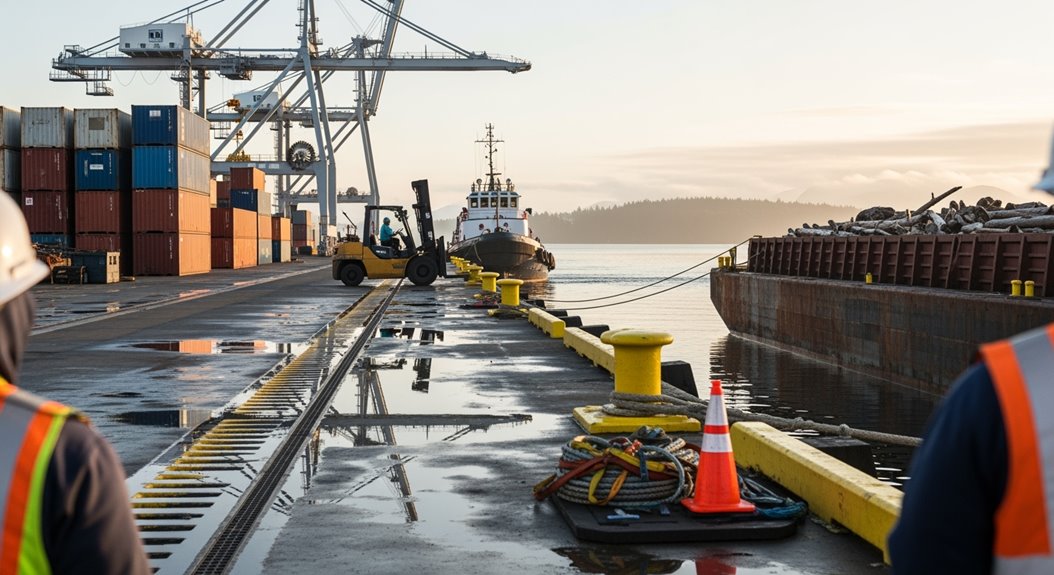
Maritime work at Washington’s busy ports exposes longshore workers and dock personnel to serious hazards every day. You’ll face risks from wet dock surfaces, heavy machinery operations, and cargo handling that can result in serious injuries. Proper slip prevention measures and fatigue management protocols are essential but often inadequate at busy facilities.
Common accident types include:
- Falls from elevated work areas, cargo holds, or gangways resulting in fractures and head injuries
- Crush injuries when caught between moving containers, forklifts, or vessels during loading operations
- Overexertion injuries from repetitive lifting and awkward cargo positioning causing chronic back problems
These hazards require immediate legal attention when injuries occur. OSHA’s marine terminal and longshoring standards emphasize hazard assessments, training, and equipment protocols, including fall protection, to reduce these risks.
Longshore and Port Worker Injury Statistics in Washington
Longshore workers face disproportionately high injury rates at Washington’s ports and docks compared to most other industries nationwide. Washington’s transportation and warehousing sector reported markedly elevated workplace injuries in 2023, with harbor ergonomics and seasonal hazards contributing to preventable accidents.
Consider these concerning statistics:
- Washington recorded 81,600 nonfatal workplace injuries in 2023, with an injury rate of 3.4 cases per 100 workers—42% higher than the national average
- Transportation and warehousing industries experienced fatality rates of 12.9 per 100,000 workers nationally
- 50,600 Washington cases required days away from work or job restrictions
These numbers represent real maritime workers suffering serious injuries. According to the BLS Census of Fatal Occupational Injuries, transportation and material moving occupations saw particularly high fatality counts in 2022, with many deaths linked to contact with objects and falls.
Insurance companies know our reputation. They know we prepare every case for trial and we’ll go the distance when settlement offers fall short. We investigate thoroughly, build bulletproof cases, and aren’t afraid to take yours to court. That changes negotiations from the start.
Anytime. Anywhere. We’re Ready to Fight for You.
Compensation Available for Longshoremen in Washington
If you've been injured while working on Washington's docks, shipyards, or ports, the Longshore and Harbor Workers' Compensation Act (LHWCA) provides specific categories of benefits designed to address your financial losses and medical needs.
These benefits differ markedly from standard workers' compensation programs, often providing more thorough coverage for maritime workers. Understanding what compensation you're entitled to receive is essential for protecting your recovery and your family's financial security.
Medical Benefits
When you're injured while working on Washington's docks or waterfront, the Longshore and Harbor Workers' Compensation Act guarantees you'll receive full medical coverage for your work-related injury or illness. This includes all reasonable and necessary treatment from doctors, hospitals, physical therapists, and specialists. You won't face copays or deductibles for approved care.
However, insurance carriers often complicate claims coordination by directing you to specific medical providers or questioning treatment recommendations. These tactics aim to minimize costs rather than prioritize your recovery.
An experienced longshore attorney makes certain you receive appropriate care without unnecessary delays or denials that could jeopardize your health and livelihood.
Disability Benefits
Understanding your financial rights after a dock injury protects you from accepting less than what the law guarantees. Disability benefits provide income replacement when you can't work due to your injury. Temporary total disability covers you while completely unable to work during recovery. Permanent partial disability compensates for lasting limitations that reduce your earning capacity.
If you can't return to your previous position, you're entitled to vocational rehabilitation services that retrain you for suitable alternative employment. These benefits continue until you reach maximum medical improvement or successfully return to appropriate work matching your capabilities.
Death Benefits
The devastating loss of a family provider creates immediate financial hardship on top of overwhelming grief. The Longshore Act provides survivor compensation to help families maintain financial stability after a workplace death. These benefits typically continue for widows or widowers and dependent children, ensuring ongoing support when you need it most. The Act also covers funeral expenses up to $3,000, addressing the immediate costs families face. You're entitled to these death benefits regardless of fault in the accident.
Our Washington attorneys help surviving families secure full compensation while handling all claim complexities during this difficult time.
Additional Damages
Beyond standard medical and wage replacement benefits, injured longshoremen in Washington may recover additional compensation depending on their accident circumstances. When employers act with deliberate indifference to safety, you might pursue punitive recovery through separate legal claims beyond Longshore Act benefits. These damages punish particularly reckless conduct and deter future violations.
Compensation for emotional distress may also be available when your injuries result from especially egregious employer behavior. While the Longshore Act itself doesn't provide emotional distress damages, alternative legal theories can sometimes support these claims. Understanding your complete range of remedies requires examining all facts surrounding your accident.
Statute of Limitations for Filing a LHWCA Claim
When you're injured on the job as a maritime worker, time becomes a critical factor in protecting your legal rights. The LHWCA imposes strict filing deadlines that you must follow to preserve your claim. You typically have one year from your injury date to file a formal claim, though certain circumstances allow for claims tolling, which pauses the deadline.
You must also notify your employer within 30 days of the accident. Missing these deadlines can result in losing your right to compensation entirely. Understanding and meeting these time requirements is essential for protecting your benefits and recovery options.
Get Results
Each one of our lawyers is a skilled and experienced litigator and negotiator. We never recommend settling your case when trial presents a better opportunity for recovery.



Why Do I Need a Longshoremen Workers Comp Injury Lawyer?
Maneuvering LHWCA claims requires specialized knowledge that general personal injury attorneys simply don't possess. Maritime law operates under different rules than standard workers' compensation, and insurance carriers count on claimants not understanding their full rights.
A dedicated longshore attorney handles thorough injury investigation to document every aspect of your accident and medical condition. They're experienced in settlement negotiation with defense lawyers who routinely lowball initial offers.
Your attorney knows which medical experts to consult, how to calculate long-term disability benefits, and when settlement offers fall short of fair compensation. This specialized representation directly impacts your financial recovery.
Why Choose Grossman Attorneys for Your Washington LHWCA Claim
When you're injured on the job as a maritime worker in Washington, you need attorneys who won't back down from insurance companies or their defense lawyers. Grossman Attorneys at Law brings over 40 years of specialized LHWCA experience to your case, combining aggressive courtroom advocacy with genuine compassion for injured workers and their families.
Our maritime injury lawyers have secured substantial settlements and verdicts in cases ranging from Defense Base Act claims to longshoremen workers' comp injury cases and offshore accidents. We understand the complex laws that govern these claims and stand ready to take your case to trial when insurance companies fail to offer the fair compensation you deserve.
Aggressive But Fair Representation
Standing up to insurance companies and their legal teams requires unwavering commitment paired with strategic restraint. Your case demands Assertive Advocacy that protects your rights without compromising professional standards. We'll push aggressively for maximum compensation while maintaining the credibility that judges and opposing counsel respect. This balanced approach proves most effective in LHWCA cases.
Our Ethical Negotiation strategy means we won't accept lowball settlements, but we'll recognize fair offers when presented. We prepare every case for trial, which motivates insurers to negotiate seriously.
You'll benefit from representation that's tough enough to win but principled enough to earn lasting results.
Experienced, Compassionate Staff
Behind every successful LHWCA claim stands a dedicated team that combines decades of specialized experience with genuine care for injured workers. At Grossman Attorneys, you'll work with the same legal professionals throughout your case, ensuring team continuity that builds trust and understanding.
Our staff receives ongoing empathy training to recognize the physical pain and financial stress you're facing after a workplace injury. You won't be shuffled between different handlers or forced to repeat your story multiple times.
From your initial consultation through settlement or trial, our experienced team provides consistent support while fighting aggressively for your benefits.
A Track Record of Winning Longshore Claims
Successfully winning Longshore and Harbor Workers' Compensation Act claims requires more than legal knowledge—it demands proven courtroom results and a reputation that insurance carriers respect. Grossman Attorneys' trial successes speak volumes when negotiating your claim.
Defense attorneys recognize our willingness to litigate cases fully, which strengthens our settlement strategy markedly. We've secured numerous multi-million-dollar recoveries for injured maritime workers by refusing inadequate offers and demonstrating our courtroom capabilities.
Our litigation-first approach means insurance companies know we'll pursue maximum compensation through trial if necessary. When you're facing powerful corporations and insurers, you need attorneys with documented victories backing your claim.
Injured at a Washington Port? Let Grossman Attorneys Fight for Your LHWCA Compensation
If you or a loved one has suffered an injury while working at a Washington port, you don't have to navigate the complex LHWCA claims process alone. Grossman Attorneys at Law has spent over 40 years fighting for injured maritime workers nationwide, securing the maximum compensation they deserve. We appreciate the physical, emotional, and financial toll that workplace injuries take on longshoremen and their families.
Our litigation-first approach means we're prepared to take your case to trial if insurance carriers refuse to offer fair compensation. Defense attorneys recognize our commitment to thorough preparation and courtroom advocacy. Don't accept less than you're entitled to under the law.
Contact Grossman Attorneys today to speak with an experienced LHWCA attorney who'll fight tirelessly for your rights.
*If you hire Grossman Attorneys for your LHWCA case, you pay no attorney fees for our service. When we win your case, the employer or its insurer typically pays a DOL-approved attorney’s fee and any case expenses we advanced are reimbursed from the recovery. If we don't win, you pay nothing.
References
- https://www.pnwa.net/wp-content/uploads/2025/06/Ports-Coastal-WA-2506.pdf
- https://wsdot.wa.gov/sites/default/files/2021-10/Freight-Plan-AppendixB-MarinePortsNavigationPlan.pdf
- https://www.washingtonports.org/find-your-port/
- https://choosewashingtonstate.com/why-washington/our-key-sectors/maritime/
- https://ports.marinelink.com/ports/port/washington
- http://investwashington.weebly.com/list-of-washington-state-ports--capabilities.html
- https://www.islandcountywa.gov/DocumentCenter/View/11000/WPPA_Public-Ports-in-Washington_Council-of-Govts_Aug-20-2025_DRAFT