


Top Rated Rhode Island Longshoreman injury Law Firm – Grossman Attorneys
If you’ve been hurt on the job at a Rhode Island dock, shipyard, or harbor facility, you need legal help from attorneys who truly understand federal maritime law and the Longshore and Harbor Workers’ Compensation Act. Most personal injury lawyers have never handled an LHWCA claim. These cases follow completely different rules than standard workers’ compensation, and one misstep can cost you the benefits you deserve.
Grossman Attorneys at Law has spent years representing injured longshoremen and port workers throughout Rhode Island. We know how to maximize your claim through skilled negotiation with insurance carriers, and we’re fully prepared to take your case to trial when insurers refuse fair compensation. Your injury affects your ability to work and support your family. We understand what’s at stake. Contact us today for a free consultation about your longshore injury claim.
Understanding the Longshore and Harbor Workers’ Compensation Act (LHWCA)
If you’ve been injured while working on Rhode Island’s docks, shipyards, or waterfront facilities, the Longshore and Harbor Workers’ Compensation Act (LHWCA) likely protects you. This federal law provides medical benefits and wage replacement to maritime workers who don’t qualify as seamen under the Jones Act.
Understanding what LHWCA covers, who qualifies for benefits, and how it differs from other maritime laws is essential to securing the full compensation you deserve after a workplace injury. It also provides no-deductible medical care and covers travel to appointments through its medical benefits, with wage-loss payments generally equal to two-thirds of pre-injury earnings.
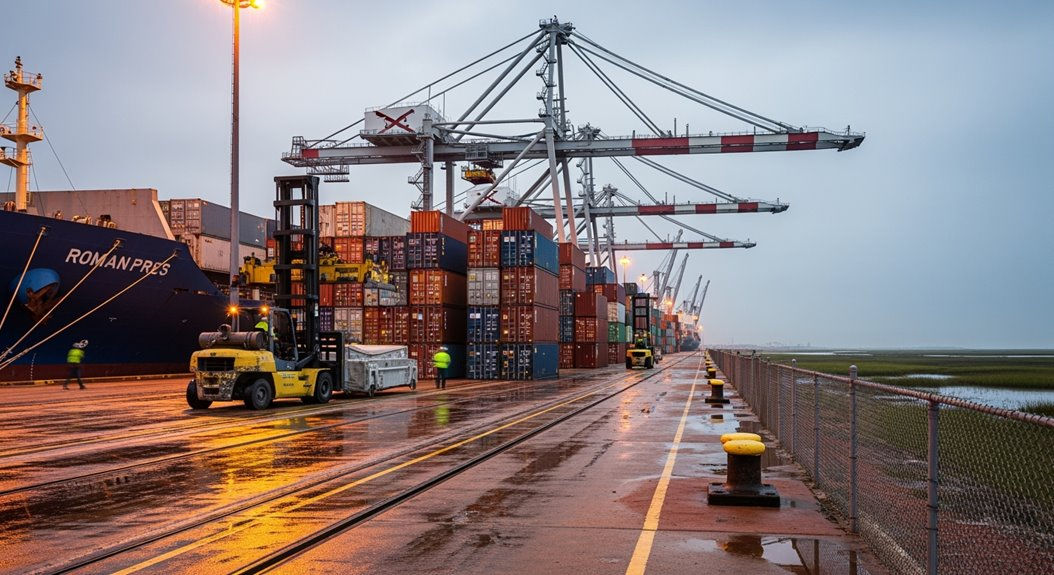
What is LHWCA Coverage?
When you’ve been injured while working on navigable waters or in adjacent shore-based areas, the Longshore and Harbor Workers’ Compensation Act (LHWCA) provides federal protection that’s distinct from standard workers’ compensation. This federal law covers dock workers, shipbuilders, harbor construction workers, and others engaged in maritime employment.
LHWCA benefits include medical treatment, wage replacement, and vocational rehabilitation without coverage limits on medical care. However, the law contains specific injury exclusions for certain workers like vessel crew members and recreational marina employees. Understanding your coverage determines whether you’ll receive benefits and which legal framework applies to your claim. The LHWCA also covers injuries that occur on piers, wharves, docks, dry docks, terminals, shipyards, marine railways, and other adjoining areas customarily used for vessel-related activities.
Who Qualifies for LHWCA Benefits?
Your employment status determines eligibility. You must work as a maritime employee loading vessels, repairing docks, building ships, or performing similar harbor-related duties. The law doesn’t require specific exposure duration to qualify.
Even temporary maritime workers can receive benefits if injured during covered employment activities on navigable waters or adjoining areas like piers, wharves, and terminals throughout Rhode Island’s coastal regions. Under the LHWCA, eligible workers may receive medical, wage loss, and vocational rehabilitation benefits administered by the OWCP/DLHWC.
How Does LHWCA Differ from Other Maritime Laws?
The LHWCA operates as a no-fault workers’ compensation system specifically designed for harbor workers, while other maritime laws like the Jones Act provide different protections based on your vessel-based employment status. Understanding comparative jurisdiction matters because your work location determines which law applies to your injury claim.
The LHWCA provides exclusive remedies for land-based maritime workers, meaning you’ll receive benefits through this system rather than filing traditional lawsuits. Jones Act seamen can pursue negligence claims against employers, while LHWCA claimants follow administrative procedures. These distinctions materially impact your compensation options and legal strategy for recovery.
Major Ports and Maritime Facilities in Rhode Island
Port of Providence
Located in the upper Narragansett Bay, the Port of Providence serves as Rhode Island’s primary deep-water shipping terminal. The facility operates across 140 acres of industrial waterfront property in Providence’s working harbor district. Major operators include ProvPort, a subsidiary of Waterson Terminal Services, which manages general cargo operations, and various stevedoring companies that handle bulk commodities, break-bulk cargo, and specialized shipments. The port serves diverse industries including construction materials, energy products, salt, scrap metal, and heavy machinery distribution throughout southern New England.
The Port of Providence processes over 400 vessel calls annually and handles approximately 1.5 million tons of cargo each year. The facility employs several hundred maritime workers including longshoremen, crane operators, and terminal staff represented by the International Longshoremen’s Association. Recent infrastructure investments have focused on modernizing cargo handling equipment and improving rail connections to enhance intermodal capabilities. The port generates significant economic impact for Rhode Island through direct employment, induced business activity, and tax revenues, serving as a critical supply chain node for the regional economy. According to federal reporting, Rhode Island ports are included in the U.S. Port Performance assessments that track throughput, capacity, and efficiency metrics across major American gateways.
Port of Davisville (Quonset Business Park)
The Port of Davisville is situated within the Quonset Business Park in North Kingstown, occupying a former naval air station site along the western shore of Narragansett Bay. The facility is managed by the Quonset Development Corporation and has become New England’s premier automobile import terminal, with companies like Waterson Auto Logistics operating extensive vehicle processing operations. The port also serves as a strategic staging area for offshore wind energy development, hosting major wind energy companies and supporting marine construction projects. Additional operations include heavy-lift cargo handling, military logistics support, and marine trades.
The Port of Davisville handles over 200,000 imported vehicles annually and accommodates approximately 150-200 vessel calls per year. The facility employs hundreds of workers in stevedoring, vehicle processing, terminal operations, and support services. Over $100 million in infrastructure improvements have been invested in recent years, including pier renovations, expanded laydown areas, and enhanced cargo handling capabilities. The offshore wind industry presence has created substantial new employment opportunities with continued growth projected. The port contributes over $400 million annually to Rhode Island’s economy through direct operations, supply chain activities, and related maritime services.
Newport Harbor
Newport Harbor is located along Rhode Island’s southeastern coastline in the historic city of Newport, serving as both a working waterfront and a premier recreational maritime destination. The harbor accommodates cruise ship visits through the Newport Cruise Terminal, which brings seasonal passenger vessel traffic to the city. Fort Adams State Park and the Newport Yachting Center provide berthing for visiting vessels and support Newport’s world-renowned sailing culture. The harbor district includes commercial fishing operations, charter boat services, marine repair facilities, and ferry terminals connecting to other coastal communities. Newport’s maritime heritage attractions, including the International Yacht Restoration School and multiple maritime museums, contribute to the area’s maritime economy.
Newport Harbor hosts approximately 25-35 cruise ship calls annually, bringing tens of thousands of passengers to the region during the cruise season. The broader maritime economy in Newport employs several hundred workers across commercial fishing, recreational boating services, maritime education, vessel maintenance, and tourism-related activities. The harbor has benefited from ongoing investments in waterfront infrastructure improvements and environmental restoration projects. Port festivals, sailing events, and maritime heritage tourism generate significant economic activity, with the combined maritime and tourism economy contributing tens of millions of dollars to Newport’s local economy. The harbor continues to balance working waterfront preservation with recreational maritime development.

Common Longshore and Dock Worker Accidents in Rhode Island
When loading operations begin at Rhode Island’s busy maritime facilities, longshore workers face an array of serious hazards that can result in catastrophic injuries or death.
The demanding nature of dock work creates dangerous conditions:
- Falls from heights onto icy decks or into frigid waters, where cold exposure leads to hypothermia within minutes
- Crushing injuries from shifting cargo containers and unsecured loads during crane operations
- Chemical burns from hazardous substances routinely handled in confined vessel compartments
Sleep deprivation and isolation during extended shifts impact mental health, impairing judgment and increasing accident risk markedly. OSHA highlights additional risks specific to longshoring and marine terminals, including struck-by hazards, vehicle collisions, and exposure to noise and hazardous atmospheres.
Longshore and Port Worker Injury Statistics in Rhode Island
Although Rhode Island’s maritime industry employs thousands of workers along its bustling waterfront, state-specific injury data for longshore and port workers remains frustratingly limited.
National statistics reveal the sobering reality you face daily:
- Longshore workers suffer injury rates triple the national average across all industries, with crushing injuries and falls from heights leading the toll
- Fatal injury rates reach 10–20 deaths per 100,000 workers, far exceeding typical workplace dangers
- Maximum weekly compensation stands at $2,082.70, though inadequate settlements often shortchange injured workers
Despite Rhode Island port safety improvements and maritime training programs, these hazards persist at Providence and Quonset facilities. According to BLS Table 1, private industry experienced an overall nonfatal injury and illness incidence rate of 2.7 cases per 100 full-time workers nationally, underscoring the elevated risks longshore workers face compared to the broader workforce.
Compensation Available for Longshoremen in Rhode Island
If you’ve suffered an injury while working as a longshoreman in Rhode Island, the Longshore and Harbor Workers’ Compensation Act provides several categories of benefits designed to protect your financial security and health.
Understanding what compensation you’re entitled to helps you recognize when insurance carriers offer settlements that fall short of your full recovery needs. These benefits include all-encompassing medical care, various forms of disability payments, death benefits for families who’ve lost a loved one, and potentially additional damages in certain circumstances.
Medical Benefits
Receiving thorough medical care after a workplace injury stands as your most fundamental right under the Longshore and Harbor Workers’ Compensation Act.
Medical benefits cover all necessary treatment related to your injury, including emergency care, surgery, and ongoing rehabilitation. You’ll have treatment access to approved physicians who understand maritime injuries. The coverage extends to pharmacy coverage for prescribed medications and medical equipment you need during recovery.
When your condition requires specialized attention, you’re entitled to specialist referrals without fighting for approval. Your employer’s insurance carrier must authorize and pay for all reasonable medical expenses stemming from your workplace accident.
Disability Benefits
Your medical treatment addresses your physical recovery, but disability benefits provide the financial support you need when injuries prevent you from working.
The Longshore Act provides compensation based on your average weekly wage and the severity of your disability. Benefits can cover temporary or permanent disabilities, whether partial or total. In some cases, you may be entitled to vocational rehabilitation services to help you return to suitable employment.
Insurance carriers often require independent medical examinations or psychiatric evaluations to assess your condition. We’ll make certain these evaluations are conducted fairly and challenge any biased findings.
Death Benefits
The devastating loss of a family breadwinner creates immediate financial hardship on top of overwhelming grief. Under the Longshore Act, eligible survivors receive two-thirds of the deceased worker’s average weekly wage. This typically includes spouses and dependent children.
The law also provides a $3,000 burial allowance to help cover funeral expenses. Beyond financial compensation, families may access survivor counseling through approved medical providers. These death benefits continue until remarriage for spouses or until children reach adulthood. Understanding your full entitlements during this difficult time guarantees your family receives every benefit the law provides.
Additional Damages
Beyond standard workers’ compensation benefits, injured longshoremen in Rhode Island can pursue additional damages when third parties share responsibility for their injuries. These claims can include compensation for emotional distress—the psychological impact of your injury, including anxiety, depression, and trauma.
You might recover damages for pain and suffering, loss of enjoyment of life, and in cases involving egregious negligence, punitive damages designed to punish wrongdoers and deter similar conduct. Third-party claims against equipment manufacturers, vessel owners, or contractors operate separately from Longshore Act benefits, allowing you to seek full compensation beyond workers’ compensation limitations.
Statute of Limitations for Filing a LHWCA Claim
When you’ve suffered an injury covered under the Longshore and Harbor Workers’ Compensation Act, understanding the filing deadlines becomes just as critical as seeking medical treatment.
The LHWCA imposes strict statute deadlines that can permanently bar your claim if missed. You must notify your employer within 30 days of your injury and file your formal claim within one year. These filing nuances require careful attention, as exceptions exist for delayed-discovery injuries or occupational diseases. Missing these deadlines means forfeiting your right to compensation, regardless of how severe your injuries are or how legitimate your claim.
Get Results
Each one of our lawyers is a skilled and experienced litigator and negotiator. We never recommend settling your case when trial presents a better opportunity for recovery.



Why Do I Need a Longshoremen Workers Comp Injury Lawyer?
Managing a Longshore and Harbor Workers’ Compensation Act claim without experienced legal representation puts you at a significant disadvantage against employers and insurance carriers who’ve handled thousands of these cases. Attorneys understand client expectations and make certain you’re pursuing full compensation, not just quick settlements.
They know proper evidence preservation techniques, documenting injuries, securing witness statements, and preserving medical records before they’re lost or destroyed. Insurance adjusters often minimize claims or deny valid benefits. A specialized lawyer levels the playing field, handling complex federal procedures while you focus on recovery. They maximize your compensation through strategic negotiation or trial.
Why Choose Grossman Attorneys for Your Rhode Island LHWCA Claim
When you’re injured on the job under the Longshore and Harbor Workers’ Compensation Act, you need attorneys who’ll fight aggressively for full compensation while treating you with the respect and compassion you deserve.
Grossman Attorneys at Law is a respected maritime law firm with over 40 years of experience representing injured workers across the nation. Our maritime injury attorneys have secured substantial settlements and verdicts in cases ranging from Defense Base Act claims to longshoremen workers’ comp injury cases and offshore accidents. We understand the complex laws that govern these claims and stand ready to take your case to trial when insurance companies fail to offer the fair compensation you deserve.
Aggressive But Fair Representation
Your LHWCA claim deserves representation that matches the strength of the opposition you’ll face. Grossman Attorneys combines zealous advocacy with ethical representation, fighting aggressively for your rights while maintaining professional integrity.
We’re prepared for strategic litigation when insurance carriers refuse fair compensation, but we’ll pursue fair negotiation first when it serves your interests. Our approach balances courtroom readiness with practical resolution strategies. Defense attorneys know we won’t back down from trial, which strengthens our negotiating position. You’ll receive powerful representation that’s both forceful in protecting your rights and grounded in honest, principled legal practice throughout your claim.
Experienced, Compassionate Staff
Behind every successful LHWCA claim stands a team that combines deep legal knowledge with genuine care for injured workers. Our staff training emphasizes both legal excellence and personal support, ensuring you’re never treated as just another case number.
We appreciate that maritime injuries create financial stress, physical pain, and emotional upheaval. That’s why we connect clients with trauma counseling resources when needed, recognizing that healing involves more than medical treatment alone. From intake specialists to trial attorneys, every team member works to protect your rights while respecting the challenges you’re facing during this difficult adjustment.
A Track Record of Winning Longshore Claims
Results speak louder than promises in longshore litigation. Grossman Attorneys has secured numerous multi-million-dollar settlements for injured maritime workers nationwide. Our precedent victories demonstrate our ability to challenge Fortune 500 companies and major insurance carriers successfully.
We’ve built our reputation through thorough case preparation and proven trial strategies that defense attorneys respect and recognize. When insurance companies see our name, they know we’re prepared to go to court. We don’t accept inadequate settlement offers. With over 40 years of maritime litigation experience, we appreciate what it takes to win complex longshore claims and maximize your compensation.
Injured at a Rhode Island Port? Let Grossman Attorneys Fight for Your LHWCA Compensation
If you or a loved one has suffered an injury while working at a Rhode Island port or maritime facility, you don’t have to navigate the complex LHWCA claims process alone.
Grossman Attorneys at Law has spent over four decades fighting for injured maritime workers nationwide, securing the maximum compensation our clients deserve. We recognize the physical, emotional, and financial toll these injuries take on workers and their families.
Our litigation-first approach means insurance carriers know we’re prepared to take your case to trial if necessary. Don’t settle for less than you’re entitled to under the law.
Contact Grossman Attorneys today to speak with an experienced LHWCA attorney who’ll fight tirelessly for your rights and your future.
*If you hire Grossman Attorneys for your LHWCA case, you pay no attorney fees for our service. When we win your case, the employer or its insurer typically pays a DOL-approved attorney’s fee and any case expenses we advanced are reimbursed from the recovery. If we don’t win, you pay nothing.
- https://dem.ri.gov/sites/g/files/xkgbur861/files/bayteam/documents/riports.pdf
- https://oceantic.org/port-of-davisville-positions-rhode-island-as-a-hub-for-the-blue-economy/
- https://www.provport.com
- https://repository.library.noaa.gov/view/noaa/43369/noaa_43369_DS1.pdf
- https://watersonllc.com/port-of-davisville.html
- https://web.uri.edu/gso/research/endeavor/port/
- https://www.maritime.dot.gov/data-reports/ports/list
- https://www.moranshipping.com/locations/ports/providence-ri
- https://www.bristolri.gov/241/Harbor
- https://turnto10.com/news/local/two-die-within-hours-of-each-other-in-separate-accidents-along-rhode-islands-shore