


Top Rated South Carolina Longshoreman injury Law Firm – Grossman Attorneys
If you’ve been injured working on South Carolina’s docks or ports, you face a federal claims system far more complex than standard workers’ compensation. The Longshore and Harbor Workers’ Compensation Act (LHWCA) provides substantial benefits, but one missed deadline or procedural mistake can cost you the compensation you’ve earned through years of hard work.
Grossman Attorneys at Law has extensive experience handling LHWCA claims for injured longshoremen and port workers. Our attorneys understand the federal regulations governing your case and have a proven track record of securing strong settlements through aggressive negotiation with insurance companies. When insurers refuse fair compensation, we’re fully prepared to take your case to trial.
You’ve devoted your career to keeping South Carolina’s ports running. Now let us fight for the benefits you deserve. Contact Grossman Attorneys at Law today for a free consultation about your longshore injury claim.
Understanding the Longshore and Harbor Workers’ Compensation Act (LHWCA)
If you’ve been injured while working on South Carolina’s docks, ports, or waterfront facilities, you’re likely covered under the Longshore and Harbor Workers’ Compensation Act (LHWCA). This federal law provides specific benefits and protections for maritime workers who don’t qualify as traditional “seamen” under the Jones Act.
Understanding LHWCA coverage, who qualifies for benefits, and how this law differs from other maritime protections is essential to securing the full compensation you deserve after a workplace injury. Under 33 U.S.C. Chapter 18, the LHWCA outlines eligibility, benefits, and procedures for injured maritime workers, including definitions of covered employment and compensation, as detailed in the Longshore and Harbor Workers’ Compensation Act.
What is LHWCA Coverage?
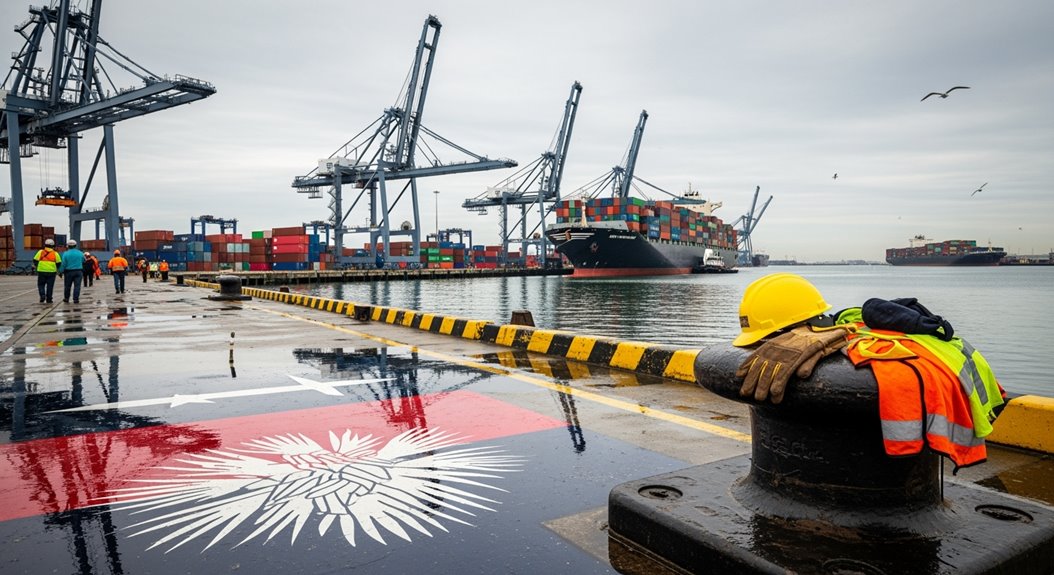
When you’re injured while working on South Carolina’s docks, shipyards, or harbor facilities, the Longshore and Harbor Workers’ Compensation Act (LHWCA) provides essential federal protection that differs markedly from standard workers’ compensation. This federal law establishes thorough coverage scope for maritime workers performing duties on navigable waters or adjoining areas like piers and terminals.
The LHWCA creates strict employer liability standards, requiring maritime employers to provide medical treatment and wage replacement benefits regardless of fault. Unlike traditional workers’ compensation, LHWCA coverage extends to permanent disability, vocational rehabilitation, and death benefits for qualifying maritime employees. Under the LHWCA, claims are administered by the OWCP’s DLHWC, and benefits can include medical care, wage loss compensation, and vocational rehabilitation based on your case specifics.
Who Qualifies for LHWCA Benefits?
Understanding whether you qualify for LHWCA benefits requires meeting two fundamental tests that federal courts apply to determine coverage eligibility.
First, you must satisfy the status test by working as a maritime employee in positions like longshoreman, harbor worker, or ship repairer. Second, you need to meet the situs test, meaning your injury occurred on navigable waters or adjacent areas like piers, docks, or terminals. These eligibility criteria for covered employees guarantee protection extends to workers performing essential maritime operations.
Both tests must be satisfied simultaneously to establish your right to compensation under federal maritime law. Covered injuries also include those occurring at dry docks, shipyards, terminals, and other adjoining areas customarily used for vessel loading, unloading, repairing, dismantling, or building.
How Does LHWCA Differ from Other Maritime Laws?
The LHWCA operates as a distinct compensation system separate from both the Jones Act and general maritime law, each addressing different categories of maritime workers with unique remedies and requirements.
Understanding comparative jurisdiction matters because Jones Act seamen can sue employers for negligence and receive unlimited damages, while LHWCA provides no-fault benefits with compensation limits set by federal schedules. You don’t need to prove employer fault under LHWCA, but your maximum recovery follows predetermined formulas.
General maritime law covers passengers and recreational boaters, creating an entirely different legal framework that doesn’t apply to longshore workers seeking workplace injury compensation.
Major Ports and Maritime Facilities in South Carolina
Port of Charleston
The Port of Charleston is South Carolina’s largest maritime complex, located in Charleston Harbor along the state’s central coast. Operated by the South Carolina Ports Authority, the facility encompasses five specialized terminals: Wando Welch Terminal, Hugh K. Leatherman Terminal, Columbus Street Terminal, Union Pier Terminal, and Veterans Terminal.
Each terminal is designed to handle specific cargo types, including containerized goods, breakbulk cargo, roll-on/roll-off vehicles, and various bulk materials. The port features state-of-the-art infrastructure including advanced ship-to-shore crane technology, deep-water berths with depths reaching 45 feet to accommodate Post-Panamax vessels, and integrated on-dock rail connections for efficient intermodal transportation.
The Port of Charleston handles millions of tons of cargo annually and employs thousands of longshore workers who support operations across its terminal network. The facility serves as a critical gateway for international trade, connecting South Carolina businesses and consumers with more than 150 nations worldwide.
The port’s economic impact extends throughout the region, generating billions of dollars in trade value and supporting a significant portion of the state’s maritime industry workforce. Analysts often estimate this broader regional impact using RIMS II multipliers, which translate port-related spending into total jobs, income, and output effects across the state.
Port of Georgetown
The Port of Georgetown is South Carolina’s second major maritime facility, located in Georgetown along the state’s northeastern coast. This port specializes in bulk cargo operations, primarily handling commodities such as steel and cement.
The facility serves industrial clients and manufacturers requiring bulk material imports and exports, operating with infrastructure tailored to these specific cargo types. The Port of Georgetown contributes to South Carolina’s maritime commerce by providing specialized bulk handling capabilities that complement the container and diversified cargo operations at Charleston. While smaller in scale than the Port of Charleston, Georgetown plays an important role in the state’s overall port system and supports local employment in maritime and logistics sectors.
Common Longshore and Dock Worker Accidents in South Carolina
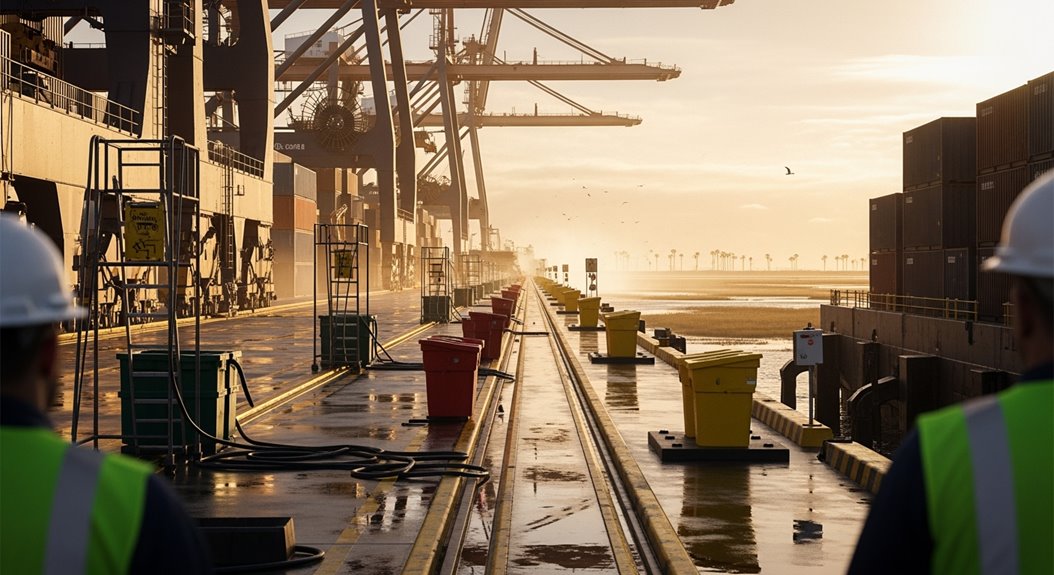
Working on South Carolina’s docks and in its ports exposes longshore workers to some of the most hazardous conditions in the American workforce. You face daily risks that can result in life-altering injuries:
- Falls from ship decks, scaffolding, or slippery surfaces caused by oil and seawater
- Struck-by accidents involving falling containers, cargo, or malfunctioning cranes
- Equipment failures with forklifts, lifting devices, and yard vehicles
- Overexertion injuries from repetitive lifting without proper dock ergonomics or adequate footwear design
These accidents often stem from inadequate safety measures, poor maintenance, and insufficient training—conditions that shouldn’t compromise your wellbeing. OSHA highlights common marine terminal hazards and provides resources on longshoring safety to help prevent these types of accidents.
Longshore and Port Worker Injury Statistics in South Carolina
Statistics paint a sobering picture of the risks you face working South Carolina’s ports and waterways.
Transportation incidents caused 44 workplace deaths in 2023, representing 39% of all occupational fatalities statewide. Water transportation workers nationwide face fatality rates three times higher than other industries. According to BLS CFOI 2022 data, transportation incidents were the leading event/exposure category for fatal occupational injuries across multiple industries.
Your risk factors include:
- Motor vehicle and equipment accidents accounting for 24 South Carolina workplace deaths
- Seasonal injury patterns during peak shipping periods when rushed schedules increase dangers
- Crew language barriers complicating safety communication on diverse port teams
- Musculoskeletal disorders from repetitive heavy lifting and awkward positions
These numbers represent real workers facing life-changing injuries daily.
Insurance companies know our reputation. They know we prepare every case for trial and we’ll go the distance when settlement offers fall short. We investigate thoroughly, build bulletproof cases, and aren’t afraid to take yours to court. That changes negotiations from the start.
Anytime. Anywhere. We’re Ready to Fight for You.
Compensation Available for Longshoremen in South Carolina
If you've been injured while working on South Carolina's docks, ports, or waterways, the Longshore and Harbor Workers' Compensation Act provides several types of compensation to help you recover and support your family.
These benefits are designed to cover your immediate medical needs, replace lost wages during your recovery, and provide financial security if you can't return to your previous work. Understanding what compensation you're entitled to is the first step toward getting the full recovery you deserve after a workplace accident.
Medical Benefits
Under the Longshore and Harbor Workers' Compensation Act, you're entitled to full medical coverage for your work-related injury without any out-of-pocket costs. This includes doctor visits, hospital stays, surgeries, medications, physical therapy, and any necessary medical equipment. Your employer's insurance carrier must pay for all reasonable and necessary treatment related to your workplace injury.
However, insurance companies often create obstacles through medical authorization requirements and treatment delays. They may require you to see their chosen doctors or deny recommended treatments. When insurers refuse proper care, we'll fight to guarantee you receive the medical treatment you need for recovery.
Disability Benefits
Beyond covering your medical expenses, the Longshore Act provides compensation to replace lost wages when your injury prevents you from working. You'll receive income replacement based on two-thirds of your average weekly wage during your recovery.
If you can't return to your previous position, you're entitled to vocational rehabilitation services that help you develop new job skills. These benefits continue until you reach maximum medical improvement or can return to suitable employment. The calculation of your disability payments depends on whether your injury causes temporary or permanent limitations and affects your earning capacity.
Death Benefits
The loss of a family's primary wage earner creates devastating financial consequences that compound the emotional trauma of losing a loved one.
When a longshore worker dies from a work-related injury or illness, the Longshore Act provides survivor support to eligible family members. These death benefits typically equal two-thirds of the deceased worker's average weekly wage, distributed among qualifying dependents. The Act also provides funeral reimbursement up to $3,000 to help cover burial expenses.
Surviving spouses without dependent children receive benefits until remarriage, while those with children receive continued support throughout the children's dependency period.
Additional Damages
When longshore workers suffer injuries in South Carolina ports and harbors, they're often entitled to compensation beyond standard medical coverage and wage replacement benefits.
If your employer's negligence or intentional actions caused your accident, you might recover punitive damages—extra financial awards designed to punish wrongful conduct and prevent future violations.
Some injured longshoremen also qualify for emotional distress compensation when their injuries cause psychological trauma, anxiety, or depression. These additional damages materially increase your total recovery. However, securing them requires proving specific legal elements that insurance companies aggressively challenge. Experienced maritime attorneys understand how to document and present these complex claims effectively.
Statute of Limitations for Filing a LHWCA Claim
Because timing can make or break your Longshore and Harbor Workers' Compensation Act claim, you need to understand the strict deadlines that govern your right to benefits.
You generally must notify your employer within 30 days of your injury and file your claim within one year. Missing these claim deadlines can result in permanent loss of your right to compensation.
However, certain filing exceptions exist for situations where you didn't immediately realize your injury was work-related or when employers fail to provide proper notice. Our attorneys can evaluate whether exceptions apply to protect your rights.
Get Results
Each one of our lawyers is a skilled and experienced litigator and negotiator. We never recommend settling your case when trial presents a better opportunity for recovery.



Why Do I Need a Longshoremen Workers Comp Injury Lawyer?
Understanding these deadlines is just the first step, navigating the actual claims process while recovering from your injuries presents an entirely different challenge.
Maritime employers and their insurers maintain experienced legal teams protecting their interests. Without skilled legal advocacy on your side, you're negotiating from a position of weakness. A specialized Longshore attorney levels this playing field through expert claims navigation, ensuring proper documentation, meeting procedural requirements, and countering tactics designed to minimize your compensation. They handle the complex legal work while you focus on recovery, transforming a formidable process into a manageable path toward fair compensation.
Why Choose Grossman Attorneys for Your South Carolina LHWCA Claim
When you're injured on the job as a maritime worker in South Carolina, you need attorneys who won't back down from insurance companies or accept less than full compensation for your injuries.
Grossman Attorneys at Law is a respected maritime law firm with over 40 years of experience representing injured workers across the nation. Our maritime accident law firm has secured substantial settlements and verdicts in cases ranging from Defense Base Act claims to longshoremen workers' comp injury cases and offshore accidents. We understand the complex laws that govern these claims and stand ready to take your case to trial when insurance companies fail to offer the fair compensation you deserve.
Aggressive But Fair Representation
Insurance companies and defense attorneys respect opponents who'll take a case all the way to trial, and that reputation shapes every negotiation from the first claim filing. Grossman Attorneys combines assertive negotiation with ethical zeal, pushing aggressively for maximum compensation while maintaining professional integrity throughout your case.
You'll benefit from representation that insurance carriers take seriously because they know we're prepared to litigate if settlement offers fall short. Our litigation-first approach means thorough case preparation from day one, positioning your claim for courtroom success while pursuing fair settlement terms. This balanced strategy consistently delivers superior results for South Carolina maritime workers.
Experienced, Compassionate Staff
Behind every successful longshore case stands a dedicated team that understands both maritime law and the real-world challenges injured workers face. Our staff guides you through complex case navigation with patience and clarity, explaining each step in straightforward terms. During client interviews, we listen carefully to understand your injury's full impact on your life and livelihood.
We recognize you're dealing with medical treatments, financial stress, and uncertainty about your future. Our team responds promptly to your questions and keeps you informed throughout your claim. You'll work with professionals who genuinely care about securing the compensation you deserve.
A Track Record of Winning Longshore Claims
Results matter most after a serious workplace injury threatens your financial security and future earning capacity. Grossman Attorneys has secured numerous multi-million-dollar settlements for injured maritime workers nationwide. Our case outcomes reflect decades of specialized experience handling complex Longshore Act claims against Fortune 500 companies and major insurance carriers.
Defense attorneys recognize our thorough preparation and willingness to litigate when necessary. We don't accept inadequate settlements. Our trial strategies demonstrate commitment to maximum compensation, whether through negotiated resolution or courtroom advocacy. You'll benefit from proven expertise that delivers measurable results when your livelihood depends on proper legal representation.
Injured at a South Carolina Port? Let Grossman Attorneys Fight for Your LHWCA Compensation
If you or a loved one has suffered an injury while working at a South Carolina port, you don't have to navigate the complex LHWCA claims process alone. Grossman Attorneys at Law has over 40 years of experience fighting for injured maritime workers nationwide, and we appreciate the challenges you're facing.
Our litigation-first approach means we're prepared to take your case to trial if insurance carriers refuse to offer fair compensation. Defense attorneys and insurers know our reputation for thorough preparation and courtroom advocacy.
Don't settle for less than you deserve. Contact Grossman Attorneys today to speak with an experienced LHWCA attorney who'll fight to secure the maximum compensation for your injuries.
*If you hire Grossman Attorneys for your LHWCA case, you pay no attorney fees for our service. When we win your case, the employer or its insurer typically pays a DOL-approved attorney’s fee and any case expenses we advanced are reimbursed from the recovery. If we don't win, you pay nothing.
- https://www.transoceancontainers.net/popular-shipping-ports-in-south-carolina/
- https://en.wikipedia.org/wiki/Port_of_Charleston
- https://projects.scdot.org/Multimodal/pdf/tech_memo_part3.pdf
- https://scspa.com/facilities/north-charleston-terminal/
- https://nauticalcharts.noaa.gov/hsrp/archive/2014/sept/2013 SC Port Guide.pdf
- https://ferrercrea.com/charleston-ports/
- https://scspa.com/about-the-port/publications/port-directory/
- https://scspa.com/navy-base-intermodal-facility/
- https://scspa.com/about-the-port/
- https://scspa.com/facilities/