


Top Rated New Hampshire Longshoreman injury Law Firm – Grossman Attorneys
If you work loading cargo, repairing vessels, or performing other dock work along New Hampshire’s coastline and suffered an injury on the job, you need an attorney who understands the federal Longshore and Harbor Workers’ Compensation Act that governs your claim. Standard workers’ compensation lawyers often lack the specialized knowledge required to maximize your LHWCA benefits.
Grossman Attorneys at Law has extensive experience representing injured longshoremen and port workers throughout the United States. Our team knows how to negotiate aggressively with insurance carriers and secure the medical treatment and wage replacement benefits you deserve. When insurers deny valid claims or offer inadequate settlements, we’re fully prepared to take your case to trial. You’ve worked hard in dangerous conditions to support your family. Now let us fight just as hard for you. Contact Grossman Attorneys at Law today for a free consultation about your longshore injury claim.
Understanding the Longshore and Harbor Workers’ Compensation Act (LHWCA)
If you’ve been injured while working on New Hampshire’s docks, shipyards, or harbor facilities, you’re likely covered under the Longshore and Harbor Workers’ Compensation Act (LHWCA). This federal law provides medical benefits and wage replacement to maritime workers who get hurt on navigable waters or adjoining areas like piers and terminals.
Understanding how LHWCA works, who qualifies for protection, and how it differs from other maritime laws is essential to securing the full compensation you deserve after a workplace accident. Under the LHWCA, employers must secure coverage through private insurance or approved self-insurance, and a DOL-administered Special Fund helps pay certain benefits when responsible employers or insurers cannot.
What is LHWCA Coverage?
The Longshore and Harbor Workers’ Compensation Act (LHWCA) provides critical wage replacement and medical benefits to maritime workers injured on navigable waters or adjoining areas like docks, piers, and shipyards. Understanding the coverage scope is essential for determining your eligibility. The Act protects longshoremen, harbor workers, ship repairers, and shipbuilders working in maritime employment. However, exclusion examples include master or crew members of vessels, office workers, and retail employees.
If you’re injured while loading cargo, repairing ships, or working on docks, you’ll likely qualify for LHWCA benefits. Coverage extends beyond traditional maritime roles to anyone performing maritime work in covered locations. Additionally, claims are administered by the OWCP and DLHWC, which oversee benefit processing and dispute resolution under the LHWCA.
Who Qualifies for LHWCA Benefits?
Determining your qualification status under the LHWCA requires meeting two fundamental tests: the status test and the situs test. The status test examines your employment status as a maritime worker, confirming you’re not a vessel master or crew member. The situs test evaluates your work location, verifying you perform duties on navigable waters or adjoining areas like docks, piers, or terminals.
Meeting these eligibility criteria establishes your right to benefits. New Hampshire maritime workers employed at Portsmouth’s shipyards, Dover’s waterfront facilities, or Hampton Harbor operations typically satisfy both requirements when injured during their employment. Under the LHWCA, eligible workers may receive medical benefits as well as disability or death benefits for injuries occurring on covered navigable waters or adjoining areas.
How Does LHWCA Differ from Other Maritime Laws?
Maritime law encompasses several distinct legal frameworks, and understanding which one applies to your situation directly affects your available compensation and legal remedies. The LHWCA covers dock workers and harbor employees, while the Jones Act protects seamen working aboard vessels. General maritime law addresses injuries occurring on navigable waters.
These overlapping areas create jurisdictional overlap that requires careful legal analysis. Each framework offers different protections, establishing a benefits hierarchy that determines whether you’ll receive workers’ compensation-style benefits or can pursue full damages through a personal injury lawsuit. Proper classification is essential for maximizing your recovery.
Major Ports and Maritime Facilities in New Hampshire
Portsmouth Harbor
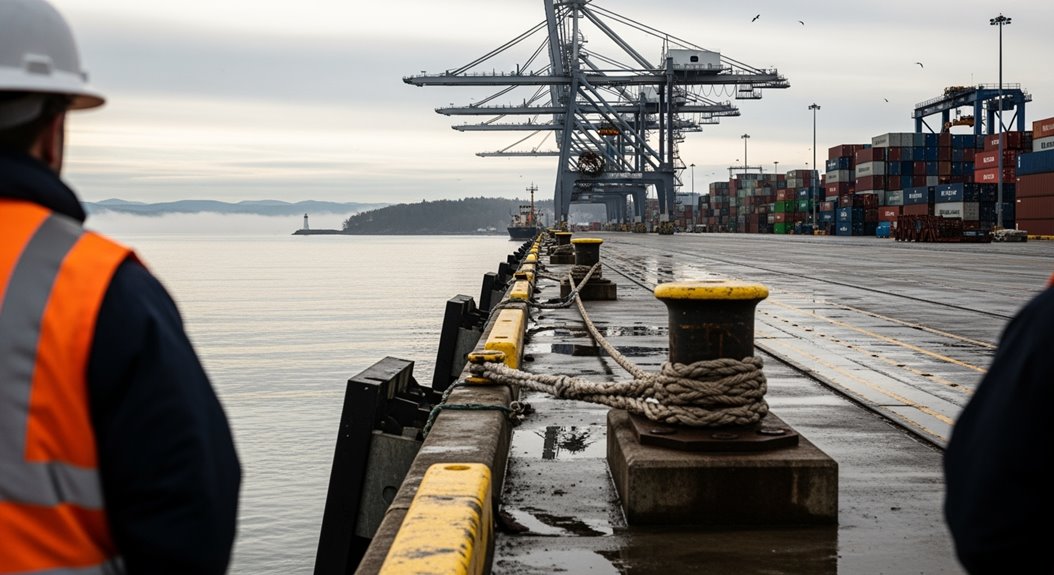
Portsmouth Harbor serves as New Hampshire’s primary maritime gateway, located along the Piscataqua River where it meets the Atlantic Ocean. The harbor spans both New Hampshire and Maine borders and includes the Market Street Marine Terminal, which handles diverse commercial operations for petroleum distributors, construction material suppliers, and scrap metal exporters.
Portsmouth Naval Shipyard, despite its name actually located in Kittery, Maine, represents the region’s largest maritime employer and specializes in nuclear submarine maintenance and overhaul operations for the U.S. Navy.
The harbor processes approximately 1.5 to 2 million tons of cargo annually, with petroleum products, road salt, cement, and scrap metal comprising the bulk of shipments. Portsmouth Naval Shipyard employs over 6,500 federal civilian workers, making it one of the largest employers in the Seacoast region. The facility contributes significantly to the local economy, generating hundreds of millions in annual economic impact through direct employment, contractor services, and related maritime activities. Ports across the United States support 1 in every 8 American jobs, according to the 2024 report, highlighting the broader economic importance of maritime operations.
Commercial Fishing Ports
New Hampshire maintains several smaller commercial fishing operations concentrated primarily in Portsmouth, Rye Harbor, and Hampton Harbor. These facilities support local fishing fleets that harvest lobster, groundfish, and other Atlantic species. Commercial fishing operations employ vessel crews, processing workers, and support staff who maintain the state’s traditional maritime industries.
New Hampshire’s commercial fishing industry, while modest compared to neighboring Maine and Massachusetts, generates several million dollars in annual landings. The ports accommodate dozens of commercial fishing vessels and provide essential services including fuel, ice, maintenance facilities, and fish processing operations that support both commercial fishermen and the recreational fishing charter industry.
Common Longshore and Dock Worker Accidents in New Hampshire
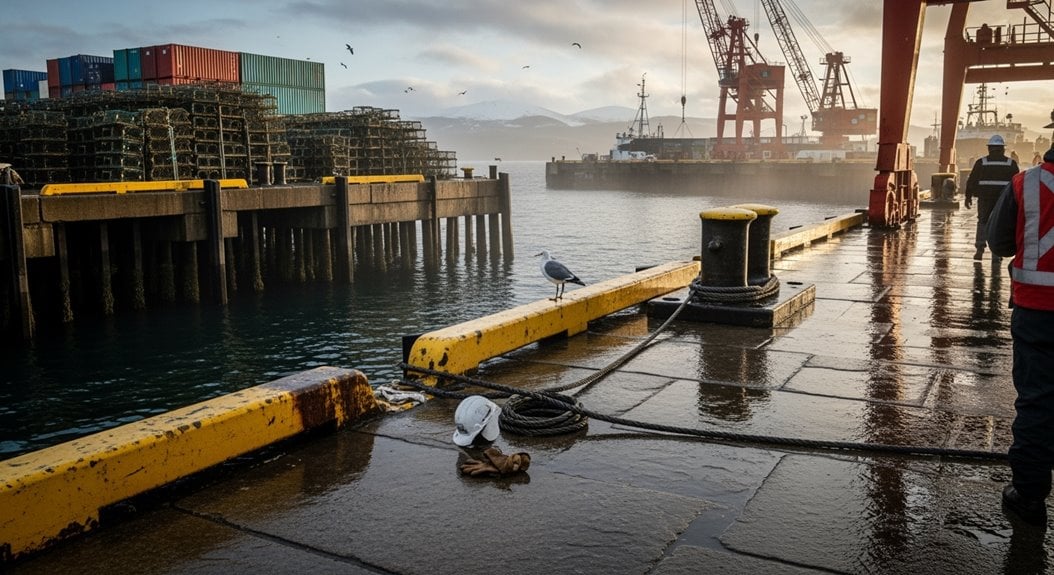
Longshore and dock workers in New Hampshire face numerous workplace hazards that can result in severe and life-altering injuries. Despite strict safety protocols, accidents occur frequently due to environmental conditions, mechanical failures, and human factors. OSHA provides guidance on longshoring hazards and best practices through its longshoring safety resources for terminals.
Common accidents include:
- Slip and fall incidents on decks slick with seawater, oil, or ice, often worsened by inadequate footwear standards
- Heavy machinery accidents involving cranes, forklifts, and winches that cause crushing injuries
- Falling cargo from improperly secured loads or failed rigging systems
- Exposure to hazardous chemicals and extreme weather conditions
- Equipment failures resulting from insufficient equipment inspections and deferred maintenance
These incidents often stem from preventable safety violations.
Longshore and Port Worker Injury Statistics in New Hampshire
The hazards facing New Hampshire’s maritime workforce translate into sobering numbers that underscore the dangerous reality of port and dock work.
Nationally, longshore workers face a fatality rate exceeding 17 deaths per 100,000 employees, approximately six times higher than average U.S. workers. These statistics likely underestimate true injury rates due to underreporting impact from worker fear and confusion about reporting requirements. The water transportation industry has a fatality rate 4.7 times higher than the rate for all U.S. workers, according to NIOSH priorities, highlighting the elevated risks faced by maritime employees.
Critical injury data reveals:
- Nearly 5,000 non-fatal injuries per 100,000 longshore workers annually
- One in twenty workers sustains reportable injuries yearly
- Port infrastructure accidents contribute to elevated risk profiles
- Only 53% of injured New Hampshire workers received compensation
- $239 million in workers’ compensation claims statewide
Insurance companies know our reputation. They know we prepare every case for trial and we’ll go the distance when settlement offers fall short. We investigate thoroughly, build bulletproof cases, and aren’t afraid to take yours to court. That changes negotiations from the start.
Anytime. Anywhere. We’re Ready to Fight for You.
Compensation Available for Longshoremen in New Hampshire
When you're injured while working on New Hampshire's docks, harbors, or waterways, the Longshore and Harbor Workers' Compensation Act provides specific types of financial protection to help you recover. Understanding what compensation you're entitled to can make a significant difference in your family's financial stability during your recovery period.
The law guarantees several categories of benefits, including coverage for all medical treatment, payments to replace lost wages, survivor benefits if a workplace accident proves fatal, and potential additional damages in certain circumstances.
Medical Benefits
Injured longshoremen receive thorough medical coverage under the Longshore and Harbor Workers' Compensation Act, ensuring access to necessary treatment without out-of-pocket costs. Your employer's insurance carrier must pay for all reasonable and necessary medical care related to your work injury, including doctor visits, surgeries, medications, and rehabilitation services. You'll choose from approved healthcare providers who understand maritime injuries.
Insurance companies sometimes challenge recommended treatments, creating treatment disputes that delay your recovery. These carriers may question whether procedures are necessary or refuse authorization for specialists. When disagreements arise, your medical records become critical evidence supporting your need for specific care and proving the connection between your injury and required treatment.
Disability Benefits
Under federal law, longshoremen who can't work due to job-related injuries receive weekly cash payments to replace lost wages during their recovery. These disability benefits vary based on your injury's severity and impact on your earning capacity. You'll receive temporary total disability if you can't work at all, or permanent partial disability for lasting impairments.
The eligibility criteria require medical documentation proving your injury prevents work. If you can't return to your previous position, you may qualify for vocational rehabilitation services to learn new job skills while maintaining your benefit payments throughout the training period.
Death Benefits
If a longshoreman dies from a work-related injury or occupational disease in New Hampshire, the Longshore and Harbor Workers' Compensation Act provides death benefits to surviving family members. These survivor benefits typically include weekly payments to dependents, calculated as a percentage of the deceased worker's average weekly wage.
The Act also covers reasonable funeral expenses up to a statutory limit. Eligible beneficiaries usually include spouses, children, and sometimes other dependents who relied on the worker's income. You'll need to file a claim promptly to secure these benefits, as strict deadlines apply to death benefit cases.
Additional Damages
Beyond the standard medical and wage replacement benefits available through the Longshore and Harbor Workers' Compensation Act, you may pursue additional damages when your employer's negligence caused your injuries. These claims fall outside the workers' compensation system and allow you to seek compensation for emotional distress, which covers the psychological impact of your injuries and workplace accident.
In cases involving particularly reckless conduct, you might also recover punitive damages, money awarded to punish wrongdoers and deter future negligence. These additional claims require proving fault, making experienced legal representation essential for maximizing your recovery.
Statute of Limitations for Filing a LHWCA Claim
When you're injured on the job as a maritime worker, time becomes one of your most critical concerns, not just for your recovery, but for protecting your legal rights. The LHWCA imposes strict statute deadlines that can permanently bar your claim if missed.
You must notify your employer within 30 days of your injury and file your formal claim within one year. These filing timelines aren't flexible, and insurance carriers won't remind you when they're approaching. Missing these deadlines means losing your right to compensation entirely, regardless of how severe your injuries are or how clear your employer's liability may be.
Get Results
Each one of our lawyers is a skilled and experienced litigator and negotiator. We never recommend settling your case when trial presents a better opportunity for recovery.



Why Do I Need a Longshoremen Workers Comp Injury Lawyer?
Maritime employers and insurance carriers employ teams of specialized attorneys whose sole purpose is minimizing what they pay you after a workplace injury. Without experienced representation, you're facing these legal teams alone while recovering from injuries. A qualified longshore attorney levels the playing field through effective legal strategy tailored to LHWCA claims.
Your lawyer handles evidence preservation, including witness statements, accident reports, and medical documentation that strengthens your case. They understand the specific procedures and deadlines governing maritime injury claims. Most importantly, they'll fight for maximum compensation while you focus on recovery, ensuring insurance companies don't exploit your unfamiliarity with maritime law.
Why Choose Grossman Attorneys for Your New Hampshire LHWCA Claim
When you're facing a Longshore and Harbor Workers' Compensation Act claim in New Hampshire, you need attorneys who'll fight aggressively for full compensation while treating you with respect throughout the process.
Grossman Attorneys at Law is a respected maritime law firm with over 40 years of experience representing injured workers across the nation. Our maritime attorneys have secured substantial settlements and verdicts in cases ranging from Defense Base Act claims to longshoremen workers' comp injury cases and offshore accidents. We understand the complex laws that govern these claims and stand ready to take your case to trial when insurance companies fail to offer the fair compensation you deserve.
Aggressive But Fair Representation
Standing up to major insurance carriers requires both determination and strategic expertise, qualities that define our approach to every LHWCA claim. We practice Assertive Negotiation, pushing aggressively for maximum compensation while maintaining the professional standards that make us effective advocates.
Our Balanced Advocacy means we're prepared to take your case to trial if insurers won't offer fair settlements, but we also recognize when negotiation serves your interests best. Defense attorneys know we've tried countless cases successfully, which strengthens our negotiating position.
You'll benefit from representation that's forceful without being reckless, strategic without compromising your rightful recovery.
Experienced, Compassionate Staff
Behind every successful case outcome stands a dedicated team that combines decades of specialized knowledge with genuine care for the people we represent. Our compassionate staff understands the physical, emotional, and financial challenges you're facing after a workplace injury. We'll guide you through each step of your LHWCA claim with patience and clarity, answering your questions and addressing your concerns promptly.
Our experienced advocates have handled hundreds of longshore cases, giving us the insight to anticipate obstacles and develop effective strategies. You'll work directly with attorneys who know maritime law inside and out, ensuring your case receives the focused attention it deserves.
A Track Record of Winning Longshore Claims
Results speak louder than promises when you're evaluating legal representation for your longshore injury claim. Grossman Attorneys has secured numerous multi-million-dollar settlements for injured maritime workers nationwide through proven settlement strategies that maximize compensation.
When insurers refuse fair offers, our trial victories demonstrate our courtroom capabilities. Defense attorneys and insurance carriers recognize our thorough preparation and litigation-first approach. We've successfully litigated against Fortune 500 companies and major insurers, building a reputation for refusing inadequate settlements. Our 40-plus years of experience means we fully understand exactly how to build winning cases that deliver the full compensation you deserve.
Injured at a New Hampshire Port? Let Grossman Attorneys Fight for Your LHWCA Compensation
If you or a loved one has suffered an injury while working at a New Hampshire port or maritime facility, you deserve experienced legal representation that fights for maximum compensation under the Longshore and Harbor Workers' Compensation Act.
Grossman Attorneys at Law has spent over four decades securing multi-million-dollar settlements for injured maritime workers nationwide, and we're ready to put that experience to work for you. Our litigation-first approach means we won't settle for inadequate offers from insurance carriers, we prepare every case for trial and aren't afraid to take your claim to court. Don't navigate the complex LHWCA claims process alone. Contact Grossman Attorneys today to speak with an experienced longshore attorney who'll fight tirelessly for the full benefits you deserve.
*If you hire Grossman Attorneys for your LHWCA case, you pay no attorney fees for our service. When we win your case, the employer or its insurer typically pays a DOL-approved attorney’s fee and any case expenses we advanced are reimbursed from the recovery. If we don't win, you pay nothing.
- https://portofnh.org
- https://www.nae.usace.army.mil/Missions/Civil-Works/Navigation/New-Hampshire/Portsmouth/
- https://sailportsmouth.org/maritime_history/contemporary-ship-operations/
- https://www.portsmouthnh.gov/economic/international-business
- https://en.wikipedia.org/wiki/Portsmouth_Naval_Shipyard
- https://www.visitnewengland.com/all/maritime-and-seafaring-new-england/
- https://www.navsea.navy.mil/Home/Shipyards/Portsmouth/
- https://installations.militaryonesource.mil/in-depth-overview/portsmouth-naval-shipyard
- https://www.maritime.dot.gov/data-reports/ports/list
- https://shmarinas.com/locations/safe-harbor-wentworth-by-the-sea/