


Top Rated Ohio Longshoreman injury Law Firm – Grossman Attorneys
When you’re injured working Ohio’s docks or ports, you face more than medical bills and lost wages. You’re navigating one of the most complex workers’ compensation systems in American law. The Longshore and Harbor Workers’ Compensation Act governs your claim, and without experienced legal guidance, you risk losing benefits you’ve rightfully earned.
Grossman Attorneys at Law understands the federal procedures, strict deadlines, and insurance tactics that make LHWCA claims so challenging. Our attorneys have deep experience with longshore injury cases and a proven track record of securing strong results through skilled negotiation. When insurance companies won’t offer fair compensation, we’re fully prepared to take your case to trial.
You’ve worked hard in one of America’s most demanding industries. Now let us fight just as hard for the benefits you deserve. Contact Grossman Attorneys at Law today for a free consultation about your longshore injury claim.
Understanding the Longshore and Harbor Workers’ Compensation Act (LHWCA)
If you’ve been injured while working on Ohio’s waterways or port facilities, you’re likely covered under the Longshore and Harbor Workers’ Compensation Act (LHWCA), a federal law that provides medical benefits and wage replacement for maritime workers. This specialized coverage exists because traditional workers’ compensation doesn’t adequately protect employees who face the unique hazards of dock work, ship repair, and cargo handling. Understanding your rights under the LHWCA is essential to securing the full compensation you deserve after a serious workplace injury. Under the LHWCA, eligible workers receive medical care with no deductibles or copays and disability payments that are adjusted annually based on the National Average Weekly Wage.
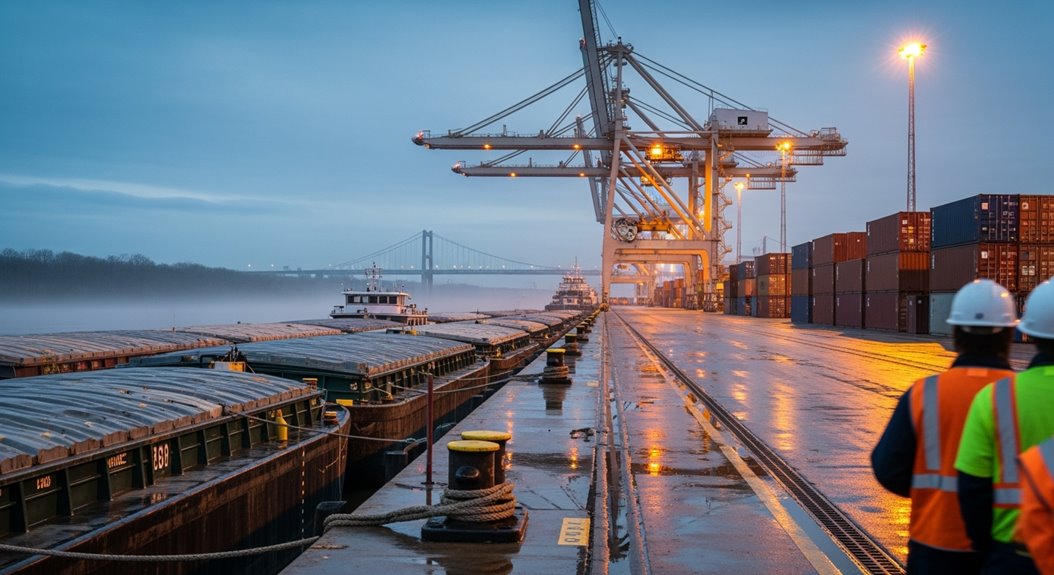
What is LHWCA Coverage?
When you’re injured while working on navigable waters or in adjacent shore-side areas, the Longshore and Harbor Workers’ Compensation Act (LHWCA) provides federal workers’ compensation benefits that protect you and your family. The coverage scope extends to dock workers, ship repairers, harbor construction workers, and other maritime employees who aren’t classified as seamen.
LHWCA benefits include medical treatment, wage replacement, vocational rehabilitation, and compensation for permanent disabilities. Understanding claim limits is essential, as you must report your injury within 30 days and file your claim within one year to preserve your rights under federal law. Administration of claims is handled by the OWCP/DLHWC, which oversees eligibility and benefit delivery under the LHWCA.
Who Qualifies for LHWCA Benefits?
Your occupation and work location determine whether you qualify for LHWCA benefits, and the federal government has established specific criteria that separate covered workers from those who fall under other compensation systems.
Eligibility criteria focus on two main factors: you must work in covered employment, and your injury must occur on navigable waters or adjoining areas like docks, piers, and terminals. Covered employment includes longshoremen, harbor workers, ship repairers, and shipbuilders.
You don’t need to work directly on water, many qualifying workers perform their duties on adjacent land areas where maritime activities occur, including Ohio’s Lake Erie ports and shipyards. Under the Act, injuries at dry docks and other adjoining areas customarily used for vessel loading, unloading, repairing, or building are also covered.
How Does LHWCA Differ from Other Maritime Laws?
The LHWCA operates as a workers’ compensation system specifically designed for maritime workers, creating a middle ground between traditional state workers’ compensation laws and the Jones Act. Unlike Jones Act claims requiring proof of employer negligence, LHWCA provides no-fault coverage, you don’t need to prove your employer caused your injury.
Jurisdictional differences matter notably: the Jones Act covers seamen on vessels, while LHWCA protects land-based maritime workers on navigable waters. Employer defenses under LHWCA are also limited compared to traditional injury lawsuits. They can’t claim you were negligent or that a coworker caused your accident to deny benefits.
Major Ports and Maritime Facilities in Ohio
Port of Cleveland
Located on Lake Erie in northeastern Ohio, the Port of Cleveland serves as a major gateway for international and domestic shipping. The port accommodates bulk cargo operations, breakbulk handling, and container logistics services. Major operators and tenants include cargo terminals, stevedoring companies, and logistics providers that support regional manufacturing, steel production, and distribution operations throughout the Great Lakes region.
The Port of Cleveland handles approximately 13 million tons of cargo annually, including limestone, salt, iron ore, steel products, and project cargo. The facility supports thousands of jobs in the region and generates significant economic impact through direct port operations and related supply chain activities. The port features rail connections to major freight networks and multimodal infrastructure that enhances cargo movement efficiency.
Port of Toledo
Situated on the western basin of Lake Erie along the Maumee River, the Port of Toledo operates as one of the busiest Great Lakes ports. The facility specializes in bulk commodities, serving agricultural, mining, and energy sectors. Major cargo categories include iron ore, grain, petroleum products, and coal, with operations supporting both domestic and international trade routes.
The Port of Toledo processes approximately 10 million tons of cargo annually across its terminal facilities. The port’s operations contribute substantially to the regional economy through direct employment and supporting industries. Infrastructure includes extensive dock facilities, storage terminals, and intermodal rail connections that link to Class I railroads serving North American markets.
Port of Ashtabula
The Port of Ashtabula is located in northeastern Ohio on Lake Erie, approximately 50 miles east of Cleveland. This deep-water port specializes in bulk commodity handling, particularly coal, iron ore, limestone, and salt. The facility serves as a critical link for regional steel mills, power generation facilities, and industrial operations requiring heavy bulk materials transport.
Ashtabula’s harbor features deep-water capabilities that accommodate large lake vessels and maintains significant cargo throughput annually. The port supports regional employment through direct operations and related logistics services. Terminal infrastructure includes specialized bulk handling equipment, storage facilities, and rail connections that facilitate efficient cargo transfer between vessels and land transportation networks.
Port of Lorain
Located on Lake Erie west of Cleveland, the Port of Lorain operates as a diversified cargo facility handling bulk and breakbulk commodities. The port serves steel manufacturing, construction materials, agricultural products, and heavy industrial cargo. Terminal operators and logistics companies utilize the facility to support regional manufacturing and distribution activities.
The Port of Lorain maintains significant annual cargo volumes and contributes to the local and regional economy through maritime operations and related services. The facility features dock infrastructure designed for bulk handling operations, along with rail connections that enable efficient intermodal cargo movement between water and land transportation systems.
Port of Conneaut
The Port of Conneaut is situated in northeastern Ohio at the Ohio-Pennsylvania border on Lake Erie. This facility focuses primarily on bulk commodity operations, particularly coal and iron ore handling. The port serves industrial customers including steel producers and power generation facilities throughout the Great Lakes region.
Conneaut maintains specialized bulk handling infrastructure with deep-water berthing capabilities for large cargo vessels. The port’s operations support local employment and contribute to the regional economy through maritime commerce. Dock facilities and material handling systems are designed for efficient loading and unloading of bulk commodities, with rail connections facilitating inland distribution.
Ports of Cincinnati
The Ports of Cincinnati operate as an inland port system along the Ohio River in southwestern Ohio. This multimodal facility encompasses approximately 220 miles of navigable waterways connecting regional industries to Mississippi River routes and ultimately to Gulf of Mexico and Atlantic Ocean ports. The facility serves manufacturing, agricultural, chemical, and petroleum industries with barge operations and intermodal logistics services.
The inland port system supports over 20,000 jobs in the region and generates billions of dollars in economic activity annually. Operations facilitate the movement of bulk commodities, containers, and project cargo through river barge transportation integrated with rail and truck networks. The facility’s strategic location and multimodal infrastructure make it a critical logistics hub for Ohio’s manufacturing and agricultural sectors connecting to domestic and international markets.
To support analysis of these facilities, USACE’s Waterborne Commerce data products (WCUS, Monthly Indicators, and TOWS) provide official statistics on tonnage, commodities, and port and waterway usage.
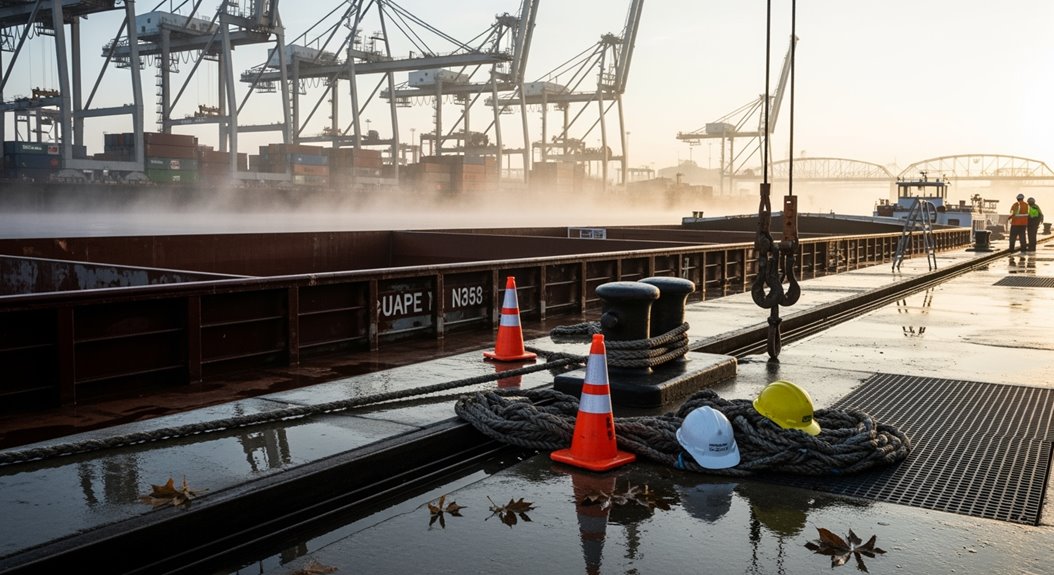
Common Longshore and Dock Worker Accidents in Ohio
Working at Ohio’s busy ports and maritime facilities exposes longshoremen and dock workers to numerous serious hazards every day. Vehicle collisions involving forklifts and cargo loaders frequently occur when shift scheduling creates congested work areas.
Inadequate dock lighting during evening operations increases risks of:
- Falling from gangways or slipping on wet surfaces near vessel edges
- Being struck by moving equipment operators can’t see clearly
- Tripping over unsecured cargo or rigging materials
Equipment malfunctions, caught-between incidents with cargo handling machinery, and hazardous material exposures also cause devastating injuries. Poor communication between workers and equipment operators compounds these dangers, particularly during loading operations. The OSHA longshoring safety page highlights common hazards and provides resources on marine terminals and longshoring operations that can help prevent these incidents.
Longshore and Port Worker Injury Statistics in Ohio
Although Ohio doesn’t publish separate injury statistics specifically for longshore and port workers, national data reveals the stark dangers these maritime employees face daily. One in twenty longshore and marine terminal workers suffers workplace injuries or illnesses annually, vastly exceeding rates for other occupations. Ohio trends mirror national patterns, though reporting gaps mean actual injury numbers are likely higher. The risks you face include:
- Fatal injury rates six times the national average for all workers
- Five thousand injuries per 100,000 workers in longshore operations
- Musculoskeletal disorders from repetitive lifting and equipment operation
These statistics underscore why experienced legal representation matters. Nationally, marine terminals and port operations experience a fatality rate of 15.9 per 100,000 workers and a nonfatal injury rate of 4,916.0 per 100,000, highlighting the elevated risks in this sector.
Insurance companies know our reputation. They know we prepare every case for trial and we’ll go the distance when settlement offers fall short. We investigate thoroughly, build bulletproof cases, and aren’t afraid to take yours to court. That changes negotiations from the start.
Anytime. Anywhere. We’re Ready to Fight for You.
Compensation Available for Longshoremen in Ohio
If you've suffered an injury while working at an Ohio port or shipyard, the Longshore and Harbor Workers' Compensation Act provides several categories of benefits designed to protect your financial security and health. Understanding what compensation you're entitled to can help you evaluate whether an insurance carrier's offer adequately covers your losses.
These benefits fall into four main categories: medical coverage, disability payments, death benefits for surviving family members, and in some cases, additional damages beyond standard workers' compensation.
Medical Benefits
When you're injured on the job as a longshoreman in Ohio, the Longshore and Harbor Workers' Compensation Act entitles you to complete medical coverage for your work-related condition. This includes doctor visits, hospital stays, surgeries, prescription medications, physical therapy, and necessary medical equipment. Your employer's insurance carrier must authorize and pay for all reasonable and necessary treatment.
However, insurers often delay treatment authorization or request excessive medical records to justify denials. You shouldn't face obstacles when seeking care you're legally entitled to receive. If the insurance company disputes your medical needs, an experienced longshore attorney can fight for immediate approval of necessary treatment.
Disability Benefits
Because longshoremen face significant physical demands in their work along Ohio's waterways and port facilities, the Longshore Act provides substantial disability compensation when injuries prevent you from performing your job duties.
You're entitled to weekly payments based on your average wage and your disability rating, a medical assessment determining how severely your injury affects your work capacity. These benefits continue while you're unable to work, whether temporarily or permanently.
If you can't return to your previous position, vocational rehabilitation services help you develop new skills for alternative employment, ensuring you maintain your livelihood despite your injury.
Death Benefits
Although no compensation can truly address the loss of a family member, the Longshore Act guarantees dependent family members receive financial support when a longshoreman dies from a work-related injury or illness in Ohio. Surviving spouses and children qualify for ongoing weekly payments based on the worker's average wages.
You're also entitled to burial assistance up to $3,000 to cover funeral and related expenses. Many families don't realize they can access survivor counseling services through the claims process. These death benefits continue for specific periods depending on your relationship to the deceased worker and your dependency status.
Additional Damages
Beyond the standard weekly compensation and medical benefits, you may qualify for additional damages depending on how your injury occurred and who was responsible. If your employer acted with gross negligence or intentional misconduct, you might pursue punitive damages, extra compensation meant to punish particularly reckless behavior.
When an injury results from third-party negligence, such as defective equipment manufacturers or negligent vessel operators, you can file separate claims beyond your Longshore benefits. These claims may include compensation for emotional distress, which addresses the psychological impact of your injury. Our attorneys evaluate every potential avenue for maximum recovery.
Statute of Limitations for Filing a LHWCA Claim
When you suffer an injury as a maritime worker in Ohio, understanding the time limits for filing your Longshore and Harbor Workers' Compensation Act claim can mean the difference between receiving benefits and losing your right to compensation entirely.
The LHWCA imposes strict filing deadlines that begin when your claim accrual occurs, typically the date of injury or when you become aware of your work-related condition.
You generally have one year to file for disability benefits and one year to give written notice to your employer. Missing these deadlines can result in benefit limitations, though equitable tolling may apply in exceptional circumstances.
Get Results
Each one of our lawyers is a skilled and experienced litigator and negotiator. We never recommend settling your case when trial presents a better opportunity for recovery.



Why Do I Need a Longshoremen Workers Comp Injury Lawyer?
Maneuvering a Longshore and Harbor Workers' Compensation Act claim involves complex federal regulations and aggressive insurance carriers determined to minimize payouts.
You'll face challenges with medical documentation, causation disputes, and calculating lifetime benefits. An experienced attorney protects your rights through proper evidence preservation, gathering witness statements, medical records, and accident documentation before they disappear.
Your lawyer develops an effective settlement strategy based on similar case outcomes and your injury's long-term impact. Insurance companies employ teams of lawyers and medical experts to reduce your compensation. You need equally skilled representation to level the playing field and secure maximum benefits.
Why Choose Grossman Attorneys for Your Ohio LHWCA Claim
When you're injured on the job as a maritime worker in Ohio, you need attorneys who won't back down from insurance companies or accept lowball settlement offers.
Grossman Attorneys at Law is a respected maritime law firm with over 40 years of experience representing injured workers across the nation. Our admiralty lawyers have secured substantial settlements and verdicts in cases ranging from Defense Base Act claims to longshoremen workers' comp injury cases and offshore accidents. We understand the complex laws that govern these claims and stand ready to take your case to trial when insurance companies fail to offer the fair compensation you deserve.
Aggressive But Fair Representation
Your LHWCA claim deserves representation that fights relentlessly for full compensation while maintaining the professionalism that insurance carriers and courts respect.
Grossman Attorneys balances assertive negotiation with ethical zealousness, pushing aggressively for maximum benefits without crossing into counterproductive tactics. This approach means we'll challenge unfair claim denials and low settlement offers through documented evidence and persuasive legal arguments.
Defense attorneys recognize our thorough preparation and willingness to litigate, which strengthens your position during negotiations. Our reputation for courtroom success motivates insurance carriers to present reasonable settlement offers rather than face trial against our experienced legal team.
Experienced, Compassionate Staff
Behind every successful LHWCA claim stands a team that combines deep legal knowledge with genuine care for injured workers steering through complex federal compensation systems.
Our compassionate staff understands the financial strain and uncertainty you're facing after a maritime injury. They'll guide you through every procedural requirement with patience and clarity. Through experienced outreach, our team maintains consistent communication about your case's progress. You'll receive prompt responses to your questions and straightforward explanations of legal developments. We handle the administrative burdens while you focus on recovery, ensuring your rights remain protected throughout the entire claims process.
A Track Record of Winning Longshore Claims
Grossman Attorneys at Law has secured millions of dollars in compensation for injured maritime workers through four decades of focused LHWCA litigation. Our verdicts record demonstrates consistent success against major insurance carriers and Fortune 500 companies who often undervalue legitimate claims. We've built our reputation by taking cases to trial when necessary, forcing defendants to provide full compensation rather than accepting inadequate settlement offers.
Our appeal success shows we'll fight for your rights at every level of the legal system. Defense attorneys recognize our thorough preparation and courtroom capabilities, which often leads to better settlement negotiations before trial even begins.
Injured at a Ohio Port? Let Grossman Attorneys Fight for Your LHWCA Compensation
If you or a loved one has suffered a maritime injury at an Ohio port, you don't have to navigate the complex LHWCA claims process alone. Grossman Attorneys at Law has spent over four decades fighting for injured longshore and maritime workers nationwide, securing the maximum compensation our clients deserve.
Unlike firms that quickly settle for less, we maintain a litigation-first approach and aren't afraid to take your case to trial when insurance carriers refuse fair compensation. Defense attorneys know our reputation for thorough preparation and courtroom success.
Don't let inadequate settlement offers shortchange your future. Contact Grossman Attorneys today to speak with an experienced LHWCA attorney who'll aggressively advocate for your rights and fight for every dollar you're owed.
*If you hire Grossman Attorneys for your LHWCA case, you pay no attorney fees for our service. When we win your case, the employer or its insurer typically pays a DOL-approved attorney’s fee and any case expenses we advanced are reimbursed from the recovery. If we don't win, you pay nothing.
- https://www.marineinsight.com/know-more/ports-on-the-great-lakes/
- https://www.portofcleveland.com/maritime-logistics/facilities/
- https://en.wikipedia.org/wiki/Port_of_Cleveland
- https://www.transportation.ohio.gov/wps/portal/gov/odot/programs/ohio-maritime-plan/resources/04-port-profiles
- http://www.clevelandmemory.org/glihc/ports/index.html
- https://www.bts.gov/sites/bts.dot.gov/files/portprofiles/2017/Cincinnati-Northern KY.pdf
- https://dam.assets.ohio.gov/image/upload/ohiodnr.gov/documents/coastal/ohio-coastal-atlas/CH04_TransportationShipping.pdf
- https://www.ohioportauthorities.com/port-authority-listing
- https://thegreatlakesgroup.com/ports
- https://stacks.cdc.gov/view/cdc/63898/cdc_63898_DS1.pdf