


Top Rated Wisconsin Longshoreman injury Law Firm – Grossman Attorneys
If you were injured working at a Wisconsin port or dock facility, you need legal representation that understands the federal Longshore and Harbor Workers’ Compensation Act. This specialized maritime law operates completely separate from standard workers’ compensation and comes with strict deadlines that can jeopardize your entire claim if missed.
Grossman Attorneys at Law has extensive experience guiding longshoremen through every stage of LHWCA claims. Our track record includes successful negotiations with resistant insurers and the willingness to take your case to trial when settlement offers fall short of what you deserve. We know how to document your injuries properly, calculate your full benefits, and fight for maximum compensation while you focus on recovery.
Your livelihood depends on getting this right the first time. Contact us today for a free consultation about your longshore injury claim.
Understanding the Longshore and Harbor Workers’ Compensation Act (LHWCA)
If you’ve been injured while working on or near Wisconsin’s waterways, you’re likely covered by the Longshore and Harbor Workers’ Compensation Act (LHWCA), a federal law that provides specific benefits and protections for maritime workers.
This specialized system differs markedly from both standard workers’ compensation and other maritime laws like the Jones Act, with unique eligibility requirements and benefit structures designed specifically for dock workers, longshoremen, and other harbor employees.
Understanding whether you qualify for LHWCA coverage and how it compares to other legal protections is essential for securing the full compensation you deserve after a workplace accident.
Under the LHWCA, injured workers receive medical care without deductibles or copays and disability payments adjusted annually based on the National Average Weekly Wage.
What is LHWCA Coverage?
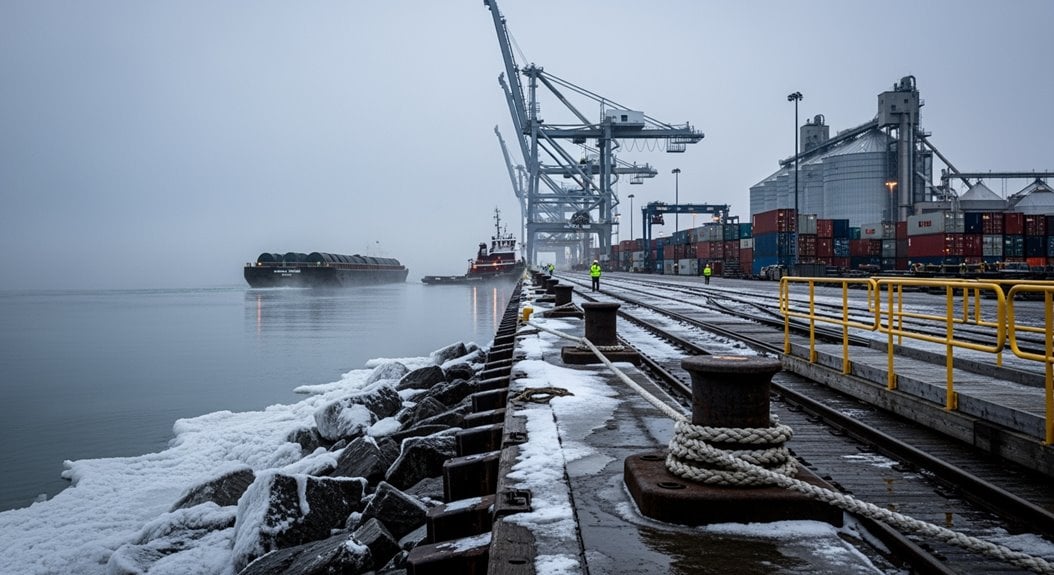
When you’re injured while working on navigable waters or in adjoining areas like docks and piers, the Longshore and Harbor Workers’ Compensation Act (LHWCA) provides essential medical and wage benefits that standard workers’ compensation doesn’t cover.
The coverage scope extends to longshore workers, harbor workers, ship repairers, and shipbuilders working in maritime settings. However, exclusion clauses prevent coverage for certain workers like masters and crew members of vessels, who fall under different maritime laws. Understanding whether your job qualifies for LHWCA protection determines which benefits you can receive and which legal process applies to your claim.
Covered locations include navigable waters and adjoining areas such as piers, wharves, dry docks, terminals, shipyards, and marine railways where vessel loading, unloading, repairing, dismantling, or building occurs.
Who Qualifies for LHWCA Benefits?
Your eligibility for LHWCA benefits depends on two key factors: where you work and what type of work you perform. The eligibility criteria require that your injury occurred on navigable waters or adjoining areas like piers, docks, terminals, or shipyards.
You must be engaged in covered employment, meaning maritime work that involves loading, unloading, repairing, or building vessels. Wisconsin workers employed at Great Lakes ports, shipping facilities, or vessel repair operations typically qualify. Even temporary maritime workers may meet these requirements if injured while performing qualifying duties in designated maritime locations.
The LHWCA is administered by the OWCP and its DLHWC, which oversee claims and benefit delivery.
How Does LHWCA Differ from Other Maritime Laws?
Understanding the differences between maritime laws protects your right to pursue the correct legal remedy after a workplace injury. The LHWCA provides no-fault benefits for harbor workers, while the Jones Act requires proving employer negligence for seamen.
These comparative statutes serve different worker classifications and offer distinct protections. You can’t pursue claims under both laws simultaneously, though benefits overlap occasionally occurs in complex cases. The LHWCA covers medical expenses and wage replacement without proving fault, whereas general maritime law allows injured seamen to seek full damages including pain and suffering.
Knowing which law applies determines your compensation pathway.
Major Ports and Maritime Facilities in Wisconsin
Port of Duluth-Superior
The Port of Duluth-Superior straddles the Wisconsin-Minnesota border at the western tip of Lake Superior, serving as a critical gateway for international and domestic shipping. Major operators include Cargill, CN Railway, and various bulk cargo handlers specializing in grain, iron ore, coal, and wind energy components. The facility supports industries ranging from agriculture and mining to steel production and renewable energy infrastructure.
As the largest freshwater port in North America by tonnage, Duluth-Superior handles approximately 35-40 million tons of cargo annually. The port sustains over 15,000 direct and indirect jobs across the region and generates nearly $2 billion in economic impact. Recent infrastructure investments exceed $50 million, focusing on dock modernization and expanded intermodal capabilities to accommodate growing trade with overseas markets. The MARAD Data & Reports portal offers dashboards and datasets that provide deeper context on port activity and maritime trends through its Data Portal.
Port of Milwaukee
The Port of Milwaukee is located on Wisconsin’s southeastern shore along Lake Michigan, providing a vital commercial hub for the state’s largest metropolitan area. Key tenants include Cargill, Michels Corporation, and various steel and cement distributors. The facility serves diverse industries including construction materials, heavy machinery, project cargo, liquid bulk products, and breakbulk shipments.
Milwaukee’s port moves approximately 2.5-3 million tons of cargo each year and supports roughly 2,400 jobs with an estimated $150 million annual economic impact. The port has invested over $40 million in recent years to upgrade infrastructure, including new cranes, expanded warehousing capacity, and improved rail connections that enhance multimodal transportation efficiency.
Port of Green Bay
The Port of Green Bay operates along the Fox River and Green Bay waterfront in northeastern Wisconsin, serving as the state’s primary paper and forest products shipping center. Major companies utilizing the port include Georgia-Pacific, WestRock, and various agricultural cooperatives handling grain and feed products. The facility also accommodates cement, salt, petroleum products, and general cargo operations.
Green Bay’s port handles over 2 million tons of cargo annually through its thirteen-mile navigable channel system. The port sustains approximately 1,000 direct jobs and contributes roughly $60 million to the local economy. Recent infrastructure improvements totaling $15 million have focused on dredging maintenance, dock rehabilitation, and enhanced cargo handling equipment to maintain competitive shipping operations.
Common Longshore and Dock Worker Accidents in Wisconsin
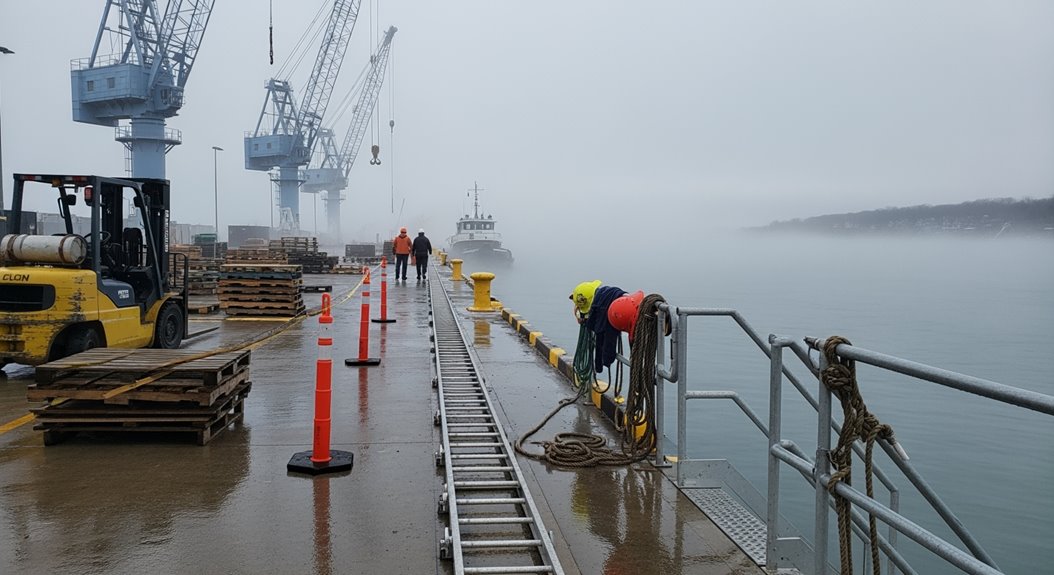
Wisconsin’s busy ports handle millions of tons of cargo each year, but this constant activity comes with significant risks for the workers who keep these facilities running. You face hazards ranging from slippery surfaces to equipment malfunctions that can cause serious injuries.
Common accidents at Wisconsin’s docks include:
- Slip and fall incidents caused by inadequate harbor lighting or wet surfaces
- Crushing injuries from moving cargo or pinching between heavy objects
- Overexertion injuries from lifting loads without proper locker room ergonomics training
- Equipment failures involving cranes, forklifts, and other machinery
These accidents often result from insufficient training, poor maintenance, or harsh weather conditions. OSHA’s marine terminal standards and longshoring regulations outline specific safety requirements for equipment, training, and operations to reduce these risks.
Longshore and Port Worker Injury Statistics in Wisconsin
While Wisconsin’s maritime industry keeps goods moving through the Great Lakes region, the workers who power these operations face documented workplace dangers that result in thousands of injuries each year. Understanding these statistics reveals why strong port safety protocols and proper cargo handling practices matter so critically.
Key Wisconsin Workplace Injury Statistics:
- Private employers reported 56,200 nonfatal workplace injuries in 2023, with Wisconsin’s rate exceeding the national average by 16.7%
- Transportation and warehousing sectors face elevated risks tracked separately in state injury databases
- Fatal workplace incidents claimed 125 Wisconsin workers in 2022
- Common causes include equipment contact, falls, and transportation-related accidents
According to national data from the Bureau of Labor Statistics, the incidence rates of nonfatal occupational injuries and illnesses vary significantly by industry, highlighting elevated risks in transportation and warehousing.
Insurance companies know our reputation. They know we prepare every case for trial and we’ll go the distance when settlement offers fall short. We investigate thoroughly, build bulletproof cases, and aren’t afraid to take yours to court. That changes negotiations from the start.
Anytime. Anywhere. We’re Ready to Fight for You.
Compensation Available for Longshoremen in Wisconsin
If you've suffered an injury while working on Wisconsin's ports or waterways, the Longshore and Harbor Workers' Compensation Act provides several types of financial protection. Understanding what compensation you're entitled to can help you plan for medical treatment and recovery while protecting your family's financial stability.
Wisconsin longshoremen injured on the job may qualify for medical benefits, disability payments, death benefits for surviving family members, and in some cases, additional damages beyond standard workers' compensation.
Medical Benefits
Under the Longshore and Harbor Workers' Compensation Act, injured longshoremen in Wisconsin receive thorough medical coverage for work-related injuries and illnesses. You're entitled to all necessary medical treatment without any out-of-pocket costs. This includes doctor visits, hospital stays, surgeries, physical therapy, medications, and medical equipment.
Your employer's insurance carrier must provide treatment authorization promptly, though they may require you to see specific approved physicians. If the insurer delays or denies medical coverage, you have the right to challenge their decision. The Act guarantees you receive appropriate care for your injuries throughout your recovery, regardless of treatment costs.
Disability Benefits
Beyond covering your medical expenses, the Longshore and Harbor Workers' Compensation Act provides wage replacement benefits when your injury prevents you from working. The disability determination process evaluates how your condition affects your earning capacity.
You may qualify for temporary total disability if you're unable to work during recovery, or permanent disability benefits if your injury causes lasting impairment. Partial disability compensation applies when you can return to work but earn less than before your accident. Some cases involve vocational rehabilitation services to help you shift into suitable employment when you can't resume your previous maritime duties.
Death Benefits
When a longshore worker dies from a work-related injury or occupational disease in Wisconsin, the Longshore and Harbor Workers' Compensation Act provides financial support to surviving family members who depended on the worker's income. Survivor pensions typically equal two-thirds of the deceased worker's average weekly wage, distributed among eligible dependents including spouses and children.
The Act also provides funeral reimbursements up to $3,000 to help cover burial expenses. These benefits guarantee your family receives financial protection during an incredibly difficult time. You'll need to file claims promptly, as strict deadlines apply to death benefit cases.
Additional Damages
While the Longshore and Harbor Workers' Compensation Act provides medical care and wage replacement benefits, Wisconsin longshoremen may also recover additional damages in specific circumstances that go beyond standard workers' compensation.
If your employer's intentional misconduct caused your injuries, you might pursue punitive damages—extra compensation designed to punish particularly reckless behavior. Similarly, when employers deny valid claims in bad faith or engage in discriminatory retaliation, you may recover compensation for emotional distress.
These additional damages aren't automatically available but require proving your employer's conduct exceeded ordinary negligence. Understanding these expanded compensation options protects your full recovery rights.
Statute of Limitations for Filing a LHWCA Claim
Understanding the deadline to file your Longshore and Harbor Workers' Compensation Act claim is critical because missing it can permanently eliminate your right to compensation. You must notify your employer within 30 days of your injury and file your claim within one year of the accident or when you discovered your work-related condition.
These filing deadlines are strict, though certain circumstances may qualify for claim tolling, which pauses the deadline. Exceptions include delayed discovery of injuries or employer misconduct. Our attorneys evaluate whether tolling applies to your situation and make certain timely filing to protect your rights.
Get Results
Each one of our lawyers is a skilled and experienced litigator and negotiator. We never recommend settling your case when trial presents a better opportunity for recovery.



Why Do I Need a Longshoremen Workers Comp Injury Lawyer?
Although the Longshore and Harbor Workers' Compensation Act exists to protect injured maritime workers, the claims process itself creates significant obstacles that most workers can't overcome alone. Insurance companies employ experienced attorneys who understand how to minimize payouts through technical defenses and procedural challenges.
A specialized longshore attorney levels the playing field by protecting your client rights from the moment you're injured. They'll handle evidence preservation, ensuring critical documentation like accident reports, witness statements, and medical records don't disappear. Your lawyer navigates complex filing deadlines, medical evaluations, and benefit calculations while you focus on recovery. Without proper legal representation, you risk accepting inadequate settlements or losing valid claims entirely.
Why Choose Grossman Attorneys for Your Wisconsin LHWCA Claim
When you're facing a Wisconsin LHWCA claim, you need attorneys who won't back down from insurance companies or settle for less than you deserve. Grossman Attorneys brings over 40 years of specialized longshore litigation experience to your case, with a proven track record of securing multi-million-dollar settlements for injured maritime workers.
Our maritime injury attorneys have secured substantial settlements and verdicts in cases ranging from Defense Base Act claims to longshoremen workers' comp injury cases and offshore accidents. We understand the complex laws that govern these claims and stand ready to take your case to trial when insurance companies fail to offer the fair compensation you deserve.
Aggressive But Fair Representation
After suffering a longshore injury in Wisconsin, you'll need attorneys who combine aggressive advocacy with honest, straightforward guidance. Grossman Attorneys provides forceful advocacy when fighting insurance companies while maintaining ethical negotiation standards throughout your case.
Our zealous representation means we thoroughly prepare every claim for trial, pressuring carriers to offer fair compensation rather than lowball settlements. We won't accept inadequate offers just to close your file quickly. Defense attorneys recognize our litigation-first approach and courtroom capabilities, which strengthens your negotiating position.
This balanced strategy protects your rights while pursuing maximum benefits through either settlement or trial.
Experienced, Compassionate Staff
Beyond our proven trial capabilities, Grossman Attorneys distinguishes itself through a team that brings both deep legal knowledge and genuine care for injured maritime workers.
Our staff training emphasizes both legal excellence and client empathy, ensuring you'll work with professionals who understand the financial pressures and physical challenges you're facing. Each team member receives ongoing education in Longshore law developments and client communication best practices.
You'll never feel like just another case number. From your first consultation through final resolution, our experienced staff provides clear guidance, prompt responses, and the personal attention your Wisconsin LHWCA claim deserves.
A Track Record of Winning Longshore Claims
Results speak louder than promises, and Grossman Attorneys has built its national reputation by consistently securing maximum compensation for injured maritime workers in LHWCA claims.
Our verdict records demonstrate our litigation capabilities, we've secured numerous multi-million-dollar settlements through strategic courtroom advocacy. Defense attorneys and insurance carriers recognize our thorough preparation and willingness to take cases to trial when settlement offers fall short.
Our trial strategies focus on presenting exhaustive evidence that establishes the full extent of your injuries and their impact on your future earning capacity. We don't accept inadequate offers simply to close cases quickly.
Injured at a Wisconsin Port? Let Grossman Attorneys Fight for Your LHWCA Compensation
If you or a loved one has suffered an injury while working at a Wisconsin port or harbor facility, you don't have to navigate the complex LHWCA claims process alone.
Grossman Attorneys at Law has spent over four decades fighting for maritime workers' rights and securing the maximum compensation our clients deserve. Our litigation-first approach means we're prepared to take your case all the way to trial if insurance carriers won't offer fair settlement terms.
Don't let defense attorneys or insurance companies minimize your claim or deny you the benefits you've earned through your hard work. Contact Grossman Attorneys today to speak with an experienced LHWCA attorney who'll aggressively advocate for your rights and help you obtain the full compensation you deserve.
*If you hire Grossman Attorneys for your LHWCA case, you pay no attorney fees for our service. When we win your case, the employer or its insurer typically pays a DOL-approved attorney’s fee and any case expenses we advanced are reimbursed from the recovery. If we don't win, you pay nothing.
References
- https://www.wisconsinports.com/find-a-port/
- https://wisconsindot.gov/Documents/travel/water/ports-report.pdf
- https://www.wicoastalatlas.net/topics/ports-harbors-and-marinas-1/
- https://www.greatlakesports.org/wp-content/uploads/2021/01/Wisconsin-2021-Update.pdf
- https://widmac.org
- https://duluthport.com/business/port-operations-and-facilities/
- https://www.wistatedocuments.org/digital/api/collection/p267601coll4/id/128/download
- https://dnr.wisconsin.gov/Topic/Boat/CrashInfo