


Top Rated Kansas Defense Base Act Law Firm – Grossman Attorneys
Working on an overseas government contract seemed like a great opportunity until an injury changed everything. Now you’re back in Kansas facing a complex federal claims process that insurance companies know far better than you do. If you were injured while working overseas for a Kansas defense contractor like Wichita Manufacturing, Salina Logistics, or Topeka Engineering Services, the Defense Base Act covers your claim. Without experienced legal representation, you risk accepting far less compensation than you deserve or having your claim denied entirely.
Grossman Attorneys at Law has spent years mastering Defense Base Act cases and consistently achieves strong results when negotiating with insurers who try to minimize payouts. Because the insurance company pays our legal fees under the DBA, our clients pay nothing out of pocket for representation. You’ve already sacrificed enough while serving contractor missions abroad. Let us fight for the full benefits you’ve earned. Contact us today for a free consultation about your Defense Base Act claim.
What is the Defense Base Act?
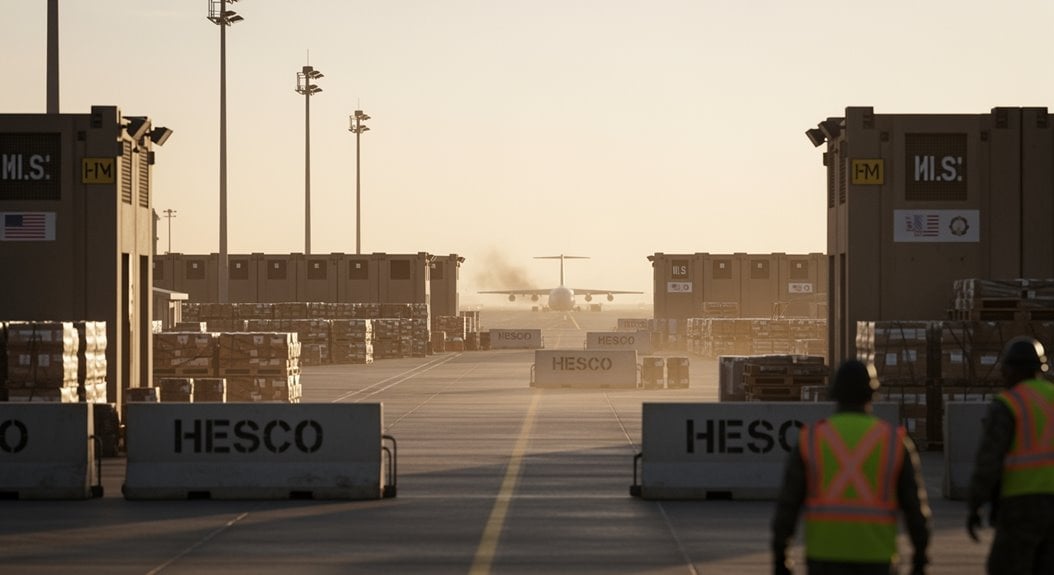
The Defense Base Act is a federal workers’ compensation law enacted in 1941 that provides mandatory insurance coverage for American civilians working on U.S. military bases and government contracts outside the United States. When you accepted a job with a government contractor to work overseas, your employer likely mentioned Defense Base Act insurance without explaining what it actually means for you.
The law was passed by Congress on August 16, 1941, when the government needed protection for civilian contractors supporting military operations during World War II. Under the Act, claims are administered by the U.S. Department of Labor’s Office of Workers’ Compensation Programs, which extends the Longshore Act protections to covered overseas contractors. Employers and subcontractors are typically required to secure this coverage, often obtained through single-source programs offered by insurers working with government contractors.
The coverage scope includes:
- Medical treatment for work-related injuries and illnesses
- Disability compensation for temporary or permanent conditions
- Rehabilitation services and vocational training
- Death benefits for your family if workplace injuries prove fatal
DBA Insurance Coverage for Overseas Contractors from Kansas
If you’re a Kansas contractor who’s worked overseas on a U.S. military base or government project, your employer was legally required to carry Defense Base Act insurance before you deployed. The Department of Labor’s Division of Longshore and Harbor Workers’ Compensation (DLHWC) maintains a central hub with guidance on coverage and benefits for DBA claims.
This mandatory coverage functions like workers’ compensation but applies specifically to American civilians working abroad in support of U.S. government operations. Understanding which types of employment trigger DBA coverage requirements helps you determine whether you’re eligible to file a claim for your overseas work injury.
The embassy handout explains required insurance, available benefits, and how to report injuries and file claims under the Defense Base Act, including guidance on DBA coverage.
Types of Employment Covered Under DBA Insurance
Defense Base Act insurance provides coverage for workers injured while performing services for U.S. government contracts outside the United States, including both direct employees and various contractor arrangements supporting military and federal operations abroad. Coverage includes essential personnel working offshore on military bases or construction sites funded by the U.S. government.
The following employment categories typically qualify for DBA protection:
- Direct employees of defense contractors working on U.S. government contracts abroad
- Remote contractors providing technical support, logistics coordination, or consulting services
- Civilian employees working for subcontractors on covered projects
- Workers on temporary assignments deployed overseas for specific project phases
Your employment structure doesn’t eliminate your DBA rights. Whether you receive a W-2 or 1099 form, work full-time or part-time, or operate as an independent consultant, the DBA statute extends to individuals performing work under qualifying government contracts in designated overseas locations.
The U.S. Department of Labor’s Office of Workers’ Compensation Programs administers these protections regardless of how your employer classifies your working relationship. In certain countries with DBA waivers, employers may be exempt from providing DBA insurance and must instead comply with applicable local labor laws and contract terms.

How Our Kansas DBA Claim Attorneys Can Help
Our Kansas DBA attorneys handle the complex legal procedures while you concentrate on physical recovery after a workplace injury overseas. Under the DBA’s no-fault system, eligible workers can seek benefits without proving employer negligence.
We gather medical records, witness statements, and employment documentation that establishes the validity of your claim under 42 U.S.C. § 1651. Our legal team manages all communications with insurance carriers and appears at administrative hearings before the Office of Workers’ Compensation Programs (OWCP).
We compile evidence demonstrating your average weekly wage calculations, prepare responses to insurance company denials within the required 30-day timeframe, and file appeals to the Benefits Review Board when necessary to secure full compensation for medical expenses, lost wages, and disability benefits you deserve under the Defense Base Act.
We ensure your claim complies with specific legal requirements and deadlines, leveraging our experience with DBA claims to protect your rights and maximize compensation.
Gather and Preserve Critical Evidence
When evidence disappears or deteriorates months after your overseas injury, insurance carriers gain powerful ammunition to dispute or deny your claim. Gallagher Bassett, a large third-party administrator, often uses its large-company resources to minimize payouts, making timely evidence preservation critical.
Our attorneys immediately establish a secure evidence chain, documenting every detail of your incident while facts remain fresh. We’ll gather witness statements from coworkers who observed your injury or understood your working conditions.
We’ll obtain incident reports, medical records, employment documentation, and site photographs before they’re lost or destroyed. We preserve security footage, equipment maintenance logs, and safety violation records.
If your claim has been denied, we can promptly file the required LS-207 hearing request with the U.S. Department of Labor and assemble the medical and witness evidence needed to challenge the denial.
Represent You in Hearings and Appeals
If the insurance carrier denies your claim or offers compensation far below what you deserve, your case doesn’t end with a rejection letter. We’ll represent you at formal hearings before an administrative law judge, presenting evidence that meets strict evidentiary standards and cross-examining witnesses who challenge your claim.
If the initial decision proves unfavorable, we’ll develop a thorough appellate strategy to challenge errors in the record. Our litigation experience guarantees your case receives aggressive advocacy at every level, from district hearings through federal appeals courts, until you receive the full compensation you’re entitled to under the Defense Base Act.
Maximize Your Compensation
Insurance carriers routinely undervalue claims by relying solely on initial medical reports, which is why our Kansas Defense Base Act attorneys systematically identify every compensable element of your injury.
We conduct thorough injury investigation to document not just your current medical condition but also future treatment needs, wage loss capacity, and permanent disability ratings. Our settlement strategies account for lifetime medical care requirements and vocational limitations that adjusters frequently ignore.
We consult medical specialists, vocational experts, and economists to establish the full value of your claim. This comprehensive approach consistently results in substantially higher compensation than insurance companies initially offer.
Get Results
Each one of our lawyers is a skilled and experienced litigator and negotiator. We never recommend settling your case when trial presents a better opportunity for recovery.



Insurance companies know our reputation. They know we prepare every case for trial and we’ll go the distance when settlement offers fall short. We investigate thoroughly, build bulletproof cases, and aren’t afraid to take yours to court. That changes negotiations from the start.
Anytime. Anywhere. We’re Ready to Fight for You.
U.S. Defense Contractors in Kansas
Kansas's aerospace and defense industry employs over 50,000 workers and generates more than $23 billion in economic output annually, creating numerous opportunities for overseas contractor deployment.
If you've worked for a Kansas defense contractor on a U.S. military base or government project abroad, you're likely covered under the Defense Base Act regardless of where your injury occurred.
The state's concentration of major aerospace manufacturers and military support operations means thousands of Kansas residents have deployed to conflict zones and installation sites worldwide where workplace injuries commonly occur.
List of Major Defense Contractors in Kansas
Kansas has built its reputation on aerospace excellence, and if you worked for a local defense contractor before being deployed overseas, you're familiar with the industry leaders. Spirit AeroSystems, Textron Aviation, and Bombardier Learjet anchor Wichita's aircraft manufacturing sector.
Lockheed Martin maintains operations in Kansas City. Boeing's influence extends across state lines. These Kansas contractors form critical links in national defense supply chains, which means your overseas work likely connected directly to Kansas production facilities.
Spirit AeroSystems
Locations: Wichita (Sedgwick County)
Founded: 2005 (spun off from Boeing)
Website: https://www.spiritaero.com
Spirit AeroSystems is one of the world's largest manufacturers of aircraft structures, producing fuselages, pylons, and wing components for both commercial and military aircraft.
The company's Wichita facility employs thousands of workers who build components for defense platforms including the B-2 Spirit bomber, F-35 Lightning II, and various military transport aircraft. Many Spirit employees have been deployed to support military operations, maintenance facilities, and production sites overseas, particularly in support of U.S. defense contracts in the Middle East and Asia-Pacific regions.
Textron Aviation
Locations: Wichita (Sedgwick County)
Founded: 2014 (merger of Cessna and Beechcraft)
Website: https://www.txtav.com
Textron Aviation manufactures business jets, turboprops, and military training aircraft from its Wichita headquarters.
The company produces the T-6 Texan II military trainer and various special mission aircraft used by defense and intelligence agencies worldwide. Textron Aviation employees have provided technical support, maintenance training, and manufacturing expertise at overseas military bases and foreign military sales locations, supporting U.S. defense partnerships globally.

Bombardier Learjet
Locations: Wichita (Sedgwick County)
Founded: 1962 (as Learjet Corporation)
Website: https://www.bombardier.com
Bombardier's Wichita facility has been a cornerstone of business aviation manufacturing for decades, producing Learjet aircraft that serve both civilian and military applications.
The company's aircraft are frequently modified for military reconnaissance, medical evacuation, and transport missions. Technicians and specialists from the Wichita facility have been deployed overseas to support aircraft delivery, maintenance operations, and training programs for allied nations acquiring Learjet platforms.
Lockheed Martin
Locations: Kansas City (Wyandotte County)
Founded: 1995 (merger; Kansas City operations date to earlier decades)
Website: https://www.lockheedmartin.com
Lockheed Martin's Kansas City operations support various defense programs including missile systems, electronics manufacturing, and aircraft support.
As part of the largest defense contractor in the United States, Kansas City employees contribute to programs that require worldwide deployment support. Workers from this facility have been sent overseas to provide technical expertise, systems integration, and maintenance support at military installations throughout combat zones and allied nations. Over 450 aviation and aerospace companies operate in Kansas, creating an extensive support network for defense deployments.
If you were injured while working overseas for any of these contractors, the Defense Base Act (DBA) provides coverage for your work-related injuries.
Types of Injuries Covered by DBA Insurance
Under the Defense Base Act, you can seek benefits for combat-related physical injuries, occupational diseases and illnesses caused by exposures, psychological conditions like PTSD which is a trauma-related stress disorder, and chronic deployment-related problems such as repetitive strain or respiratory issues.
If your work overseas led to these conditions, the law treats them as job-related and covers medical care and wage replacement. We're ready to explain how coverage applies to your specific situation and guide you through the claim steps with care and precision.
Combat-Related Physical Injuries
Combat trauma from hostile fire, explosions, or attacks falls squarely within Defense Base Act coverage for contractors working in conflict zones.
These environments expose you to some of the most devastating injuries recognized under the DBA. Blast injuries occur in approximately 70-80% of combat-related contractor casualties according to Department of Defense data, causing traumatic brain injuries, hearing loss, shrapnel wounds, and internal organ damage.
You're protected whether the injury occurs during a direct attack on your worksite or while traveling between locations. Insurance carriers can't deny your claim simply because the injury happened in a war zone. That's exactly why Congress created the DBA in 1941, recognizing the extraordinary dangers contractors face overseas.
Occupational Diseases and Illnesses
Beyond the immediate dangers of hostile action, Defense Base Act coverage extends to occupational diseases and illnesses you develop from extended exposure to hazardous conditions at overseas worksites.
Occupational exposures to burn pit smoke, toxic chemicals, asbestos, extreme heat, and contaminated water can cause respiratory conditions, cancers, and chronic illnesses that emerge months or years after your deployment. According to Department of Labor statistics, approximately 15 to 20 percent of Defense Base Act claims involve occupational disease rather than acute injury.
Poor workplace ergonomics in maintenance facilities, warehouses, and equipment operations lead to repetitive stress injuries and musculoskeletal disorders. DBA coverage applies whether your condition appears immediately or develops gradually throughout your contract assignment, with the statute of limitations typically beginning when you become aware of the connection between your illness and workplace exposure.
Psychological and Mental Conditions
Contractor work in combat zones and high-stress overseas environments creates psychological trauma that qualifies for Defense Base Act coverage just as clearly as physical injuries.
Combat stress, post-traumatic stress disorder, anxiety, and depression from deployment experiences are compensable conditions under DBA insurance. Moral injury, the psychological damage from witnessing or participating in events that violate your core values, also qualifies for benefits.
Insurance carriers often challenge mental health claims more aggressively than physical injuries, questioning causation and severity. You need documentation from qualified mental health professionals and legal representation that understands both psychological conditions and DBA claim requirements.
Chronic Deployment-Related Conditions
Extended exposure to deployment conditions causes chronic health problems that develop gradually rather than appearing from a single incident. Deployment fatigue from extended work schedules in harsh environments weakens your body's natural defenses. You might experience immune suppression that makes you vulnerable to infections and illnesses that wouldn't affect you stateside.
Respiratory conditions from prolonged dust or burn pit exposure often don't manifest until 6 to 18 months after deployment. Joint deterioration, hearing loss, and cardiovascular problems frequently result from cumulative workplace stressors. DBA coverage includes these gradual-onset conditions when you can establish they resulted from your overseas contractor employment.
Medical Facilities and Treatment for Kansas DBA Claimants
Proper medical treatment serves dual purposes for DBA claimants returning to Kansas: facilitating your physical recovery and documenting your condition for claim purposes.
Kansas provides several qualified facilities, including the University of Kansas Health System in Kansas City and Via Christi hospitals in Wichita, with experience treating overseas contractor injuries.
Under the Defense Base Act, you maintain the right to choose your treating physician, and insurance carriers must honor this selection. Your medical records become critical evidence establishing the extent of your injuries, necessary treatments, and work restrictions.
Consistent treatment with providers who understand DBA documentation requirements strengthens your claim while ensuring you receive appropriate care for your recovery.

Trauma Centers and Medical Facilities in Kansas
University of Kansas Hospital
3901 Rainbow Boulevard
Kansas City, KS 66160
(913) 588-1227
Located in Kansas City, the University of Kansas Hospital is a nationally verified Level I trauma center providing comprehensive care for the most serious injuries. The facility includes specialized services such as burn centers and rehabilitation programs, making it equipped to handle complex cases resulting from overseas injuries under the Defense Base Act.
Wesley Medical Center
550 N. Hillside Street
Wichita, KS 67214
(316) 962-2000
Wesley Medical Center serves the Wichita area as a Level I trauma center for adults and a Level II trauma center for pediatric patients. The facility provides advanced emergency and trauma care for serious injuries requiring immediate specialized treatment.
Ascension Via Christi St. Francis
929 N. St. Francis Street
Wichita, KS 67214
(800) 353-3111
Located in Wichita, Ascension Via Christi St. Francis operates as a Level I trauma center, offering comprehensive emergency and trauma services for critically injured patients throughout the region.
Overland Park Regional Medical Center
10500 Quivira Road
Overland Park, KS 66215
(844) 706-8773
Overland Park Regional Medical Center is a Level II trauma center serving the Overland Park area in the Kansas City metropolitan region. The facility provides advanced trauma care for serious injuries that may require initial stabilization or comprehensive treatment.
Important Medical Rights Under the DBA
Understanding your medical rights under the Defense Base Act can make the difference between receiving proper treatment and struggling with denied care or inadequate benefits. You're entitled to specific protections that contractors often don't know exist.
Your essential medical rights include:
- Choice of physician - You can select your own doctor without requiring medical consent from the insurance carrier
- Emergency treatment - Immediate care can't be delayed for authorization
- Second opinions - You can seek additional medical evaluations if you disagree with initial assessments
- Appeal rights - Treatment denial decisions can be challenged through formal procedures
These protections guarantee you receive appropriate care.
DBA Benefits Available to Kansas Residents
Understanding your full range of DBA benefits helps you pursue complete compensation after your overseas injury or illness. The Defense Base Act provides four main categories of benefits: coverage for all necessary medical treatment, disability payments calculated as a percentage of your average weekly wage, vocational rehabilitation when you can't return to your previous work, and death benefits for your family members if you suffered a fatal injury.
You're entitled to these benefits regardless of where your injury occurred or whether you've returned to Kansas for treatment.

Medical Treatment Coverage Options
If you've suffered an injury or illness while working overseas on a U.S. government contract, the Defense Base Act requires your employer's insurance carrier to cover all necessary medical treatment related to your condition.
This includes surgery, hospitalization, physical therapy, diagnostic testing, and ongoing rehabilitation. You're entitled to prescription coverage for medications your doctor orders to treat your work-related injury or illness.
The carrier must also provide telemedicine access when you're unable to see specialists in person. Coverage extends to both immediate emergency care and long-term treatment needed for full recovery from your workplace injury.
Disability Compensation Payment Rates
Defense Base Act disability benefits replace two-thirds of your average weekly wage when workplace injuries or illnesses prevent you from working at your overseas job site. These wage loss calculations determine your compensation based on earnings before your incident.
The DBA uses federal benefits schedules that establish maximum and minimum weekly payment amounts, adjusted annually by the Department of Labor. For fiscal year 2024, the maximum weekly compensation rate is $1,809.64, while the minimum stands at $452.42.
You'll receive temporary total disability payments while completely unable to work, or temporary partial disability compensation if you can perform limited duties at reduced earnings.
Permanent disability classifications provide ongoing compensation when your condition reaches maximum medical improvement but leaves lasting impairments affecting your earning capacity.
Vocational Rehabilitation Services
When your workplace injuries prevent you from returning to your previous contractor position overseas, vocational rehabilitation services help you develop new job skills and shift into alternative employment within your physical limitations. These DBA-mandated services include thorough skills assessment to identify your transferable abilities and potential career paths.
Return to work planning connects you with training programs, education opportunities, and job placement assistance. Insurance carriers must cover reasonable rehabilitation costs when medical evidence confirms you can't resume your former duties.
Kansas contractors who've moved from overseas security work to domestic positions have successfully utilized these benefits to rebuild their careers stateside.
Death Benefits for Families
The Defense Base Act provides mandatory death benefits to Kansas families who lose a contractor working overseas. When a contractor dies due to work-related circumstances abroad, surviving families receive compensation equal to two-thirds of the deceased worker's average weekly wages, up to a maximum of 50% of the national average weekly wage as established by the Social Security Administration.
The Department of Labor's Division of Longshore and Harbor Workers' Compensation administers these benefits under 33 U.S.C. § 909, which sets the burial expense allowance at $3,000. Families also qualify for financial assistance covering relocation costs from the work site back to Kansas.
Dependent children maintain eligibility for survivor benefits until reaching age 18, or indefinitely if they've disabilities that existed before age 18 or occurred between ages 18 and 23 while attending school full-time.
The Act additionally covers survivor counseling services to help families navigate the psychological impact of losing a family member in a workplace incident overseas. Insurance carriers frequently dispute death benefit claims by questioning the work-related nature of the death, challenging the dependency status of survivors, or offering settlement amounts below the statutory maximums.
Legal representation from attorneys experienced in Defense Base Act claims increases the likelihood of securing complete benefits without improper reductions or denials from insurance companies handling these cases.
Statute of Limitations for DBA Claims
If you've suffered an injury while working overseas on a U.S. military base or government contract, understanding filing deadlines isn't just important—it's essential to protecting your right to compensation.
The DBA generally requires filing within one year of injury or last compensation payment. However, statute nuances exist for occupational diseases, which allow two years from awareness. Equitable tolling may extend deadlines if employer misconduct or language barriers prevented timely filing.
Key deadline considerations include:
- Traumatic injuries require claims within one year from injury date
- Occupational diseases allow two years from discovering work connection
- Written employer notice must occur within 30 days
- Last compensation payment resets your filing deadline
Contact Our Kansas Defense Base Act Law Firm Today for Help
If you or a loved one has been injured while working overseas on a U.S. military base or government contract, Grossman Attorneys at Law is here to help.
Whether you need to file a Defense Base Act claim, your claim has been denied or delayed, or you've received an inadequate settlement offer, our experienced legal team stands ready to fight for the full compensation you deserve.
We've successfully represented more than 500 contractors from around the world, and our multilingual staff speaks English, Spanish, Creole, French, Russian, and Ukrainian to serve clients from diverse backgrounds.
Contact our firm today to speak with an experienced Defense Base Act attorney who'll aggressively advocate for your rights and guarantee you receive maximum compensation for your injuries.
*If you hire Grossman Attorneys for your DBA case, you pay no attorney fees for our service. When we win your claim, the employer or its insurer typically pays a DOL-approved attorney’s fee and any case expenses we advanced are reimbursed from the recovery. If we don't win, you pay nothing.