


Top Rated Montana Defense Base Act Law Firm – Grossman Attorneys
If you were injured while working overseas for a Montana defense contractor like KBR, DynCorp, or Fluor, the Defense Base Act covers your claim. This federal law protects civilian employees who get hurt supporting U.S. military operations and government projects abroad. But getting the benefits you deserve is rarely simple.
Insurance companies frequently challenge claims, delay medical treatment, and minimize serious injuries. You need an attorney who understands how to fight back. Grossman Attorneys at Law has decades of experience handling Defense Base Act cases nationwide. We know how to negotiate aggressively with insurers to secure maximum compensation for injured contractors.
Because DBA law requires insurance carriers to pay all attorney fees, our clients never pay anything out of pocket. We understand how difficult it is to recover from a workplace injury while dealing with complex federal claims from thousands of miles away. Call us today for a free consultation and let us help you get the benefits you’ve earned.
What is the Defense Base Act?
The Defense Base Act is a federal workers’ compensation law that protects American civilians injured while working overseas on U.S. military bases, embassy construction projects, and other government contracts.
Understanding its jurisdictional scope helps you determine if you’re covered after an overseas work injury. It is administered by the Department of Labor’s Office of Workers’ Compensation Programs through the DLHWC, which provides statutory guidance and claims oversight.
Congress enacted the law on August 16, 1941, extending workers’ compensation protections to civilians supporting wartime efforts abroad.
The DBA covers three primary categories:
- Employees working on U.S. military bases worldwide
- Workers on public works contracts with foreign governments funded by U.S. agencies
- Contractors supporting American military operations or welfare services overseas
Administered by the U.S. Department of Labor, the DBA extends the Longshore Act overseas to provide medical treatment and wage-loss compensation to injured defense contractors.

DBA Insurance Coverage for Overseas Contractors from Montana
Montana residents injured while working overseas for U.S. government contractors receive coverage through their employer’s DBA insurance for incidents occurring in any foreign location. The Defense Base Act mandates that companies holding government contracts outside the United States maintain this specialized workers’ compensation coverage for their employees. Determining eligibility for DBA protection requires examining whether your contractor position falls within the categories specified under 42 U.S.C. § 1651, which defines covered employment relationships and contract types. Employers and their subcontractors are required to secure DBA insurance, and many obtain it through single-source programs administered for federal contractors. Employers must also comply with posting obligations that inform employees of coverage and claims procedures.
Types of Employment Covered Under DBA Insurance
While a significant percentage of Montana contractors know their work overseas involves risks, fewer understand that Defense Base Act insurance protects a surprisingly broad range of employment relationships and job functions. Accurate benefit amounts often depend on how your Average Weekly Wage is calculated under the DBA.
Coverage extends beyond obvious contractor classifications to include:
- Direct employees of prime contractors working on U.S. military bases and government-funded construction projects
- Subcontractor personnel at any tier, including specialized technicians and support staff
- Service providers ranging from food service workers to IT specialists supporting military operations
Employment exclusions are limited. If you’re working under a contract connected to U.S. military or government operations abroad, you’re likely covered.
If your claim is delayed or denied, it may be because a third-party administrator like Gallagher Bassett is minimizing payouts for the employer, making it important to consult a DBA lawyer.
How Our Montana DBA Claim Attorneys Can Help
Managing a DBA claim while recovering from an overseas injury can feel overwhelming, especially when you’re dealing with insurance companies that have teams of lawyers protecting their interests. You shouldn’t face this complex legal process alone, and that’s where our Montana DBA claim attorneys step in to level the playing field. We’ll handle the legal heavy lifting so you can focus on your recovery while we fight for every dollar you deserve.
Our team understands the Defense Base Act and will ensure all legal requirements and deadlines are met while advocating for fair compensation. We guide clients through administrative hearings and appeals before the Department of Labor to help resolve disputed claims efficiently.

Gather and Preserve Critical Evidence
Because Defense Base Act claims often hinge on documentation created immediately after an incident, our Montana DBA attorneys work quickly to identify and secure evidence before it’s lost, altered, or destroyed.
We’ll establish a clear evidence chain by collecting accident reports, safety logs, medical records, and photographs from the incident scene. We also track timelines and notices to protect your right to disability compensation within the one-year statute or two-year occupational disease period.
Our team contacts witnesses within 24 to 48 hours while their memories remain fresh, obtaining detailed witness statements that document what happened and the conditions you were working under.
We’ll also preserve electronic communications, work schedules, and contractor safety protocols that support your claim and demonstrate how your injury occurred during covered employment.
Under the DBA, non-scheduled injury compensation is evaluated case-by-case, so we also secure medical opinions, disability ratings, and documentation showing the injury’s impact on your earning capacity to help maximize recovery for unscheduled injuries.
Represent You in Hearings and Appeals
When insurance carriers deny your claim or offer compensation that doesn’t cover your medical expenses and lost wages, our Montana Defense Base Act attorneys step into the formal hearing process with a proven litigation strategy.
We’ve represented contractors in administrative hearings before Department of Labor Administrative Law Judges (ALJs), presenting compelling oral arguments backed by medical evidence and employment documentation.
Our procedural strategy includes thorough witness preparation, expert testimony coordination, and aggressive cross-examination of insurance-hired medical examiners.
We’ll handle every aspect of your hearing and pursue appeals through the Benefits Review Board and federal circuit courts when necessary to secure your entitled benefits under 33 U.S.C. § 919.
Maximize Your Compensation
Defense Base Act settlements and compensation awards vary dramatically based on how thoroughly your attorney documents disability, calculates future medical needs, and challenges lowball insurance offers.
We conduct detailed settlement negotiation backed by vocational experts, economists, and medical specialists who quantify your lifetime losses. Our team handles medical lien management, ensuring outstanding bills don’t consume your recovery.
We’ve secured settlements exceeding $2 million for Montana contractors by refusing inadequate offers and demonstrating full trial preparation. Insurance carriers recognize our willingness to litigate. This reputation consistently produces settlement amounts 40-60% higher than firms that avoid courtrooms. We’ll fight for maximum compensation.
Get Results
Each one of our lawyers is a skilled and experienced litigator and negotiator. We never recommend settling your case when trial presents a better opportunity for recovery.



Insurance companies know our reputation. They know we prepare every case for trial and we’ll go the distance when settlement offers fall short. We investigate thoroughly, build bulletproof cases, and aren’t afraid to take yours to court. That changes negotiations from the start.
Anytime. Anywhere. We’re Ready to Fight for You.
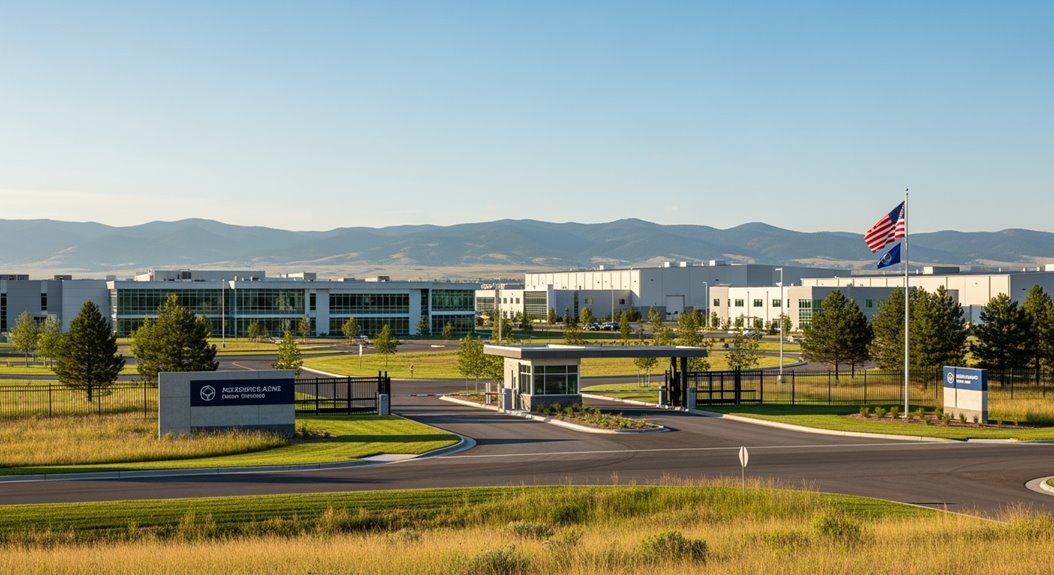
U.S. Defense Contractors in Montana
If you're working for a defense contractor in Montana, you're part of a substantial industry employing hundreds of Montanans on projects that sometimes extend overseas.
The state's defense sector encompasses technology firms like S & K Technologies and S2 Corp., construction companies including Walsh Group and James Talcott Construction, and equipment suppliers such as TNL Sales and Nomad Global Communication Solutions.
When these contractors deploy you to work on U.S. military bases or government projects abroad, you're covered under the Defense Base Act whether you're installing communications systems in the Middle East or building facilities on installations in the Pacific.
List of Major Defense Contractors in Montana
S & K Technologies
Locations: St. Ignatius (Lake County)
Founded: 1999 (tribally-owned enterprise)
Website: https://www.sktechinc.com
S & K Technologies leads Montana defense contractors with $65.7 million in 2021 contracts, representing 26.6% of statewide contractor dollars.
The company provides IT services, engineering support, and infrastructure development to military installations worldwide. As a tribally-owned enterprise of the Confederated Salish and Kootenai Tribes, S & K deploys skilled workers to support national security missions at overseas bases and facilities.
The company's work directly ties to Malmstrom Air Force Base operations while extending to global defense infrastructure projects. Workers deployed abroad under S & K contracts fall under DBA coverage when performing services in support of U.S. military operations overseas.
Confederated Salish and Kootenai Tribes
Locations: Pablo (Lake County)
Founded: 1855 (federally recognized tribal government)
Website: https://www.csktribes.org
The Confederated Salish and Kootenai Tribes secured $25.1 million in defense contracts in 2021.
Through various tribal enterprises, the organization provides construction, logistics, and support services to military installations. Tribal employees and contractors may deploy to overseas locations supporting U.S. defense operations.
James Talcott Construction
Locations: Great Falls (Cascade County)
Founded: 1946
Website: https://www.jamestalcott.com
James Talcott Construction earned $13.7 million in defense contracts.
The company specializes in heavy civil construction and has supported military infrastructure projects both domestically and at overseas installations. Deployed workers performing construction services at foreign bases qualify for DBA coverage.
T & L Sales
Locations: Belgrade (Gallatin County)
Founded: 1984
Website: https://www.tands.com
T & L Sales received $12.4 million in defense contracts. The company provides equipment, supplies, and logistics support to military operations.
Chase Tactical
Locations: Belgrade (Gallatin County)
Founded: 2009
Website: https://www.chasetactical.com
Chase Tactical in Belgrade supplies protective gear and tactical equipment to deployed military teams worldwide.
The company manufactures body armor, plate carriers, and ballistic protection systems used by special operations forces and conventional military units operating in combat zones and high-risk overseas environments.
Types of Injuries Covered by DBA Insurance
When you're hurt overseas on a U.S. contract, DBA insurance can cover more than broken bones and burns from blasts or accidents; it also recognizes traumatic brain injury, hearing loss from constant noise, and other physical trauma.
You can also claim psychological injuries like PTSD and depression, which are mental health conditions caused by dangerous events, as well as occupational diseases such as respiratory issues from burn pit smoke or chemical exposure.
If your symptoms linger, the DBA covers chronic deployment-related conditions like neuropathic pain, joint damage, or sleep disorders that build over time and limit your ability to work.
Physical Trauma and Injuries
Physical trauma injuries account for approximately 60-70% of all Defense Base Act claims filed annually, spanning from severe combat wounds to standard occupational accidents identical to those occurring at domestic construction and logistics operations.
Your coverage applies whether you experience blast trauma from explosive devices, thermal burns from equipment fires, bone fractures from elevation falls, or crush injuries from heavy machinery operations.
Combat injuries during hostile enemy actions receive full coverage, as do vehicular collisions on installation roadways and building collapses at construction locations.
Traumatic brain injuries, spinal cord damage, limb amputations, and deep lacerations all qualify for comprehensive medical treatment and permanent disability compensation under your DBA protection.
Psychological and Mental Conditions
Because psychological conditions often develop gradually during overseas deployment rather than manifesting immediately after a single incident, contractors sometimes assume their mental health struggles don't qualify as compensable work injuries.
DBA insurance covers post-traumatic stress disorder, anxiety, depression, combat stress, and moral injury resulting from your overseas work environment.
You don't need to experience direct combat to develop these conditions. Witnessing violence, living under constant threat, processing traumatic situations involving civilians, or enduring prolonged deployment stress all create valid psychological injury claims.
Documentation from mental health professionals strengthens your case, but these conditions remain fully compensable under the Act.
Occupational Diseases and Illnesses
Extended exposure to hazardous conditions at overseas work sites frequently causes serious illnesses that develop over weeks, months, or even years rather than resulting from a single traumatic event.
The Defense Base Act covers occupational exposures including respiratory diseases from burn pit smoke, toxic chemical contact, and extreme heat injuries that progressively damage your health.
Work-related infections contracted overseas (such as tropical diseases, bacterial contaminations from unsanitary conditions, and viral illnesses specific to deployment regions) qualify for DBA benefits.
These gradual-onset conditions require thorough medical documentation connecting your illness to workplace exposures during contractor service.
Chronic Deployment-Related Conditions
Long-term service in harsh overseas environments creates lasting health problems that don't announce themselves with a single injury date or dramatic accident.
Deployment fatigue develops over months of irregular sleep, extended workdays, and constant operational stress. Your body's immune suppression from prolonged exposure to environmental hazards, poor nutrition, and deployment conditions makes you vulnerable to infections and illnesses that persist after returning home.
Chronic respiratory problems from burn pit exposure, persistent digestive disorders from contaminated water, and cardiovascular issues from sustained stress all qualify for DBA coverage when they're documented and connected to your overseas deployment.
Medical Facilities and Treatment for Montana DBA Claimants
After returning to Montana from your overseas contractor assignment, you'll need quality medical care to document your injuries and support your DBA claim. Montana's major trauma centers and medical facilities can provide necessary treatment while generating crucial documentation for your case.
Your choice of medical provider and the records they create will significantly impact both your physical recovery and your claim's success. Under the Defense Base Act, you have specific rights regarding medical treatment, including the ability to select your own physician in some circumstances. Proper medical documentation establishes the extent of your injuries, connects them to your work overseas, and demonstrates ongoing treatment needs. Quality medical care serves the dual purpose of promoting healing while building the evidentiary foundation your claim requires.

Trauma Centers and Medical Facilities in Montana
Whether you were medevaced home or returned to Montana on your own, getting to the right trauma center is the first step in protecting your health and your Defense Base Act claim. Rural access can be challenging, so call ahead and confirm transport options.
St. Vincent Regional Hospital
1233 North 30th Street
Billings, MT 59101
(406) 237-7000
Located in Billings, Montana's largest city in the south-central region of the state. This Level I trauma center is the highest designation available, with trauma surgeons and specialists on-site 24 hours a day, 7 days a week, providing immediate comprehensive care for the most severe injuries.
Billings Clinic
2800 10th Avenue North
Billings, MT 59101
(406) 657-4000
Also located in Billings, serving as the second Level I trauma center in the city. This facility offers the full range of trauma services with immediate access to specialized surgical teams and critical care resources around the clock.
Providence St. Patrick Hospital
500 West Broadway
Missoula, MT 59802
(406) 543-7271
Located in Missoula in western Montana. This Level II trauma center provides immediate specialist response and comprehensive trauma care, with the capability to handle most major injuries and emergencies.
Logan Health
310 Sunnyview Lane
Kalispell, MT 59901
(406) 752-5111
Situated in Kalispell in northwest Montana near Glacier National Park. This Level III trauma center provides initial stabilization and emergency care, with the ability to transfer patients to higher-level facilities when more specialized treatment is needed.
Bozeman Health Deaconess Hospital
915 Highland Boulevard
Bozeman, MT 59715
(406) 585-5000
Located in Bozeman in southwest Montana. This Level III trauma center offers stabilization and emergency care services, coordinating transfers to Level I or II centers when patients require more advanced trauma specialty care.
Important Medical Rights Under the DBA
Too often, injured contractors don't realize they control where they receive treatment under the Defense Base Act, not the insurance company. You can choose your doctors, specialists, and treatment facilities.
Insurance carriers can't override these fundamental protections:
- Right to Select Physicians: You pick your treating doctors, including specialists for complex injuries or psychological conditions requiring ongoing care.
- Protection Against Treatment Refusals: Carriers can't deny medically necessary care recommended by your physician without formal review processes.
- Medical Privacy Protections: Your treatment records remain confidential, shared only as required for claim processing and legal proceedings.
Understanding these rights prevents carriers from limiting your recovery options.
DBA Benefits Available to Montana Residents
Montana residents injured while working overseas on government contracts receive medical coverage, disability payments, rehabilitation services, and survivor benefits under the Defense Base Act that extend well beyond standard workers' compensation programs.
The Defense Base Act provides these comprehensive benefits specifically designed to address the unique challenges contractors face when injured abroad.
Understanding what you can claim and how these benefits work is essential to securing the full compensation you've earned through your service.

Medical Coverage and Treatment
Recovering from an overseas contractor injury requires thorough medical care, and the Defense Base Act provides Montana residents with broader healthcare coverage than most workers' compensation systems.
You're entitled to treatment from any qualified physician you choose, not just approved network providers. Coverage includes surgeries, hospitalizations, physical therapy, diagnostic testing, and prescription medication management for both physical injuries and psychological conditions like PTSD.
Montana's rural geography makes telehealth access particularly valuable for follow-up appointments and ongoing treatment coordination.
The insurance carrier must authorize and pay for all reasonably necessary medical care related to your work injury.
Disability Compensation Rates
When you're unable to work due to an overseas contractor injury, the Defense Base Act provides wage replacement benefits calculated at two-thirds of your average weekly wage, up to a maximum amount adjusted annually by the Department of Labor.
Your compensation depends on accurate benefit calculation based on your pre-injury earnings, including base pay, hazard pay, and overseas allowances.
Insurance carriers often dispute wage amounts to minimize payments, making thorough wage verification essential.
Montana contractors working high-risk overseas positions typically earn compensation packages ranging from $80,000 to $150,000 annually depending on role and location, and proper documentation of all income sources guarantees you receive the full benefits you've earned through dangerous work abroad.
Vocational Rehabilitation Services
Your injury might prevent you from returning to your previous overseas contractor position, but DBA coverage includes vocational rehabilitation services designed to help you shift into new employment that accommodates your medical restrictions.
These services begin with an all-encompassing vocational assessment that evaluates your transferable skills, physical capabilities, and realistic career options given your current medical limitations.
The program then provides retraining opportunities, education funding, and job placement assistance to help you establish sustainable employment.
Insurance carriers sometimes resist authorizing these services or limit their scope, but vocational rehabilitation represents a valuable benefit you've earned through your overseas service.
Death Benefits for Families
If a contractor dies while working overseas under DBA coverage, the Act provides substantial death benefits to surviving family members who depended on that worker's income. These benefits include two-thirds of the worker's average weekly wage, distributed among eligible survivors according to statutory formulas established in 33 U.S.C. § 909.
The DBA provides burial assistance up to $3,000 under 33 U.S.C. § 909(b) to help families with funeral and transportation costs. Additionally, surviving spouses and children may access survivor counseling services to address grief and trauma.
Our Montana DBA attorneys guide families through this difficult claims process with compassion and thoroughness.
Statute of Limitations for DBA Claims
Missing a deadline for your Defense Base Act claim can jeopardize your right to compensation, making it essential to understand the specific timeframes that apply to your situation.
You generally must file traumatic injury claims within one year of your injury, while occupational disease claims allow two years from when you first connected your condition to your work. Key considerations include:
- Notice requirements: You must notify your employer within 30 days of traumatic injuries
- Diagnosis timing: The clock starts when medical professionals link your condition to employment
- Equitable tolling: Courts may extend deadlines if circumstances prevented timely filing
Montana contractors shouldn't risk losing benefits by missing these critical deadlines.
Contact Our Montana Defense Base Act Law Firm Today for Help
If you're a Montana contractor who was injured, became ill, or developed psychological conditions while working overseas on a U.S. military base or government project, Grossman Attorneys at Law is here to help.
Whether you need to file a Defense Base Act claim, appeal a denied claim, negotiate a delayed settlement, or challenge an inadequate offer, our experienced team stands ready to fight for the full compensation you deserve.
We've successfully represented contractors from more than 50 countries worldwide, and our multilingual staff speaks English, Spanish, Creole, French, Russian, and Ukrainian.
Don't navigate the complex DBA claims process alone. Contact Grossman Attorneys at Law today to speak with an experienced Defense Base Act attorney who'll protect your rights.
*If you hire Grossman Attorneys for your DBA case, you pay no attorney fees for our service. When we win your claim, the employer or its insurer typically pays a DOL-approved attorney’s fee and any case expenses we advanced are reimbursed from the recovery. If we don't win, you pay nothing.