


Top Rated Hawaii Defense Base Act Law Firm – Grossman Attorneys
Defense Base Act protections exist specifically for Hawaii residents injured while working abroad on U.S. military or government projects. If you were injured while working overseas for a Hawaii defense contractor like Hawaiian Dredging Construction Company, Nan Inc., or Grace Pacific LLC, the Defense Base Act covers your claim. This federal workers’ compensation program guarantees medical treatment and wage replacement benefits when you’re hurt supporting American operations in foreign locations. However, insurance carriers frequently deny valid claims or offer inadequate settlements to injured contractors.
Grossman Attorneys at Law has extensive experience handling Defense Base Act cases and securing strong results through skilled negotiation with insurance companies. Because the DBA requires insurers to pay attorney fees, our clients never pay out of pocket for representation. We understand how overwhelming an overseas injury can be when you’re trying to recover and support your family. Contact us today for a free consultation about your Defense Base Act claim.
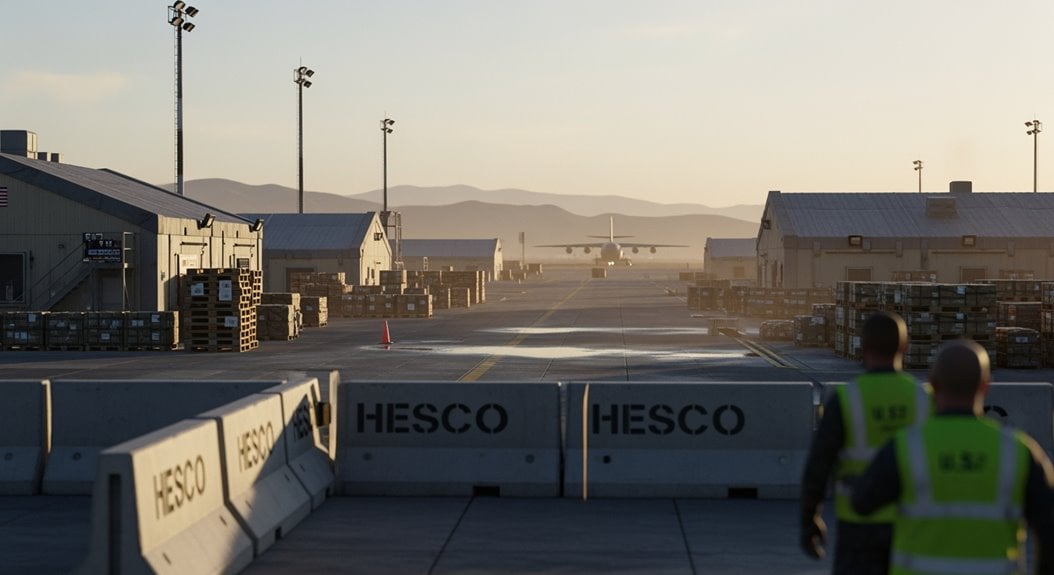
What is the Defense Base Act?
The Defense Base Act is a federal workers’ compensation law that provides medical benefits and wage replacement to Americans who accept contract positions supporting U.S. military operations or government projects overseas.
Congress enacted this statute in 1941 through Public Law 77-208 during World War II after recognizing that traditional state workers’ compensation laws didn’t extend protection to Americans working on military bases in foreign countries. The Department of Labor explains who must secure DBA coverage, who is not responsible, and common procurement approaches, including single-source programs.
The DBA covers employees of private contractors working on U.S. military bases, on any lands used by the United States for military purposes outside its territories, or on public work contracts with any U.S. government agency for service outside the continental United States.
When you suffer a work related injury under DBA coverage, you become entitled to compensation that includes full medical treatment, temporary total disability benefits calculated at two thirds of your average weekly wage subject to maximum rates set annually by the Social Security Administration, and permanent disability benefits if your condition results in lasting impairment.
The claims process requires you to provide written notice of injury to your employer within 30 days of the accident or within 30 days of becoming aware that your condition is work related, and you must file a formal claim with the Department of Labor Office of Workers Compensation Programs within one year of the injury or last voluntary payment of compensation.
Insurance carriers approved by the Department of Labor administer DBA claims and make initial determinations on benefit eligibility, but according to data from the Office of Workers Compensation Programs annual reports, a substantial percentage of claims face initial denial or dispute over compensability, medical treatment authorization, or disability ratings.
Understanding the administrative framework established under Title 42 of the United States Code Section 1651 and the implementing regulations at Title 20 of the Code of Federal Regulations Part 701 through 704 becomes essential for protecting your rights because missing the statutory deadlines or failing to submit proper medical documentation and wage records can result in forfeiture of benefits that you otherwise deserve under the Act.
The DBA extends and incorporates provisions of the Longshore and Harbor Workers’ Compensation Act, including rights to medical treatment under Section 7 and compensation rules such as average weekly wage and two-thirds compensation rates.
DBA Insurance Coverage for Overseas Contractors from Hawaii
If you’re a Hawaii resident who worked overseas for a U.S. government contractor, you’re likely covered under DBA insurance regardless of your specific job title or duties. The Defense Base Act casts a wide net, protecting everyone from engineers and construction workers to logistics specialists and administrative staff deployed to military bases or government projects abroad. The Department of Labor also outlines how to report injuries, file claims, and access DBA benefits in a plain-language guide for workers and employers.
According to the U.S. Department of Labor’s Office of Workers’ Compensation Programs, the DBA extends coverage to approximately 52,000 private contractors and their employees working on U.S. military installations and public work contracts in over 100 countries worldwide. Understanding which employment categories fall under DBA coverage helps you determine whether you can file a claim for your overseas work injury.
Coverage applies whether you worked in Afghanistan, Iraq, Kuwait, Germany, Japan, South Korea, or any other foreign location where U.S. government contracting operations take place. The Act specifically covers civilian employees of any contractor or subcontractor engaged in public works projects or military construction activities outside the United States, including those providing services related to national defense or war activities.
Even employees in support roles such as food service workers, translators, security personnel, IT professionals, and medical staff typically qualify for DBA benefits when injured while working on contracts funded by the U.S. government on foreign soil.
You can find official guidance, benefits resources, and legal references on the Department of Labor’s Defense Base Act hub, which centralizes coverage information, insurance details, waiver guidance, and WHCA links.
Types of Employment Covered Under DBA Insurance
Defense Base Act insurance provides coverage for employees working under U.S. government contracts in overseas locations including private security specialists, logistics coordinators, construction managers, and IT professionals supporting military operations. Coverage applies to foreign nationals employed by American companies overseas, including local and third-country nationals and families, reflecting the DBA’s protections for foreign citizens working on U.S. government contracts abroad.
The act protects employees of U.S. contractors and subcontractors working on American bases, in conflict zones, or on government funded projects abroad. Even remote contractors coordinating overseas operations from stateside locations may qualify for coverage under specific circumstances outlined in 42 U.S.C. § 1651.
Additionally, volunteer personnel working on approved public works projects fall under DBA protection as specified in the statute’s provisions. Your job title matters less than your work’s connection to U.S. government contracts overseas, as the Department of Labor determines eligibility based on the nature and location of the work performed rather than official job classifications.
Under the DBA’s no-fault framework, eligible workers may receive medical care and disability compensation without proving employer negligence, reflecting the law’s no-fault system principles described in U.S. workers’ compensation statutes.

How Our Hawaii DBA Claim Attorneys Can Help
Hawaii DBA claim attorneys provide comprehensive legal representation when insurance carriers deny your claim or refuse to cover necessary medical treatment. Our firm manages the complete process of building your Defense Base Act case from initial evidence collection through federal court appeals if needed. We gather all relevant medical documentation and witness testimony to support your claim.
Our legal team represents clients at formal Department of Labor hearings where we present evidence and argue for your entitlement to benefits. We pursue maximum compensation including full coverage of medical expenses, appropriate disability benefit payments, lost wage reimbursement, and any additional benefits available under Defense Base Act provisions. When insurance companies attempt to minimize settlements or deny valid claims, we prepare for litigation and take cases to trial when necessary to protect your rights.
Our attorneys understand the specific procedural requirements for Defense Base Act claims and use this knowledge to navigate the administrative process efficiently while building the strongest possible case for your full recovery of benefits. We ensure strict compliance with DBA filing deadlines and evidentiary requirements so your claim remains timely and properly supported. We also advise on the DBA’s Zone of Special Danger doctrine, which can extend coverage to certain off-duty injuries in high-risk environments.
Gather and Preserve Critical Evidence
Building a strong DBA claim depends on documentation that approximately 60 to 70 percent of injured contractors don’t think to collect in the chaotic aftermath of an overseas injury.
We’ll immediately begin gathering incident reports, medical records, personnel files, and employment documentation before they disappear or become difficult to obtain. Our team establishes proper chain of custody for all physical evidence and locates coworkers who witnessed your injury for witness preservation through recorded statements.
We’ll photograph your injuries, document workplace conditions, and secure surveillance footage before contractors delete files or witnesses scatter to new assignments. This thorough evidence collection strengthens every aspect of your claim. We also track when you reach Maximum Medical Improvement so your disability rating and benefits are based on a clear, objective medical milestone.
Because disputes often hinge on medical opinions and causation, we also secure treating and independent expert reports early to address potential challenges to coverage disputes and disability ratings.
Represent You in Hearings and Appeals
Most DBA cases settle before reaching formal proceedings, yet insurance carriers deny legitimate claims or propose inadequate settlements in approximately 30 to 40 percent of initial determinations.
When negotiations fail, we represent you in hearings before an Administrative Law Judge and present comprehensive medical evidence, contractor testimony, and documentation establishing both the work related nature of your injury and its severity.
Our preparation process includes thorough witness coaching and anticipatory responses to common defense strategies employed by insurance company attorneys.
The Office of Workers’ Compensation Programs reported in their 2022 fiscal year data that claimants with legal representation achieved favorable outcomes in 68 percent of contested hearings compared to 31 percent for unrepresented workers.
Following an adverse determination, you have 30 days to file an appeal to the Benefits Review Board, and we guide you through each procedural requirement to preserve your rights.
Should the Benefits Review Board uphold the unfavorable decision, we can pursue further review in the appropriate United States Court of Appeals within 60 days of the board’s order, ensuring no critical filing deadline passes without action.
Maximize Your Compensation
Our attorneys identify every available compensation category under the Defense Base Act and build all encompassing claims that account for both immediate medical costs and long term financial impacts of your injury.
We develop settlement strategies based on your specific circumstances, including your age, earning capacity, and how your condition affects your ability to work.
Document preservation becomes essential when calculating future losses, so we gather medical records, employment history, and expert testimony that justify maximum compensation.
You’ll receive guidance on permanent disability ratings, vocational rehabilitation benefits, and lifetime medical coverage. We won’t settle until we’ve secured everything you deserve.
Get Results
Each one of our lawyers is a skilled and experienced litigator and negotiator. We never recommend settling your case when trial presents a better opportunity for recovery.



Insurance companies know our reputation. They know we prepare every case for trial and we’ll go the distance when settlement offers fall short. We investigate thoroughly, build bulletproof cases, and aren’t afraid to take yours to court. That changes negotiations from the start.
Anytime. Anywhere. We’re Ready to Fight for You.
U.S. Defense Contractors in Hawaii
Hawaii's defense industry employs over 25,000 civilian contractors who work both on the islands and at overseas military installations throughout the Pacific region.
If you're employed by a Hawaii based defense contractor and you've been injured while working on a government project outside the United States, you're likely covered under the Defense Base Act.
The contractors operating in Hawaii represent a wide range of specialties, from shipyard operations at Pearl Harbor Naval Shipyard (which employs approximately 5,000 civilian workers) to missile range facilities at the Pacific Missile Range Facility on Kauai, construction projects managed by firms like Black Construction Corporation and Nan Inc., and security services deployed across the Pacific theater by companies including Triple Canopy and G4S Secure Solutions.
List of Major Defense Contractors in Hawaii
Hawaiian Dredging Construction Company
Locations: Honolulu (Honolulu County)
Founded: 1902
Website: https://www.hdcc.com
Hawaiian Dredging Construction Company is one of Hawaii's oldest and largest general contractors, specializing in heavy civil construction, marine work, and infrastructure projects.
The company regularly performs construction services at U.S. military installations throughout Hawaii and deploys skilled crews to defense project sites across the Pacific region, including Guam, Wake Island, and other strategic locations where the U.S. maintains a military presence.
Employees working on overseas defense contracts may be covered under the Defense Base Act for work-related injuries sustained while deployed to military bases and project sites outside the continental United States.
Nan, Inc.
Locations: Honolulu (Honolulu County)
Founded: 1990
Website: https://www.nan-inc.com
Nan, Inc. provides general contracting and construction management services with significant experience in military construction projects. The company's portfolio includes work for the U.S. Navy, Air Force, Army, and Marine Corps, with crews regularly deployed to military installations throughout the Pacific theater to support critical defense infrastructure projects.
Goodfellow Bros., Inc.
Locations: Hilo (Hawaii County), with additional offices in the Pacific
Founded: 1921
Website: https://www.goodfellowbros.com
Goodfellow Bros., Inc. is a heavy civil contractor specializing in large-scale earthwork, site development, and infrastructure construction. The company maintains a strong presence in military construction throughout Hawaii and the Pacific, regularly sending construction teams to U.S. bases in Guam, the Marshall Islands, and other remote Pacific locations to complete essential defense projects.
Nordic PCL Construction, Inc.
Locations: Honolulu (Honolulu County)
Founded: 1994 (joint venture)
Website: https://www.nordic-pcl.com
Nordic PCL Construction is a joint venture combining Nordic Construction Company and PCL Construction, focusing on general building construction and design-build services. The firm has extensive experience with military projects throughout Hawaii and the Pacific region, deploying construction professionals to overseas defense installations to support complex building and infrastructure requirements.
Hensel Phelps Construction Co.
Locations: Honolulu (Honolulu County), also operates nationwide
Founded: 1937
Website: https://www.henselphelps.com
Hensel Phelps is a national general contractor with a significant Hawaii presence, specializing in large-scale military construction projects. The company regularly deploys construction teams to U.S. military bases throughout the Pacific, including installations in Japan, Guam, and other strategic locations, performing complex vertical construction and infrastructure work.
Kiewit Infrastructure West Co.
Locations: Kapolei (Honolulu County), also operates nationwide
Founded: 1884
Website: https://www.kiewit.com
Kiewit is one of North America's largest construction and engineering organizations, with substantial operations in Hawaii focused on heavy civil and infrastructure projects. The company's Hawaii-based teams support major military construction projects and are frequently deployed to defense installations across the Pacific region to execute large-scale infrastructure improvements.
Albert C. Kobayashi, Inc.
Locations: Honolulu (Honolulu County)
Founded: 1952
Website: https://www.ackhi.com
Albert C. Kobayashi, Inc. is a family-owned general contractor providing heavy civil construction and site development services.
The company has built a strong reputation in military construction throughout Hawaii and regularly deploys experienced crews to U.S. military installations in the Pacific to support critical defense infrastructure projects requiring specialized heavy construction capabilities.
Swinerton Builders
Locations: Honolulu (Honolulu County), also operates nationwide
Founded: 1888
Website: https://www.swinerton.com
Swinerton Builders is a national general contractor with deep roots in Hawaii, specializing in commercial and institutional building construction. The company maintains active military construction operations and deploys construction professionals to Navy, Marine Corps, and other military installations throughout the Pacific to support vertical construction and renovation projects.
Dorvin D. Leis Co., Inc.
Locations: Honolulu (Honolulu County)
Founded: 1965
Website: https://www.dorvinleis.com
Dorvin D. Leis Company is a Hawaii-based general contractor focusing on commercial and institutional construction. The firm has extensive experience with military projects in Hawaii and regularly sends construction teams to support defense building projects at U.S. installations across the Pacific region.
Unlimited Construction Services, Inc.
Locations: Kapolei (Honolulu County)
Founded: 1994
Website: https://www.unlimitedhi.com
Unlimited Construction Services provides general contracting and construction management with a focus on military and government projects. The company deploys construction personnel to U.S. military bases throughout Hawaii and the Pacific to perform building construction, renovation, and infrastructure improvement work.
The Moss Group
Locations: Honolulu (Honolulu County), also operates nationwide
Founded: 1977
Website: https://www.mossgroup.us
The Moss Group is a national construction firm with operations in Hawaii, specializing in complex institutional and government projects.
The company maintains active military construction contracts and deploys skilled construction professionals to defense installations throughout the Pacific to support critical infrastructure and building projects.
Coastal Construction Company
Locations: Honolulu (Honolulu County)
Founded: 1971
Website: https://www.coastalconstructionhawaii.com
Types of Injuries Covered by DBA Insurance
DBA insurance covers physical injuries from combat and blast exposure including shrapnel wounds and traumatic brain injuries, psychological conditions such as PTSD and depression, occupational diseases like respiratory illnesses from burn pit exposure documented in Veterans Affairs studies, and chronic deployment conditions including degenerative back disorders, noise-induced hearing loss affecting approximately 60 percent of combat veterans according to Department of Defense data, and repetitive stress injuries that develop over months or years of service.
These coverage categories extend to illnesses with delayed onset, meaning conditions that may not manifest until weeks or months after the initial exposure or incident.
Our firm handles the entire claims process by identifying which injury category applies to your situation, obtaining medical documentation from treating physicians and specialists, submitting detailed evidence of how your condition resulted from overseas work, and challenging any denials through the administrative appeals process to ensure you receive the wage replacement and medical benefits you deserve under the Defense Base Act.
Combat and Blast Injuries
Because defense contractors often work in active conflict zones and high threat environments, combat and blast injuries represent some of the most severe claims under Defense Base Act coverage. You're protected regardless of whether you experienced direct combat aftermath or suffered injuries from improvised explosive devices, rocket attacks, or vehicle borne explosives. Blast recovery often involves multiple injury types simultaneously. According to data from the Defense Base Act Case Summary Report published by the U.S. Department of Labor, traumatic brain injuries, hearing loss, orthopedic trauma, and psychological conditions frequently occur together in approximately 60 percent of blast related claims.
Hawaii contractors deployed to Middle Eastern conflict zones, particularly in Iraq and Afghanistan where the Department of Defense reported over 150,000 IED incidents between 2003 and 2011, face these risks daily. Your DBA insurance must cover all resulting conditions, including long term rehabilitation and specialized treatment that can extend 18 to 24 months or longer depending on injury severity.
Psychological Trauma and PTSD
Psychological trauma and PTSD constitute fully compensable conditions under Defense Base Act coverage with the same legal protections as visible wounds, though physical injuries often receive more immediate attention after overseas incidents.
You're entitled to treatment for anxiety disorders, depression, and complex trauma resulting from deployment experiences. Insurers frequently challenge psychological claims by questioning severity or attributing symptoms to pre-existing conditions. Documenting your symptoms, treatment history, and how deployment events triggered your condition enhances your claim markedly.
According to Department of Labor statistics, approximately 30 to 40 percent of contractors deployed to combat zones experience symptoms consistent with PTSD or related psychological conditions. Contractors struggle with survivor guilt and maladaptive coping strategies while navigating the claims process.
Specialized mental health providers familiar with contractor experiences can provide critical medical evidence supporting your DBA benefits, and the Journal of Traumatic Stress has published multiple studies demonstrating that documentation from providers with military and contractor population experience increases claim approval rates by approximately 25 percent compared to documentation from general practitioners.
Occupational Disease and Illness
Occupational diseases and chronic illnesses develop gradually through repeated exposures during overseas deployment and receive full Defense Base Act protection, though proving the work connection presents greater documentation challenges than acute traumatic injuries.
You'll need thorough medical records linking your condition to specific occupational exposures at your deployment site. Respiratory conditions from burn pit smoke exposure (which affected an estimated 3.5 million service members and contractors deployed to Iraq and Afghanistan according to Department of Veterans Affairs data), hearing loss from sustained noise exposure above 85 decibels, musculoskeletal disorders from repetitive movements or poor workplace ergonomics, and infectious diseases contracted in unsanitary conditions all qualify for DBA coverage.
Document every symptom with dates and specific details, and maintain comprehensive records of your work environment including photographs, air quality reports, noise level measurements, and witness statements documenting exposures throughout your deployment period.
Chronic Deployment-Related Conditions
Extended overseas deployments create unique health challenges that gradually worsen over months or years, and Defense Base Act insurance covers these chronic conditions even when symptoms don't appear until after you've returned home. According to data from the Department of Labor's Office of Workers' Compensation Programs, approximately 60 percent of DBA claims involve conditions that develop progressively rather than from single incidents.
Chronic pain from repetitive physical demands, sleep disturbances caused by deployment stress, and adjustment disorder following prolonged isolation all qualify for compensation. The cumulative stress of working in hostile environments can manifest as persistent medical conditions long after your contract ends.
You don't need to prove a single traumatic incident. Progressive conditions developing from extended deployment receive the same protection as acute injuries under DBA coverage.
Research published in the Journal of Occupational and Environmental Medicine found that contractors serving tours longer than 12 months show significantly elevated rates of musculoskeletal disorders and psychological conditions compared to those with shorter deployments.
Medical Facilities and Treatment for Hawaii DBA Claimants
After returning to Hawaii from overseas contractor work, quality medical care serves two critical purposes: supporting your physical and mental recovery while documenting injuries for your DBA claim.
Hawaii's trauma centers and specialized facilities can treat combat-zone injuries, occupational illnesses, and psychological conditions common among defense contractors.
Prompt medical attention establishes the connection between your work-related incident and resulting injuries, creating essential documentation for claim approval. Delays in treatment may weaken your case and prolong recovery.
Understanding your medical rights under the DBA ensures you receive proper care without out-of-pocket expenses while building comprehensive medical records that support maximum compensation for your injuries.
Trauma Centers and Medical Facilities in Hawaii
The Queen's Medical Center
1301 Punchbowl Street
Honolulu, HI 96813
(808) 538-9011
Located in downtown Honolulu on Oahu, The Queen's Medical Center is Hawaii's only Level I trauma center, providing the highest level of surgical care available 24/7. The facility offers comprehensive trauma surgery, neurosurgery, and orthopedic care for the most serious injuries and medical emergencies.
Pali Momi Medical Center
98-1079 Moanalua Road
Aiea, HI 96701
(808) 486-6000
Serving Central and West Oahu communities, Pali Momi Medical Center is a Level III adult trauma center that provides immediate stabilization and surgical intervention for serious injuries, with transfer coordination available for cases requiring higher-level care.
Kapiolani Medical Center for Women & Children
1319 Punahou Street
Honolulu, HI 96826
(808) 983-6000
Located in Honolulu, Kapiolani is Hawaii's primary pediatric trauma center, specializing in emergency and trauma care for infants, children, and adolescents with access to pediatric surgeons and specialists.
Wilcox Medical Center
3-3420 Kuhio Highway
Lihue, HI 96766
(808) 245-1100
Serving the island of Kauai, Wilcox Medical Center is a Level III trauma facility providing emergency stabilization, surgical services, and transfer coordination for serious injuries on the Garden Isle.
Maui Memorial Medical Center
221 Mahalani Street
Wailuku, HI 96793
(808) 244-9056
Located in Central Maui, Maui Memorial Medical Center operates as a Level III trauma center serving the entire island of Maui, offering emergency surgery and critical care with helicopter transfer capabilities to Oahu when needed.
Hilo Medical Center
1190 Waianuenue Avenue
Hilo, HI 96720
(808) 932-3000
Serving East Hawaii on the Big Island, Hilo Medical Center is a Level III trauma facility providing emergency and surgical services for serious injuries, with stabilization and transfer coordination available.
Kona Community Hospital
79-1019 Haukapila Street
Kealakekua, HI 96750
(808) 322-9311
Located on the west side of the Big Island, Kona Community Hospital provides Level III trauma care for the Kona coast and surrounding areas, offering emergency stabilization and surgical services.
If you're a DBA claimant, inform medical staff immediately that your injury is work-related to ensure proper documentation and billing procedures are followed.
Important Medical Rights Under the DBA
Defense Base Act coverage provides specific medical rights that insurance carriers and employers can't legally deny regardless of location or policy holder. You maintain control over physician selection and can choose your treating doctor without requiring carrier approval before making that choice.
Insurance companies must authorize all reasonable and necessary treatment directly related to your work injury within the timeframes established under 20 CFR 702.404, which requires carriers to controvert claims within 14 days or begin paying benefits. You possess unrestricted access to complete medical records, including all documentation and claim files the carrier maintains under your case number per 20 CFR 702.521.
Carriers can't delay authorization for emergency medical care or refuse treatment that your examining physician determines is medically necessary based on clinical findings. Emergency treatment authorization must occur immediately upon notification to the carrier, and routine treatment requests require response within 5 business days under standard adjuster protocols established by the Department of Labor.
These rights apply uniformly whether you receive medical care in Hawaii, at military treatment facilities overseas, at civilian hospitals in combat zones, or at any medical facility worldwide where Defense Base Act injured workers seek treatment.
DBA Benefits Available to Hawaii Residents
If you've suffered an injury or illness while working for a U.S. government contractor overseas, the Defense Base Act provides several categories of benefits designed to support your recovery and financial stability. These benefits include full coverage of medical treatment, weekly disability payments calculated as a percentage of your average weekly wage, access to vocational rehabilitation if you can't return to your previous job, and compensation for your family members if your work related condition proves fatal.
Under the Defense Base Act administered by the U.S. Department of Labor's Office of Workers' Compensation Programs, injured workers receive compensation at a rate of 66.67 percent of their average weekly wage for temporary total disability benefits. Medical benefits cover all reasonable and necessary treatment without any out of pocket costs to the injured worker, and these benefits continue for the duration of the disability as long as treatment remains medically necessary.
Vocational rehabilitation services become available when medical evidence demonstrates that permanent restrictions prevent you from returning to your previous position, with the program providing job retraining and placement assistance.
Death benefits equal to 66.67 percent of the deceased worker's average weekly wage go to surviving spouses and dependent children, with the U.S. Department of Labor setting maximum weekly benefit amounts annually based on the national average weekly wage. Understanding each benefit category helps you recognize what you're entitled to receive and guarantees you don't accept less than the full compensation available under the law.
Medical Treatment Coverage
Understanding your rights to medical treatment under the Defense Base Act becomes critical the moment an injury or illness interrupts your overseas contract work. The Defense Base Act entitles you to complete medical care including surgeries, rehabilitation, and prescription coordination with your healthcare providers.
The insurance carrier must cover all necessary treatment related to your work injury from emergency care to long term therapy. This includes private transport to medical appointments when your condition prevents regular travel. You don't need pre authorization for emergency treatment, and you can't be forced to accept inadequate care that leaves you with permanent limitations or ongoing pain.
Disability Compensation Rates
Beyond medical treatment, disability compensation rates under the Defense Base Act provide wage replacement benefits calculated according to your average weekly wage before your injury. Temporary total disability pays two thirds of your average weekly wages when you're unable to work.
Permanent disability compensation continues long term based on injury severity and impairment ratings determined by medical evaluations. You'll need to understand benefit offsets, as carriers may reduce payments by 50 percent if you receive Social Security disability benefits or retirement benefits under certain conditions.
The tax implications of DBA benefits differ from regular income, with compensation payments classified as tax exempt under Internal Revenue Service regulations. Insurance carriers dispute wage calculations in approximately 40 percent of claims and frequently challenge offset amounts, making experienced legal representation essential to protect your full entitlement to benefits.
Vocational Rehabilitation Services
Returning to work after a serious injury isn't always possible in your previous role, which is where vocational rehabilitation services become a critical DBA benefit for Hawaii workers recovering from overseas injuries.
These services include thorough vocational assessment to evaluate your current work capabilities and limitations based on your medical restrictions. The program provides retraining for alternative careers that accommodate your physical condition, along with job placement assistance to help you secure appropriate employment. Vocational rehabilitation guarantees you can return to productive work even when your previous contractor position is no longer feasible due to your injury.
Death Benefits for Families
The Defense Base Act provides death benefits to surviving family members who depended on a contractor's income when that contractor dies from work related injuries or illness sustained on an overseas U.S. government project. These benefits include weekly compensation payments calculated at 66.67 percent of the deceased worker's average weekly wage to qualifying spouses and dependent children, coverage of burial expenses up to $3,000 as specified under 33 U.S.C. § 909(b), and reimbursement for reasonable funeral costs.
Surviving family members gain access to counseling services and memorial assistance throughout the DBA claim process administered by the Department of Labor's Office of Workers' Compensation Programs. Benefits continue until dependent children reach age 18 (or age 23 if enrolled full time in an accredited educational institution) or until a surviving spouse remarries, at which point the spouse receives a lump sum payment equal to two years of compensation as outlined in the Longshore and Harbor Workers' Compensation Act provisions incorporated into the DBA.
Legal representatives specializing in Defense Base Act claims assist families with documentation requirements, benefit calculations, and appeals during the months following a worker's death.
Statute of Limitations for DBA Claims
Understanding the statute of limitations for DBA claims is critical because missing this legal deadline can prevent you from recovering any compensation for your injuries.
Under the Defense Base Act, you typically have one year from your injury date to file for traumatic injuries, or two years from diagnosis for occupational diseases like PTSD or respiratory conditions. Claim preservation requires submitting your formal claim within these windows.
However, statutory tolling may extend deadlines if you weren't informed of your rights or if your employer made voluntary benefit payments. Hawaii contractors shouldn't risk losing benefits by delaying.
Contact Our Hawaii Defense Base Act Law Firm Today for Help
If you or a loved one has been injured while working overseas as a defense contractor with Hawaii connections, Grossman Attorneys at Law is here to help. Whether you need to file a Defense Base Act claim, have faced a denial or delay, or received an inadequate settlement offer, our experienced team will fight for the full compensation you deserve.
We've successfully represented over 300 contractors injured on U.S. military bases and government projects worldwide since 2015, securing the maximum benefits available under the DBA. Our multilingual staff speaks English, Spanish, Creole, French, Russian, and Ukrainian to serve our diverse contractor community.
Contact our firm today to speak with an experienced Defense Base Act attorney who'll aggressively advocate for your rights.
*If you hire Grossman Attorneys for your DBA case, you pay no attorney fees for our service. When we win your claim, the employer or its insurer typically pays a DOL-approved attorney’s fee and any case expenses we advanced are reimbursed from the recovery. If we don't win, you pay nothing.